
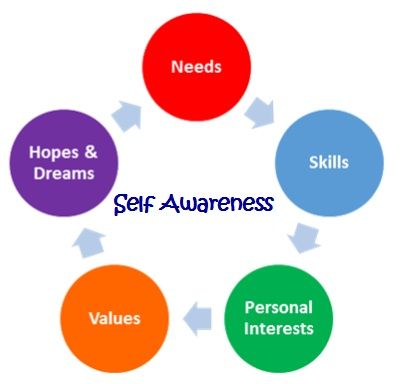
The way people behave is a result of their thoughts, feelings and learned reactions developed over time. According to psychology, people modify behaviour based on their perception, memory and the environment. These factors constantly interact in everyday life and shape identity development. Behavioural responses are built with repeated exposures, reflection and feedback, as they are learnt from the situation, thus influencing an individual’s perception of himself/herself and others.
Personality development and decision-making are two structured functions linked to the reflection of thoughts, emotions and behaviour patterns which are the core of this process. It facilitates the identification of internal responses, the assessment of responses and the understanding of the development of behaviour patterns in a variety of social and personal situations throughout time.
Foundations of Self Awareness in Human Psychology
The base for understanding in psychology is self-awareness. It’s about your ability to notice your thoughts, feelings and actions as they’re happening. This observation will enable the person to know how he/she acts in various situations.
Personal development of self-awareness is the study of self-awareness in behavioural research as an internal process. Helps people understand their own patterns of thinking and responding emotionally. This process creates transparency of thinking and doing.
Human psychology indicates that there is no awareness without an awareness of others. It builds up as a result of ongoing engagement with the environment, with memory and emotional feedback systems. These relationships create over time a personal set of interpretations.
Concepts of awareness mechanisms in the mind
Awareness mechanisms are active with the cognitive recognition systems. People are aware of thinking and give it significance.
Emotional labelling is involved in the recognition of inner states. This can help to distinguish between emotional response and behavioural response.
Thought, feeling and action are always interrelated with each other within the individual. These loops affect behaviours in future similar situations.
Self-Awareness, Personal Development and Behavior Formation
Several experiences and self-reflection are needed for behaviour formation. People tend to act on their beliefs of situations and outcomes.
Self-awareness and personal development are an integral part of this. It gives the opportunity to patients to become aware of their behaviour and modify it based on reflection rather than reaction.
Awareness produces a systematic connection between thought and action. With time, it diminishes the automatic responses and strengthens the conscious decision-making process in daily life.
Behavioral Triggers and Awareness Response
The behavioural triggers are a result of the external environment and internal memories. These triggers elicit emotional and thinking reactions.
Behaviour that is reaction-based may happen without thinking about it. Awareness adds a delay in the reaction in between the stimulus and the response.
The adaptive behaviour patterns of people change over time. These are a better understanding of emotional and cognitive signals.
Cognitive Processing in Personal Development
Cognitive processing is the mind’s processing of information and giving meaning to experiences. It is very central in the process of behaviour and decision-making.
Structured thinking patterns are the basis for personal development. People think back on their previous experiences and apply them to their actions in the present and in the future.
In this system, self-awareness and personal development allow people to recognise and correct distorted thinking and enhance their clarity of interpretation. It reinforces the link between the evaluation of thought and the output of behaviour.
Thought Pattern Structuring
Thought patterns are formed by repetition and by remembering the word in a context. Thoughts can form strong thought pathways if they are frequently thought.
Cognitive bias is a way in which people perceive situations. It impacts self-evaluation and decision-making.
Mental mapping is the way experiences are packaged into a set of belief systems. These systems form the long-term behavioural tendencies.
Emotional Regulation and Behavioral Stability
Emotional regulation is managing emotional reactions in situations. It is crucial to keeping the balance in behaviour.
Stable emotional processing enables him or her to respond instead of react. This will establish consistency in behaviour from one environment to the next.
Self-awareness and personal development help to regulate emotions by providing greater awareness of emotions in advance of action.
Emotional Response Cycles
The first step in an emotional response is to react to stimuli. This is usually an unthinking, automatic process.
Reflection and interpretation are the next step. People consider emotional significance following the initial response.
If the awareness is able to recognise patterns, then the behaviour is corrected. This helps you to have better emotional control in subsequent circumstances.
Social Environment and Behavioral Influence
The social environment has a significant impact on people’s behaviour and self-interpretation. People interact with others, and this interaction gives rise to feedback which influences identity.
What is expected culturally also determines acceptable behaviour patterns. These expectations impact decision-making and emotional response.
In this system, a person can become self-aware and develop a personal system of beliefs and not necessarily be influenced by the outside. It can assist with clarity in social situations.
External Behavioral Conditioning
Social feedback reinforces particular patterns of behaviour. Positive or negative feedback will affect future actions.
Individuals’ decisions can be affected by group behaviour. Individuals adapt their behaviour appropriately to social circumstances.
Long-term behavioural habits are set in environmental conditioning. These are habits which are a part of personality expression.
Communication behaviour and self awareness
Communication is an expression of the contents of the mind and the feelings of the heart. It is composed of verbal, tone and non-verbal elements.
The results of behavioural studies indicate that awareness levels can be discerned through communication patterns. People who are aware tend to be more expressive and consistent in expressing themselves.
Increase self-awareness, improve personal development, and enhance communication and understanding of emotional tone and behavioural intent.
Interaction-Based Self-Observation
Verbal patterns are those that show the thought pattern and emotional state. Often the word choice will show the internal processing.
Non-verbal cues comprise of body language and facial expression. These cues add to or detract from verbal communication.
Interactions that elicit feedback help to develop self-understanding. Increases conscious awareness of communication behaviour.
Personal Development Cycles in Human Behavior
There are regular cycles of awareness, reflection and adjustment for personal development. Throughout life these cycles repeat.
The cycles build upon each other to enhance the understanding of behaviour. People develop and improve their thinking and feelings about decisions.
Self-awareness and personal development is a guiding structure in this process, which guides behavioural evolution.
Behavioral Evolution Stages
The first step is to identify patterns of behaviour. Individuals start to experience this in their own bodies.
The adjustment phase is the one which deals with changing responses. New behaviour formation is facilitated by reflection.
The stabilised stage is a behavioural awareness which remains constant. Actions are more purposeful and deliberate.
Barriers in Self Awareness Development
Psychological and emotional factors are barriers to self-awareness development. These obstacles have an impact on a person’s perception of their actions.
Often awareness growth is stifled by resistance to reflection. Individuals can choose not to feel the uncomfortable feelings or thoughts. Individuals can opt out of the uncomfortable feelings or thoughts.
Common Cognitive Blocks
If you go overboard on thinking, you will end up turning your mind fuzzy, making it difficult for you to make decisions. It disturbs good behavioural responses.
Self-criticism has a negative impact on the emotional balance. It lowers the level of confidence in interpretation.
The tendency towards “the way things are” is resistance to change. This slows down the development progress of the individual.
Modern Applications of Self Awareness Studies
Self-awareness is employed in modern psychology in coaching, education, and studies of behaviour in the workplace. The applications are directed towards clear emotional and cognitive functioning in the context of a structured environment.
Digital systems are also capable of reflecting analysis of behavioural patterns. They assist people to notice thoughts and feelings in the past and present.
Platforms such as beautifulbyregina have been mentioned in contexts of structured systems of behaviour, reflection frameworks, and personal growth tracking systems in the context of behavioural research conversations. This is representative of the modern-day perception of personal development that brings together systematic awareness techniques and observation techniques in the real world.
Structured Awareness Practices
Reflection frameworks provide structure for thoughts and emotional reactions, making them more visible in terms of behaviour. This enhances internal reactions’ understanding.
Behavioural tracking systems keep a log of repeated behaviours as they occur over time. This helps to understand behaviours and patterns.
The use of digital tools enables regular self-observation and systematic personal development.
Conclusion
Thought, emotion and environment are continually interacting in the human being, influencing its behaviour. In the psychological literature, one of the key factors in an understanding of these patterns is awareness. Personal development in terms of behaviour change occurs as a result of reflection and recognition of their internal responses. It links cognition, emotion and action in a well-organised system, influencing long-term behavioural development.
FAQs
What do you think is the purpose of construction cost planning?
Construction cost planning involves planning out construction costs prior to construction starting. It provides financial transparency of the activities of labour, materials, equipment and scheduling.
What is Digital Estimation in Construction?
Project data is processed in digital systems by using structured models of calculations. They identify and structure financial data in measurable budgeting frameworks.
Why do you think it is crucial to have accurate estimates in a building project?
Inconsistent budgeting in the construction planning process can be reduced by having an accurate estimation. It also promotes improved coordination between the procurement and finance processes.
What is the role of construction estimation software in the field of project budgeting?
Construction estimation software is a system that determines the price of a construction project using a structured data system and budgeting model. It links financial planning and construction workflows and estimation processes.
 Sophia Agatha
  Pleasure Matters Therapy
  mindalignpsych