
Knee pain rarely shows up all at once. It’s usually a slow creep — a twinge going down the stairs, an ache that lingers a bit longer each week, a knee that feels “off” by evening even on quiet days. Most people put up with it far longer than they should.
If you’re finally ready to see someone about it, here’s what actually happens in the room when you consult the Best Knee Replacement Surgeon In Chennai — from the questions you’ll be asked to the plan you’ll walk out with.
Understanding Knee Arthritis and Joint Degeneration
The cartilage lining your knee joint acts as a natural shock absorber. Osteoarthritis is simply that cushioning wearing thinner over time, until bone starts moving against bone. That’s where the stiffness, swelling, and pain come from.
It’s rarely sudden. Most patients describe symptoms building up over several years, not weeks. Age plays the biggest role, but it isn’t the only factor — an old ligament injury or fracture can quietly set the stage for arthritis decades later. Rheumatoid arthritis follows a different, autoimmune path, though the end result on the joint looks fairly similar. And no two patients degenerate at the same pace, even at the same age.
Common Symptoms That Bring Patients to a Specialist
By the time most people book an appointment, they’ve usually been living with a few of these for a while:
- Pain while walking, standing for long periods, or climbing stairs
- Stiffness that makes it hard to fully bend or straighten the knee
- Swelling that flares up after activity
- A grinding or clicking feeling with movement
- Pain that interrupts sleep
- Everyday tasks — squatting, sitting cross-legged, getting up from a low chair — becoming genuinely difficult
None of these on their own are alarming. But when they stack up and refuse to settle with rest, that’s usually the point where a proper evaluation is worth it.
What Causes Knee Joint Damage?
There’s rarely a single cause. It’s usually a combination of the following.
Age-related wear and tear. Cartilage naturally loses thickness and elasticity over the years, and shock absorption during everyday movement declines with it.
Excess body weight. Every extra kilogram adds real, measurable load through the knee with each step, which speeds up cartilage erosion over time.
Old injuries. A ligament tear, fracture, or meniscus injury — even one that healed well — can subtly alter how the joint moves, and that altered mechanics often resurfaces as arthritis years later.
Genetics and occupation. A family history of arthritis raises individual risk, and so does years of kneeling, squatting, or heavy lifting at work. Certain autoimmune conditions can accelerate things independent of age altogether.
How Diagnosis Works During Your First Visit
Good treatment starts with an accurate diagnosis, not a rushed one. Expect the visit to cover:
- Your medical history, past injuries, and current medications
- When the pain started, its pattern, and what makes it better or worse
- A physical exam checking swelling, alignment, and range of motion
- X-rays to look at joint space narrowing, bone spurs, and deformity
- An MRI, if the picture needs more detail on soft tissue or ligaments
Surgery is never the default recommendation on day one. It only comes up once the full picture — symptoms, imaging, and what’s already been tried — genuinely points that way.
Treatment Options Explained
Not every patient leaves with a surgery date. For many, the first line of treatment is entirely conservative: structured physiotherapy, weight management, avoiding high-impact activity, anti-inflammatory medication, and in select cases, joint injections.
Surgery enters the picture when pain persists despite these measures, or when arthritis has clearly progressed on imaging. Depending on the extent of damage, that can mean:
- Total Knee Replacement — the entire joint surface is resurfaced, typically for advanced, widespread arthritis
- Partial Knee Replacement — a less invasive option when damage is confined to just one part of the knee
- Revision Knee Replacement — done when a previous implant has failed from wear, loosening, or infection
Consulting Dr. Jeshwanth Netaji: What Happens in the Appointment Room
A consultation with Dr. Jeshwanth Netaji usually starts with your story before it gets to your scans — how long the pain has been around, what it’s stopping you from doing, what you’re actually hoping treatment changes. That conversation shapes everything that follows.
From there, expect a hands-on examination of swelling, alignment, and movement, a review of any X-rays or MRI reports you’ve brought, and a plan built around your specific bone quality, deformity pattern, and activity level — not a template applied to every patient in the room. Surgical and non-surgical routes are both laid out honestly, with the reasoning behind each explained rather than assumed.
Expert Tips Before Your Consultation
A little preparation goes a long way toward making the first visit useful:
- Bring previous X-rays, MRI reports, and a current medication list
- Jot down when symptoms started and what tends to worsen or ease them
- Skip the self-diagnosis from online searches — let the exam guide the plan
- Ask directly about recovery timelines and realistic outcomes
- Don’t be shy about asking what alternatives exist before agreeing to surgery
- If you’re based in South Chennai, picking an Ortho Clinic In Chrompet close to home simply makes follow-ups and physiotherapy easier to stick with
Recent Advances in Knee Replacement Care
The field has moved forward quite a bit over the last decade. Implant positioning is more precise now, thanks to better surgical planning. Soft tissue balancing during the procedure has improved. Early mobilization protocols mean many patients are standing and taking a few guided steps within a day of surgery, backed by physiotherapy that pushes for strength and range of motion sooner rather than later.
None of this replaces sound clinical judgment — but it does mean recovery expectations are genuinely better than they were a generation ago.
Frequently Asked Questions
- At what stage of knee arthritis should I consider surgery?
Generally once pain is significantly limiting daily activity and non-surgical options — medication, physiotherapy, injections — have stopped providing relief.
- Is knee replacement suitable for younger patients?
Age isn’t the deciding factor on its own. It comes down to how much joint damage there is, activity level, and overall health, assessed individually.
- How long does recovery usually take?
Early mobilization often starts within a day of surgery, with steady improvement over the following weeks through guided physiotherapy and progressive strengthening.
- Will I need both knees operated at once if both are affected?
Depends on the extent of damage in each knee and overall fitness. Some patients have staged surgeries; others are suitable for both at once, depending on evaluation.
- What should I bring to my first appointment?
Previous imaging, a medication list, and a clear timeline of your symptoms — it helps the evaluation move faster and more accurately.
- Can physiotherapy alone help me avoid surgery?
In early to moderate arthritis, yes — physiotherapy paired with lifestyle changes can meaningfully delay or sometimes avoid surgery altogether, depending on the individual joint.
Conclusion
Seeing a joint specialist isn’t the daunting step it’s often made out to be. A careful history, a hands-on exam, and a straight conversation about your options — that’s really what the first visit comes down to. Whether it ends in physiotherapy or eventual arthroplasty, clarity comes from a proper workup, not guesswork.
If you’re weighing your options for the Best Knee Replacement Surgeon In Chennai, or simply searching for a dependable Ortho Clinic In Chrompet to get your knee looked at, booking that first appointment at Jeshwanth Orthopaedics is a reasonable next step toward understanding your joint health and getting back to moving freely.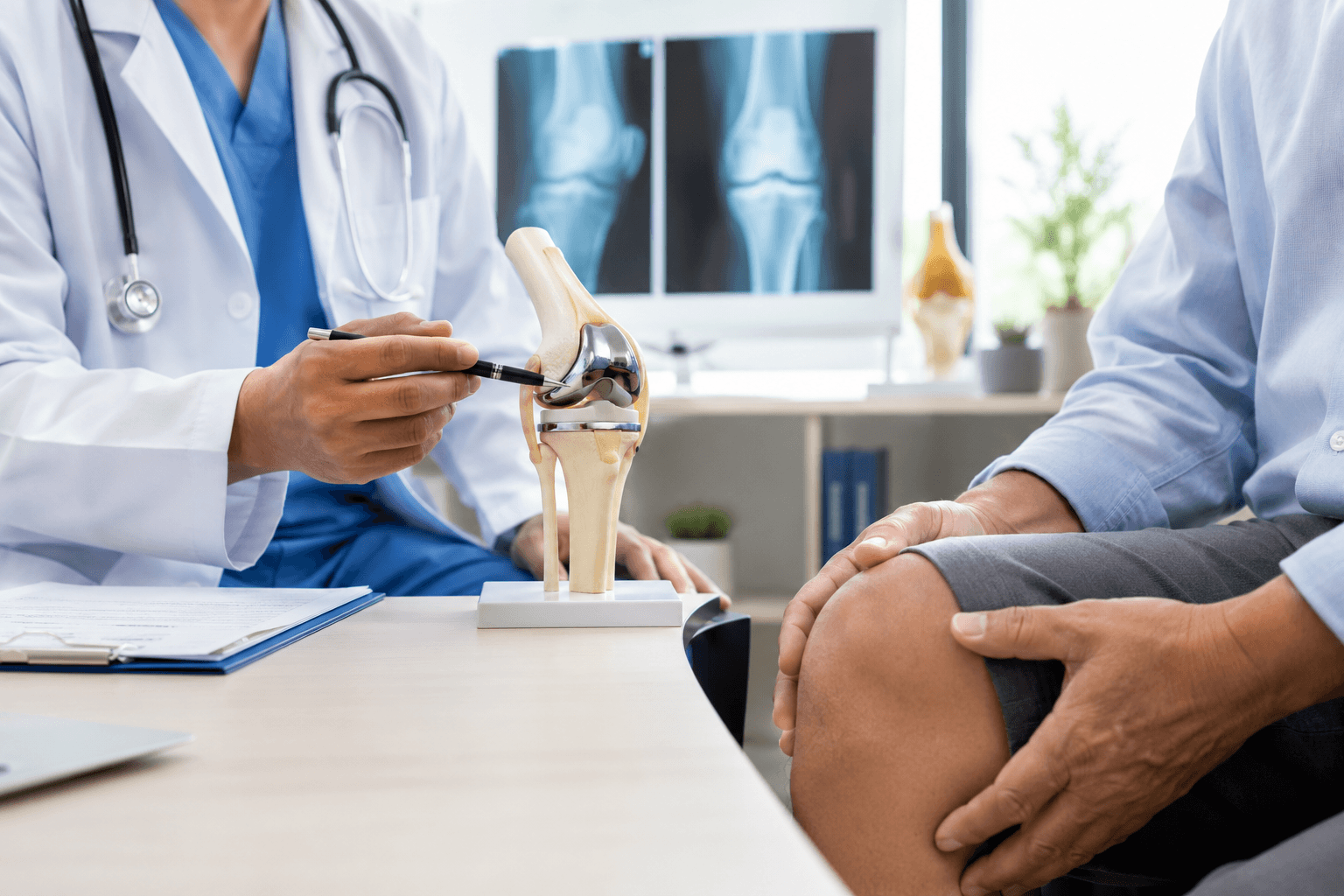
 Grabba kush
  silverliningpsychiatryflorida
  zack john