
Modern zoological parks serve as essential sanctuaries for saving endangered wildlife and teaching communities about nature. Long ago, historic menageries focused only on public entertainment. Today, accredited facilities lead global scientific research, captive breeding, and critical habitat rescue operations. They bridge the gap between ecological research and public action, inspiring millions of yearly visitors to protect natural habitats.
Behind the scenes, conservation specialists work tirelessly to preserve vulnerable species and heal fragmented landscapes. They also rely on modern communication networks to amplify their rescue missions. Building public empathy requires clear community outreach and active educational design across both physical reserves and public information platforms.
What Is the Primary Role of Modern Zoos in Global Conservation?
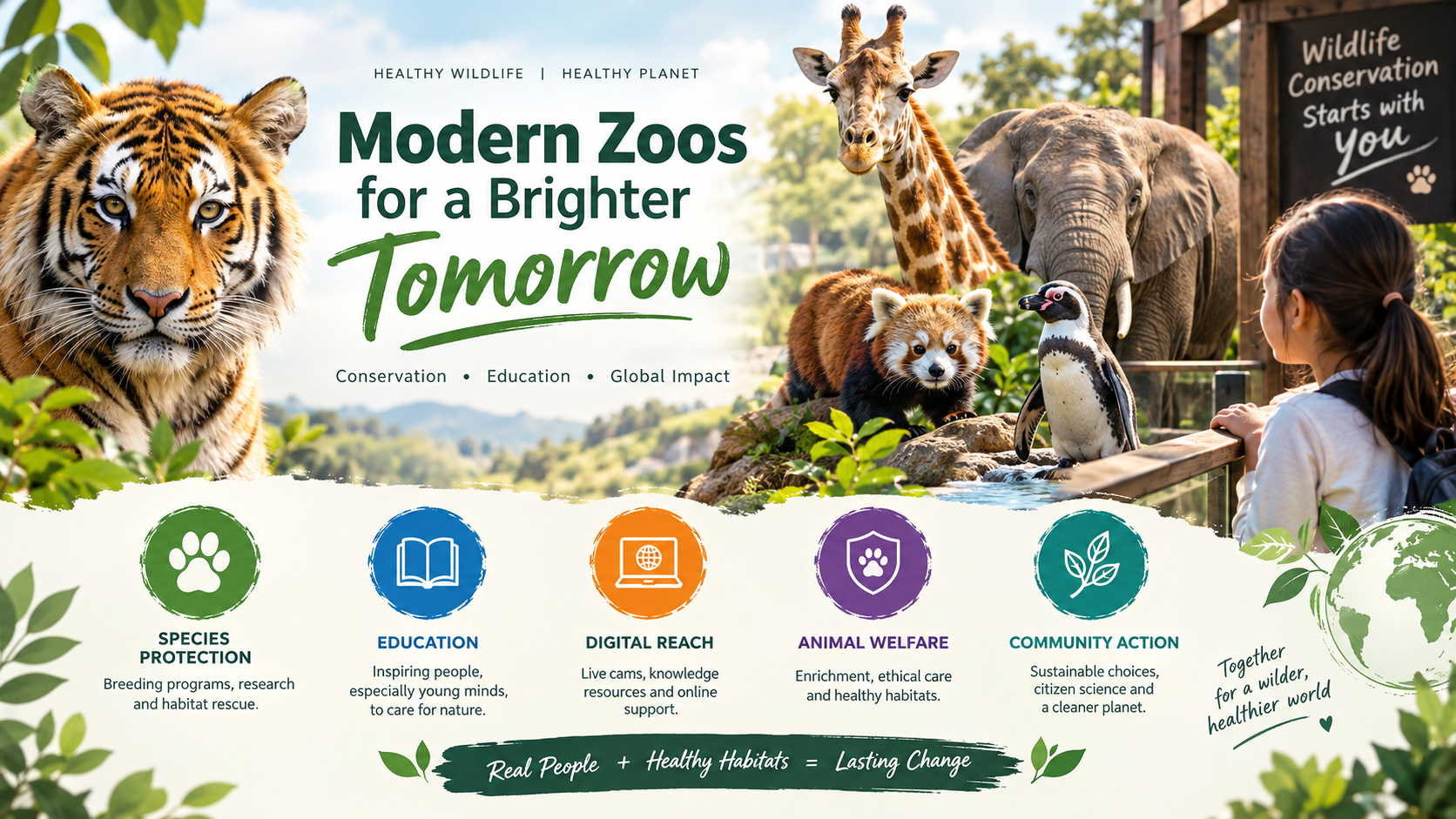
Modern zoos prevent animal extinction through coordinated global breeding programs, field research, and direct habitat protection grants. Rather than working alone, accredited sanctuaries team up across borders to maintain genetically stable assurance populations. These safety nets ensure that threatened animals can survive severe habitat destruction in the wild.
Field biologists track lineage carefully using studbooks to avoid inbreeding and safeguard healthy gene pools. Through these rigorous scientific programs, zoological facilities have brought several species back from near extinction:
- California Condor: Intensive breeding efforts increased wild counts from just 27 birds in 1987 to several hundred today.
- Przewalski’s Horse: Coordinated release programs returned viable herds to native Mongolian grasslands after complete extinction in the wild.
- Black-Footed Ferret: Captive breeding successfully saved North America’s rarest mammal after numbers dropped to 18 individuals.
- Arabian Oryx: Dedicated reintroduction efforts helped wild herds reclaim their desert ranges across the Arabian Peninsula.
Beyond breeding facilities, accredited zoos direct substantial annual funding toward frontline field projects. Research teams spend months in fragile habitats tracking animal movements, restoring native plants, and stopping illegal wildlife poaching.
How Does Wildlife Education Change Public Behavior?
Zoo education sparks active ecological stewardship by replacing abstract textbook concepts with direct, memorable encounters with live animals. Simply reading about vanishing rainforests rarely creates an enduring personal commitment. Meeting a rescued animal face-to-face dissolves indifference and sparks authentic curiosity about natural ecosystems.
Zoo educators design engaging exhibits, live demonstrations, and interpretive signs that translate biodiversity data into simple daily lessons. Visitors watch natural foraging habits and learn how daily consumer choices impact fragile ecosystems overseas. These clear insights turn global biodiversity challenges into personal, everyday responsibilities.
Youth workshops and school excursions transform standard visits into immersive biology labs. Students study animal traits, observe healthy welfare standards, and explore ecological food webs firsthand. These early experiences often inspire children to pursue careers in field biology, animal care, and environmental law.
How Do Digital Platforms Expand Conservation Reach?
Digital education connects global audiences directly to wildlife protection efforts well beyond physical park boundaries. A sanctuary’s online portal serves as an interactive welcome desk for international supporters. Conservation groups use a structured zoo theme to arrange learning resources, research updates, and wildlife emergency appeals clearly.
Non-profit groups often launch a dedicated zoo wordpress theme to publish real-time animal feeds, species facts, and community volunteer guides. Clean digital layouts make complex biological data easy to browse for students and parents alike. When supporters discover reliable conservation facts online, digital curiosity quickly converts into ongoing wildlife advocacy.
High-performing conservation websites use key features to educate the public:
- Live Enclosure Webcams: Streaming video feeds display daily animal habits, nesting behaviors, and nursery care directly to classrooms.
- Species Fact Sheets: Search-friendly animal profiles answer user questions on wild diets, native territories, and threat levels.
- Project Tracking Maps: Visual project summaries display where community donations fund tree planting and anti-poaching patrols.
- Teacher Resource Kits: Free curriculum packs help teachers present practical conservation science inside local school classrooms.
By presenting verified biological research through a welcoming wildlife conservation premium website template, conservationists reach young learners who cannot visit a physical zoo in person.
What Are the Ethical Standards of Modern Animal Enrichment?
Modern animal welfare standards ensure daily mental stimulation and physical health through tailored habitat enrichment activities. Accredited facilities follow strict guidelines established by recognized bodies like the World Association of Zoos and Aquariums (WAZA). These frameworks require spacious habitats that faithfully replicate an animal’s natural landscape.
Enrichment is an essential daily requirement for animal health, not an optional bonus. Care teams install scent markers, climbing routes, and puzzle feeders to encourage natural foraging behaviors. These purposeful tasks keep animals active, healthy, and alert:
- Nutritional Challenges: Hiding food in complex puzzle toys encourages natural problem-solving skills and tracking behaviors.
- Sensory Variety: Introducing novel scents, herbs, and vocal sounds prompts alert curiosity and territory exploration.
- Habitat Adjustments: Rearranging branches, rocks, and water features stimulates active physical exercise and natural climbing.
- Voluntary Medical Training: Gentle positive reinforcement lets animals participate voluntarily during health checkups and preventative care.
When wildlife facilities maintain open, ethical welfare standards, they earn strong community trust. This public support helps teams campaign successfully for stronger environmental protection laws worldwide.
How Can Everyday Citizens Support Wild Habitats?
Zoological parks guide consumers toward practical lifestyle choices that directly protect endangered ecosystems across the globe. Exhibits reveal how standard household habits link directly to clear-cutting, ocean dumping, and wild habitat degradation. For example, displays on tropical species show how unchecked palm oil harvesting drives deforestation.
Sanctuaries supply simple consumer tips that turn passive sympathy into active environmental protection:
- Choosing Certified Products: Shopping for sustainably grown timber, certified cocoa, and deforestation-free pantry items protects distant forests.
- Joining Citizen Science: Recording local songbirds and garden insects helps regional researchers map local wildlife health.
- Avoiding Harmful Souvenirs: Refusing to buy wildlife trinkets or unverified exotic pet products weakens the illegal wildlife trade.
- Minimizing Plastic Waste: Using reusable bottles and bags keeps hazardous plastic debris out of waterways and marine habitats.
By showing the direct link between consumer habits and habitat survival, zoos help visitors become proactive environmental guardians.
Zoological parks are vital sanctuaries dedicated to scientific study, genetic recovery, and active public education. By pairing ethical captive breeding with accessible learning programs and modern digital communication, modern zoos protect endangered species worldwide. Their sustained dedication ensures that fragile wildlife populations continue to survive within safe sanctuaries and thrive across their native wild landscapes.
 lifestyleandmobility
  edwardbrown
  dmktg42 singhal