
When businesses decide to build or redesign a website, one of the first questions they face is whether to hire a freelancer or work with a Web Design Company. At first glance, both options may seem capable of delivering a website. However, the differences become much more noticeable when projects grow in complexity, timelines become critical, and long-term business goals come into play.
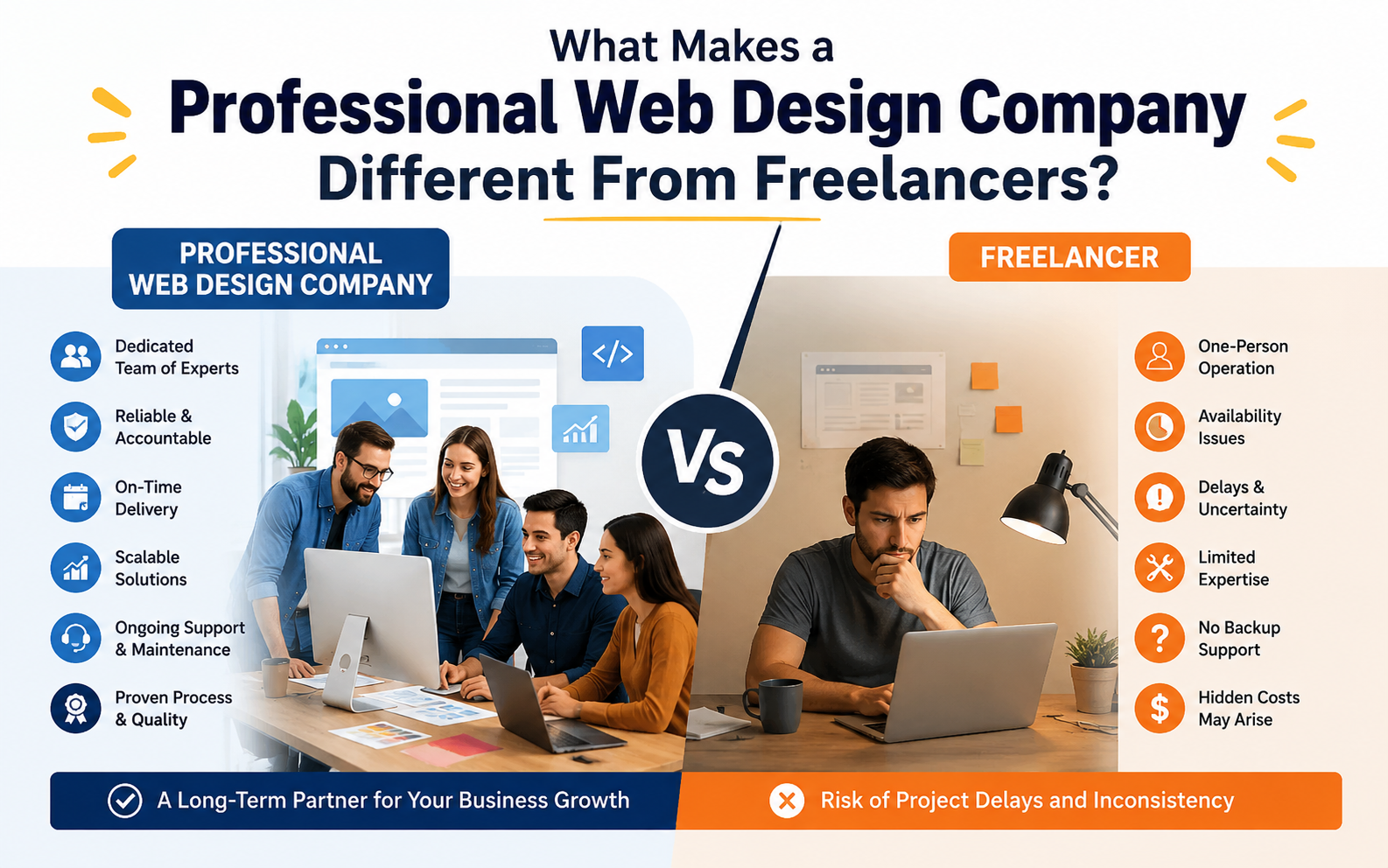
Many small businesses initially choose freelancers because of lower costs and direct communication. In some situations, that decision makes perfect sense. But as businesses grow, they often discover that website design involves much more than creating attractive pages. Strategy, user experience, technical performance, security, scalability, and ongoing support all play important roles in a website’s success.
Understanding these differences can help business owners make a more informed decision before investing their time and money.
The Difference Starts With Team Structure
One of the biggest distinctions between freelancers and professional agencies is the team behind the project.
A freelancer typically works independently. While many freelancers possess strong design or development skills, they can only handle a limited number of tasks simultaneously. They may be responsible for design, coding, content formatting, revisions, testing, and client communication all at once.
A professional web design company operates differently. Projects are often handled by specialists who focus on specific areas, such as:
- UI/UX design
- Front-end development
- Back-end development
- Content strategy
- SEO implementation
- Quality assurance testing
- Project management
This specialized approach allows each aspect of the website to receive focused attention rather than relying on a single individual to manage everything.
Strategic Planning Goes Beyond Design
Many people assume website projects are mainly about visuals. In reality, successful websites begin with planning and strategy.
Professional agencies typically spend time understanding:
- Business objectives
- Target audiences
- Customer behavior
- Conversion goals
- Competitor positioning
- Content requirements
This discovery phase helps ensure that the website supports broader business goals rather than simply looking attractive.
Freelancers may also conduct planning sessions, but project budgets and time constraints often limit the depth of research that can be performed.
Consistency Across Larger Projects
As websites become larger, maintaining consistency becomes increasingly important.
A business website may contain dozens or even hundreds of pages. Consistent navigation, branding, layouts, typography, and user experience help visitors move through the site confidently.
Professional teams often create design systems and style guidelines before development begins. These frameworks ensure that every page follows the same standards.
Freelancers can certainly build consistent websites, but maintaining that consistency becomes more challenging as project scope increases.
Better Project Management and Communication
Website projects involve many moving parts.
Content needs to be written. Designs require approval. Development milestones must be completed. Testing must be performed before launch.
Professional agencies usually assign project managers who coordinate these activities and keep stakeholders informed throughout the process.
This structured workflow offers several advantages:
- Clear timelines
- Organized communication
- Defined responsibilities
- Reduced project delays
- Better documentation
With freelancers, communication is often direct and personal, which can be beneficial. However, project management responsibilities may fall entirely on the freelancer, making scheduling more difficult during busy periods.
Stronger Focus on User Experience
Modern websites are no longer digital brochures.
Visitors expect intuitive navigation, fast-loading pages, clear calls to action, and seamless mobile experiences. User experience directly affects engagement, conversions, and customer satisfaction.
Professional agencies often include UX specialists who study how visitors interact with websites. They use this information to improve:
- Navigation structures
- Information architecture
- User journeys
- Mobile usability
- Conversion pathways
These elements influence how effectively a website serves both users and business objectives.
Technical Expertise Across Multiple Areas
Website development has become increasingly complex.
Today’s websites may require integrations with:
- Customer relationship management systems
- Marketing platforms
- Analytics tools
- Booking systems
- Payment gateways
- E-commerce platforms
Professional agencies often have specialists experienced in different technologies and platforms. This allows them to handle complex requirements more efficiently.
Freelancers may possess excellent technical skills, but expertise is naturally limited to their individual experience and specialization.
Scalability for Future Growth
Many businesses build websites based on their current needs without considering future growth.
A website that works well today may need additional features later, such as:
- New service pages
- Customer portals
- E-commerce functionality
- Multi-location support
- Advanced integrations
Professional agencies often design websites with scalability in mind. This forward-thinking approach can reduce future redevelopment costs and make expansion easier.
Freelancers can also build scalable websites, but long-term planning may depend heavily on the project’s budget and initial scope.
Quality Assurance Is Often More Thorough
Website issues are not always obvious during development.
Problems can appear in:
- Different browsers
- Mobile devices
- Form submissions
- Page loading performance
- Security settings
- Third-party integrations
Professional agencies usually follow structured testing procedures before launch. Dedicated quality assurance processes help identify issues that could negatively impact users after deployment.
This additional layer of testing often contributes to a smoother launch experience.
Ongoing Support and Maintenance
A website is rarely finished once it goes live.
Regular updates, security patches, performance monitoring, backups, and content changes are all part of maintaining a healthy website.
Professional agencies often provide ongoing support plans that include:
- Technical assistance
- Performance monitoring
- Security maintenance
- Website updates
- Troubleshooting
Freelancers may also offer maintenance services, but availability can vary depending on workload, schedules, and long-term commitments.
For businesses that rely heavily on their websites, dependable support can be a significant advantage.
Risk Management and Reliability
Business websites often represent an important source of leads, sales, and customer interactions.
Working with a professional agency can reduce certain risks because agencies typically have:
- Established workflows
- Backup personnel
- Documented processes
- Multiple technical resources
- Long-term operational structures
If a freelancer becomes unavailable due to personal circumstances or workload challenges, projects can experience delays.
Agencies are generally better positioned to maintain continuity because multiple team members can contribute when necessary.
When a Freelancer May Be the Better Choice
Despite these advantages, freelancers remain an excellent option for many projects.
A freelancer may be the right choice when:
- The project is relatively small
- Budget is limited
- Requirements are straightforward
- Fast turnaround is needed
- Ongoing support is minimal
Many highly skilled freelancers deliver exceptional work and build strong relationships with their clients.
The decision should not be based on which option is universally better, but rather which option aligns best with the project’s goals and complexity.
Final Thoughts
Both freelancers and professional web design agencies play valuable roles in the digital landscape. Freelancers often provide flexibility, affordability, and direct collaboration. Professional web design companies typically offer broader expertise, structured processes, scalability, and dedicated support.
For businesses seeking a simple website, a freelancer may be more than sufficient. For organizations planning long-term growth, complex functionality, and ongoing digital initiatives, the resources and specialized knowledge offered by an agency can provide significant advantages.
The right choice ultimately depends on business objectives, project requirements, budget, and future expectations. Understanding the strengths of each option allows decision-makers to invest with greater confidence and avoid costly surprises later.
 seobacklinkservice
  ponec86
  fajere jaafar