
Many people around the world have seen a man wearing a long robe and wondered what it is called and why he wears it. This robe is known as an Islamic thobe, and it is a well known piece of male arab clothing worn across many countries. It is simple in shape, yet it carries a deep meaning tied to faith, comfort, and culture. In this article, we will explain what an Islamic thobe is, where it came from, and why so many Muslim men choose to wear it today. We will also look at how it differs across regions, and when men tend to wear it most.
This simple robe carries far more meaning than its plain shape might suggest at first glance. It touches on daily comfort, deep faith, and long standing family tradition, all at the same time. By the end of this article, readers will have a clear picture of why this robe has stayed a steady choice for millions of men across many generations.
What Is an Islamic Thobe?
An Islamic thobe is a long, loose robe that reaches from the neck down to the ankles. It often has long sleeves and a simple, clean shape with no tight fit around the body. Most thobes are made from cotton, linen, or wool, depending on the weather where the wearer lives. The robe can be worn alone, or paired with a head cover, a scarf, or a light jacket for a fuller look. While styles can change slightly from one country to another, the core shape stays the same: a long, flowing robe that covers the body from the shoulders to the feet. This makes it a central piece of male arab clothing in many parts of the world.
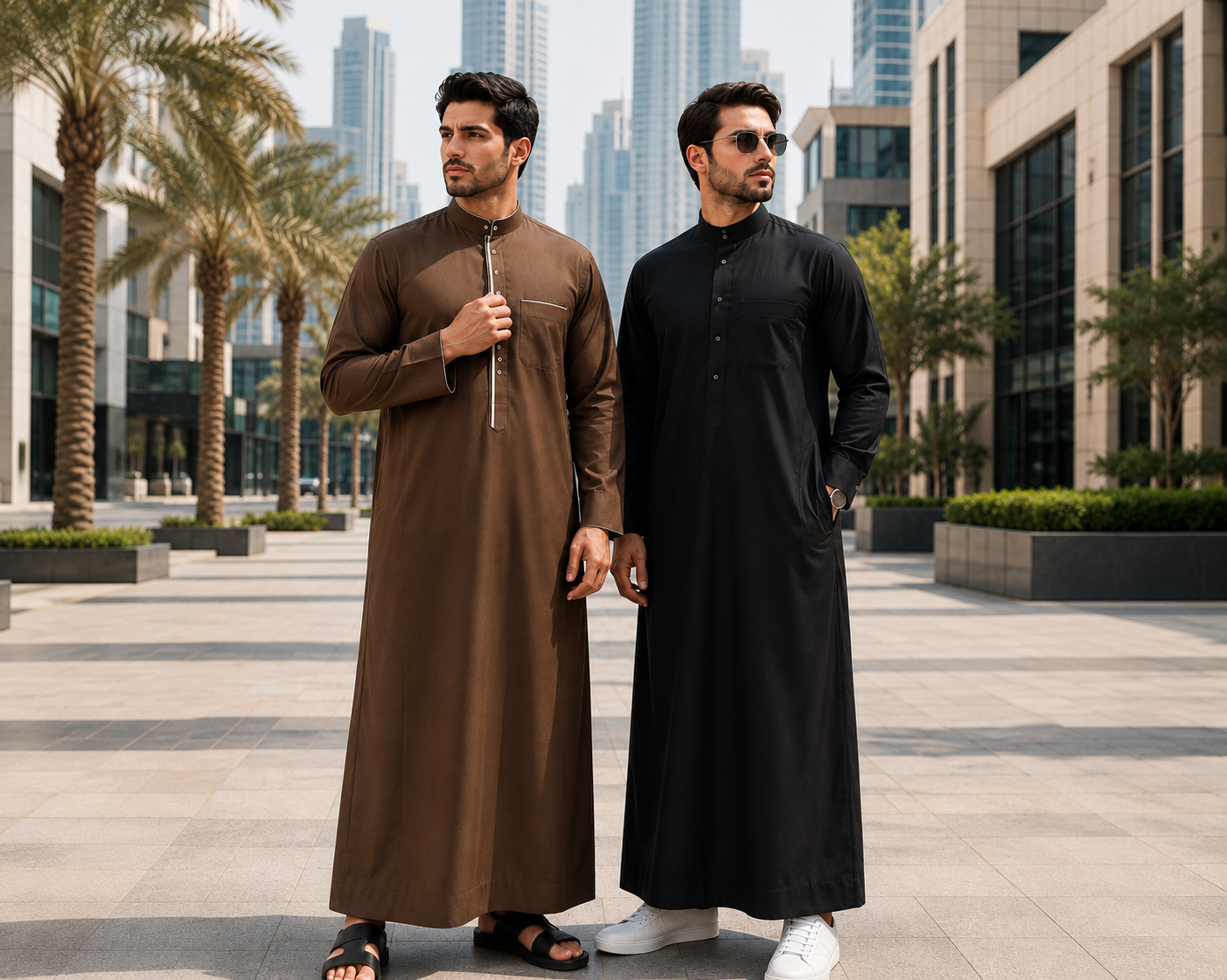
The name of this garment can shift slightly by region, even though the shape stays close to the same. In some places it is called a thobe, while in others it may be known as a dishdasha or a kandura. No matter the name, the goal of the garment stays the same: to offer a clean, modest, and cool option for daily wear. Many young boys grow up watching their fathers and grandfathers wear this robe, which helps the style stay strong across each new generation.
The History Behind the Islamic Thobe
To understand why the thobe holds such deep meaning, it helps to look back at where it began and how it grew over time.
Early Roots in Arab Lands
The thobe has roots that go back many years, long before it became linked with religion alone. In the hot desert lands of the Arabian Peninsula, people needed clothing that kept them cool under the sun while still covering the skin from heat and sand. A long, loose robe worked well for this task, since it let air move freely around the body. Over time, this simple robe became a normal part of daily dress across the region, worn by farmers, traders, and leaders alike, long before it took on the religious meaning it holds for many today.
Cloth choices in this early period also shaped the design in small ways. Cotton was often used near the coast, where it was easy to trade and grow, while wool was more common in cooler, higher areas. Over the years, small design changes, such as looser sleeves or a slightly shorter hem, appeared based on local weather and daily tasks like farming or herding. These small shifts laid the groundwork for the many regional styles seen today.
How the Style Spread
As trade routes grew and people moved across regions, the thobe style spread beyond its early home. Traders, travelers, and religious scholars carried the style with them to new lands, where local cloth and local taste shaped small changes in cut and color. Over centuries, the thobe became linked closely with Islamic tradition, since it was worn by many early Muslim communities and later tied to modest values found in the faith. Today, it stands as one of the most known forms of male arab clothing, worn from the Gulf states to parts of Asia and Africa.
This spread was helped along by centers of trade and learning, where scholars, merchants, and pilgrims often gathered. As these travelers moved between cities and countries, they carried their clothing habits with them, which slowly blended with local dress in each new place. This is part of why a thobe worn in one country may look slightly different from a thobe worn in another, even though both share the same deep roots and the same core purpose.
Why Muslim Men Wear the Thobe
There are several strong reasons why the Islamic thobe remains a popular choice among Muslim men today, from comfort to deep cultural meaning.
Comfort and Ease of Movement
One of the simplest reasons men wear a thobe is comfort. The loose cut allows air to flow around the body, which helps keep the wearer cool in warm weather. It also gives room to sit, bend, kneel, and move without any tight or stiff feeling. This is especially helpful during prayer, when a man must bow and kneel several times in a short span. A thobe allows this movement with ease, unlike some tighter forms of Western dress that can feel stiff during these positions.
The loose fit also helps in daily life beyond prayer. Walking, sitting on the floor, riding in a car, or working through a long day all feel easier in a robe that does not pull or press against the body. Since the fabric hangs freely from the shoulders, there is less strain on the waist and legs compared to fitted trousers. This simple comfort is one reason the thobe has stayed popular across so many years and so many daily routines.
A Sign of Modesty
Modesty holds a central place in Islamic teaching, and clothing plays a role in showing this value. The loose, flowing shape of the thobe covers the body without clinging to its form, which lines up with the idea of dressing modestly. Because the robe hides the shape of the body, it also removes focus from physical form and places it on character and behavior instead. For many Muslim men, wearing a thobe is a quiet way to reflect this value each day, without needing to say a single word about it.
Modesty in dress goes past just hiding the shape of the body; it is also about presenting oneself with calm and order. A clean, well kept thobe shows care and respect, both for oneself and for others around. Because the robe covers the arms and legs fully, it also removes worry about how much skin is shown in public or religious spaces. This gives many men a sense of ease, since they do not need to think twice about their outfit before stepping out for the day.
A Link to Faith and Culture
For many men, wearing an Islamic thobe is also a way to feel close to their faith and their roots. It can bring a sense of pride, since it connects the wearer to a long line of tradition passed down through family and community. Wearing a thobe to the mosque, to a family event, or even during daily errands can serve as a small, steady reminder of one’s beliefs and background. This is part of why the thobe remains popular even today, in a world filled with many other clothing choices.
Family also plays a big role in keeping this tradition alive. A young boy may receive his first thobe as a gift during Eid, marking a small step toward growing up within his culture. As he grows older, he may pass this same custom on to his own sons, keeping the tradition moving from one generation to the next. In this way, the thobe becomes something deeper than plain clothing; it becomes a small thread that ties a family’s story together across time.
Islamic Thobe vs Other Male Arab Clothing
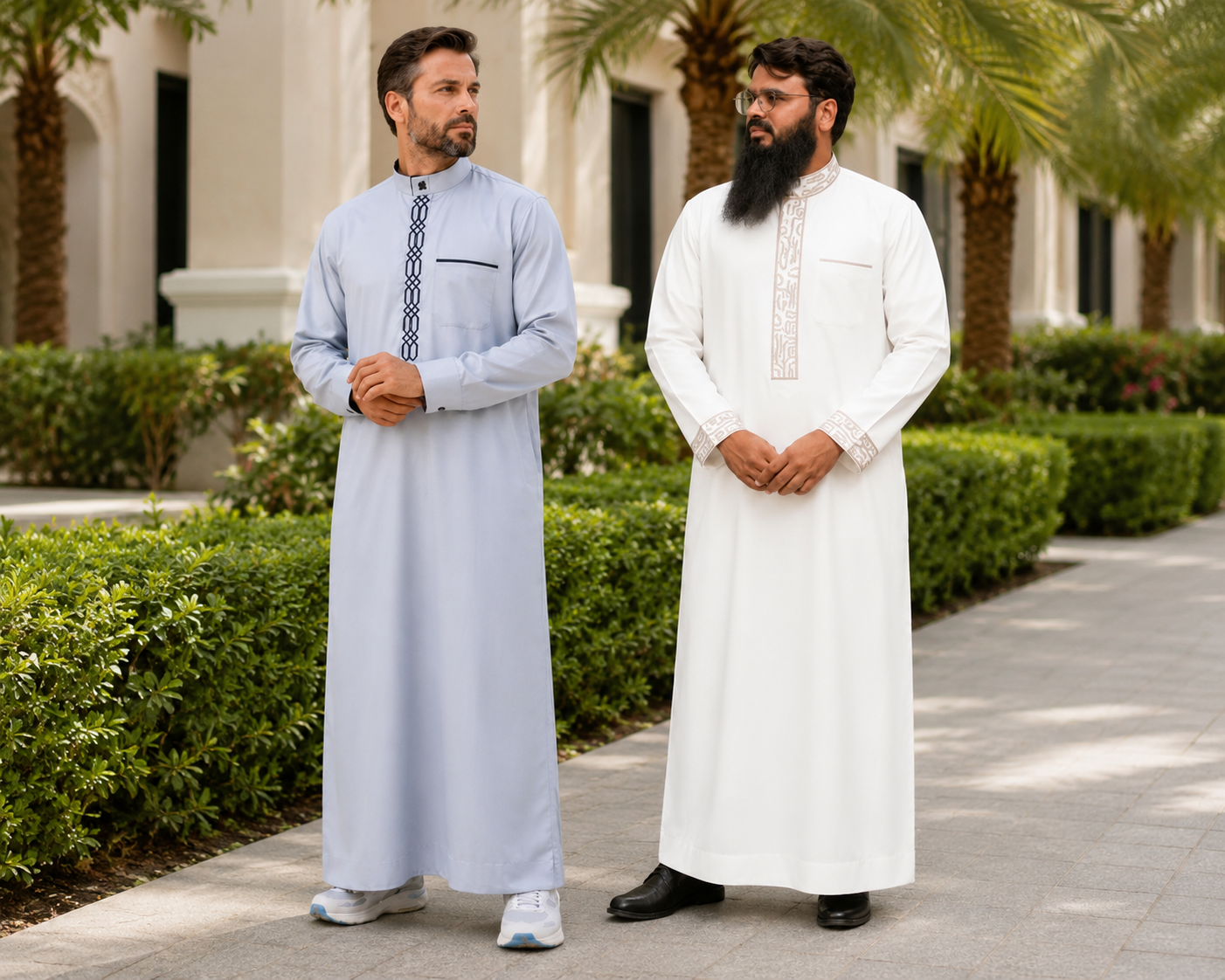
While the thobe is one of the most known pieces of male arab clothing, it is not the only one. Some regions favor a dishdasha, which is close in shape to the thobe but may use a different name depending on the country. Other regions wear a kandura, which often skips the collar and adds a small tassel near the neck instead. A bisht, a light open cloak, is sometimes worn over the thobe for formal events, such as weddings or religious holidays. Understanding these small differences helps explain why male arab clothing can look slightly different from one country to the next, even though the core idea of a long, loose robe stays the same across most of them.
Different Styles Across Regions
The cut and detail of an Islamic thobe often shift based on where it is worn. In Saudi Arabia, the thobe tends to have a stiff, standing collar and cuffed sleeves, giving it a sharp and formal look. In Oman and the UAE, the collarless kandura style is more common, often paired with a small tassel that hangs near the chest. In parts of South Asia, a similar robe is worn with local touches, such as different stitch patterns or slightly shorter sleeves. Color also shifts by region and season, with white being common in hot months and darker or heavier fabric worn during cooler weather. These small style shifts show how one simple robe can carry many local touches while still holding onto its shared roots.
When Do Men Wear an Islamic Thobe?
An Islamic thobe can be worn nearly any day, but it holds special meaning during certain times. Many men wear it daily for comfort and ease, especially in warm regions where loose clothing feels better than tight pants and shirts. It is also common at Friday prayers, since many men like to dress with extra care before heading to the mosque. During Eid, weddings, and other religious holidays, a nicer, often embroidered thobe is worn to mark the importance of the day. Some men also wear a thobe for simple daily errands, showing that the robe fits both quiet, everyday moments and larger, more formal events with equal ease.
Final Thoughts
The Islamic thobe is a rich part of history, not just a simple piece of cloth. It carries a long history, ties closely to Islamic values of modesty, and remains one of the most known forms of male arab clothing across the world. From its early roots in the desert heat to its role in modern weddings and daily prayer, the thobe has stayed close to its core purpose: comfort, modesty, and a quiet link to faith. Whether worn daily or saved for special events, the Islamic thobe continues to hold deep meaning for millions of Muslim men, showing that a simple robe can carry rich history within its folds.
What is the male Arab outfit called?
The traditional male Arab outfit is called a thobe, kandura, or dishdasha, depending on the country.
Can a white man wear a thobe?
Yes. Anyone can wear a thobe if it is worn respectfully and appropriately.
What is a hijab for men called?
There is no male hijab. Men commonly wear a ghutra, shemagh, or keffiyeh as a traditional head covering.
Can non-Muslims wear thobe?
Yes. Non-Muslims can wear a thobe because it is traditional clothing, not exclusive to Muslims.
Do you wear anything under a thobe?
Yes. Most men wear an undershirt and underwear under a thobe for comfort and modesty.
 Mark willsons
  Muhammad Awais
  alahadcleaningservices