
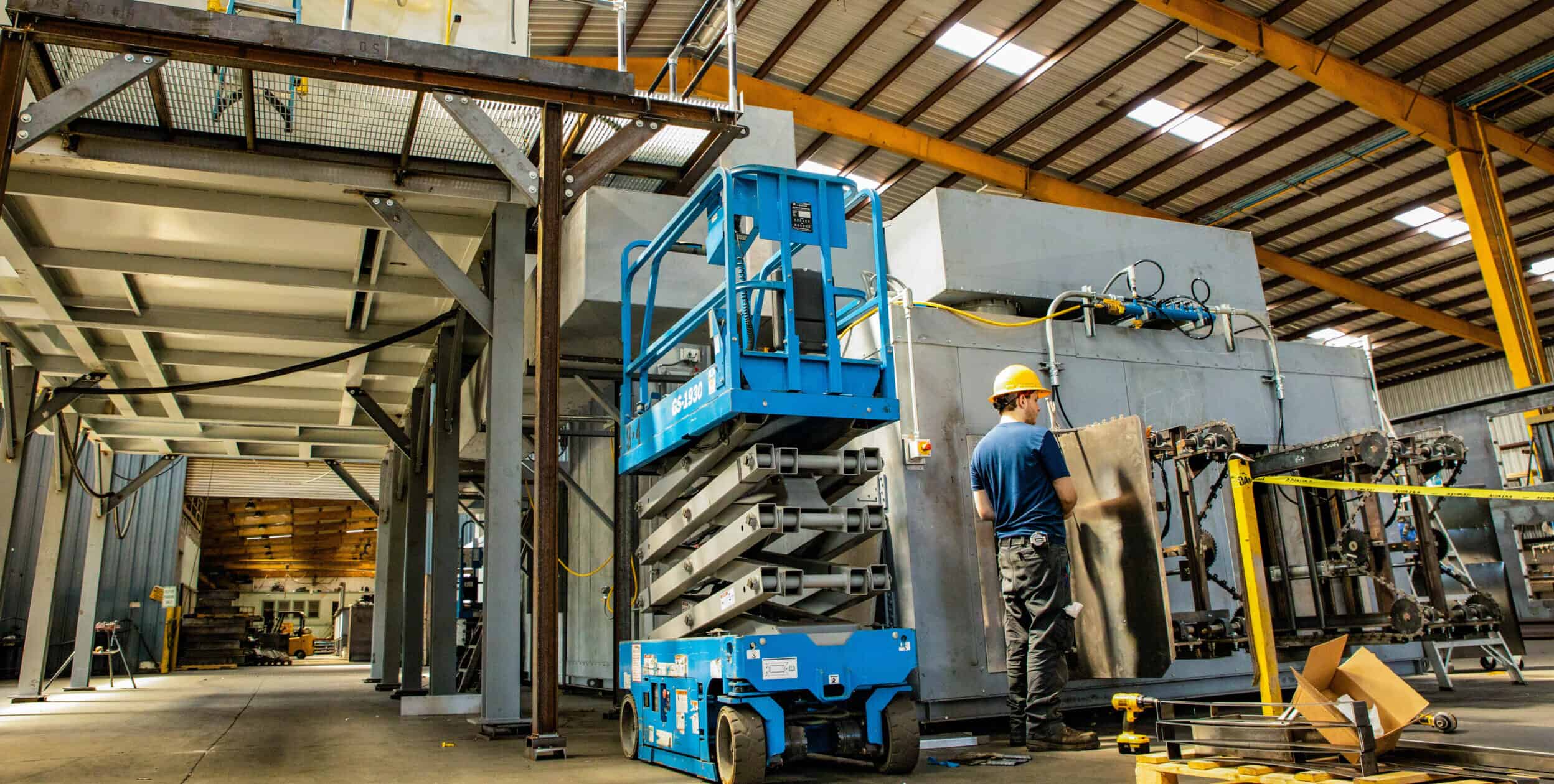
When we think of an industrial oven, it is easy to picture a giant metal box that simply gets hot. To the untrained eye, it’s just a scaled-up version of a kitchen appliance. However, in the world of high-stakes manufacturing, an industrial oven is far more than a heater; it is a sophisticated instrument of precision.
In modern production, “close enough” is no longer an acceptable metric for temperature. Whether you are curing the carbon fiber wing of a commercial jet or sterilizing medical instruments, a fluctuation of just a few degrees can be the difference between a high-performance product and a pile of expensive scrap. Achieving excellence in manufacturing today requires moving beyond the concept of basic heating and embracing the science of thermal accuracy.
The Invisible Foundation of Product Consistency
At the heart of every successful production line is consistency. If a manufacturer produces 10,000 automotive parts, the first unit off the line must be identical in structural integrity to the last. This is where the true value of a high-quality industrial oven becomes apparent.
Temperature uniformity is the “holy grail” of thermal processing. The majority of individuals think that when their oven shows 200 degrees Celsius as the temperature in use, that means all of the space in the oven is likewise at that same temperature. In actuality, many low-cost or not well-maintained types of ovens will develop “cold” or “hot” areas because of the design of the air-moving systems.
Why Uniformity Matters
Materials respond unpredictably to uneven heating. If a powder-coated part has a cold area, for example, it may not cure properly and may strip or rust prematurely. If a coated part has a hot area, it may have a discolored or brittle coating. By maintaining precise control over airflow and heat distribution, manufacturers ensure that every square inch of a product receives the exact thermal energy required for a perfect finish.
Industries Where Precision is Non-Negotiable
While almost every sector uses heat in some capacity, several industries rely on extreme temperature accuracy as a baseline for safety and functionality.
1. Aerospace and Defense
In aerospace, materials are pushed to their absolute physical limits. Composites used in fuselage construction must be cured under strict temperature ramps. If the heat rises too quickly, internal stresses can develop, leading to microscopic fractures that might fail under the pressure of high-altitude flight. Here, the industrial oven is a safety-critical component.
2. Pharmaceuticals and Biotech
The medical field uses industrial-grade ovens for everything from depyrogenation (removing pyrogens from glassware) to drying sensitive chemical compounds. If the temperature exceeds the set point by even a fraction, the molecular structure of a drug could be altered, rendering it ineffective or even dangerous.
3. Semiconductor Manufacturing
The electronics we use every day—smartphones, laptops, and car sensors—depend on delicate soldering and curing processes. As components get smaller, the margin for thermal error shrinks. Precision ovens provide the stable environment necessary to ensure that microscopic circuits are bonded without damaging the sensitive silicon chips.
The Efficiency Revolution: Heat Recovery Systems
For decades, industrial heating was a massive drain on resources. Traditional ovens would generate heat, use it once, and then vent the hot exhaust gases straight into the atmosphere. This was not only environmentally taxing but also incredibly expensive.
Today, the most advanced manufacturing plants are integrating heat recovery systems to turn that wasted energy into a resource.
The Logic of Waste Heat Recovery
The concept is simple but the engineering is profound. Waste heat recovery systems capture the thermal energy from the oven’s exhaust stream and “recycle” it back into the facility. This captured heat can be used to:
- Pre-heat the intake air for the oven itself, reducing the energy needed to reach operating temperature.
- Provide space heating for the warehouse or office areas.
- Heat water used in other parts of the manufacturing process.
By closing the loop on energy consumption, companies aren’t just being “green”—they are significantly lowering their operational overhead. In an era of rising energy costs, an oven equipped with an efficient recovery system becomes a competitive advantage.
The Role of Advanced Controls and Data
The “human” element of monitoring an oven is slowly being replaced by smart sensors and Proportional-Integral-Derivative (PID) controllers. These systems don’t just turn the heat on and off; they predict thermal lag and adjust energy input in real-time.
Data Logging for Quality Assurance
If you’re in an industry that is regulated, like food or medical devices, it isn’t enough to say that you’ve heated products correctly – you need to show that you’ve done so. Most modern industrial ovens are data hubs, recording every second of each heating cycle they process. If a customer or a regulatory body questions the integrity of a batch, the manufacturer can produce a digital “birth certificate” for that product, showing a perfect temperature graph from start to finish.
This level of transparency builds immense trust in the supply chain. It moves manufacturing away from guesswork and into the realm of verifiable science.
Maintenance: The Key to Longevity and Accuracy
Even if you spend a fortune on the best industrial oven offered, you will lose accuracy over time unless you have an established maintenance program in place. Door seals wear out, heating elements wear out, and sensors drift from their set points as time goes on.
The Cost of Neglect
A sensor that is off by just 3% might not seem like a disaster, but over a year of high-volume production, that 3% drift can lead to thousands of dollars in wasted energy and a measurable increase in product rejection rates. Regular calibration ensures that the “intended” temperature matches the “actual” temperature, preserving the integrity of the process.
Sustainability and the Future of Thermal Processing
As we look toward the future of manufacturing, the focus is shifting heavily toward decarbonization. This is putting the spotlight back on how we generate and manage heat. We are seeing a move away from gas-fired ovens toward high-efficiency electric models, particularly when paired with waste heat recovery systems.
The goal for the next generation of factories is “thermal circularity.” This is the idea that no calorie of heat should be wasted. By integrating the oven into the broader energy ecosystem of the building, manufacturers can reach a level of efficiency that was previously thought impossible.
Conclusion: Investing in the Future
Choosing an industrial oven is one of the most important capital investment decisions a manufacturer can make. It is an investment in the brand’s reputation for quality. While it might be tempting to focus solely on the initial purchase price, the long-term winners are those who look at the “total cost of ownership”—factoring in energy efficiency, the reliability of heat recovery systems, and the precision of the control software.
In the end, heat is easy to generate. But controlling that heat, distributing it with mathematical precision, and reclaiming it for future use—that is where the real “magic” of modern manufacturing happens. When you master the temperature, you master the product. And in a world that demands perfection, precision is the only way forward.
 justinanto942
  InstaaCoders Technologies
  lisawebb723