
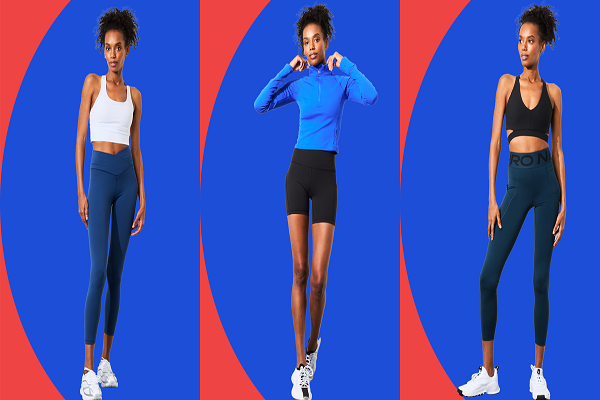
Women’s leggings are a core product for many activewear, fitness, gym wear, and private-label clothing brands. They are worn for training, yoga, running, casual use, travel, and everyday lifestyle wear. Therefore, producing a successful leggings collection requires more than selecting attractive colors or adding a logo.
A strong product needs the right balance of stretch, recovery, comfort, opacity, waistband support, seam placement, and sizing. If any of these areas are weak, customers may experience slipping waistbands, poor coverage, uncomfortable seams, or fabric that quickly loses shape.
For brands selling throughout the United States, bulk production can provide a practical way to increase inventory while keeping product specifications consistent. However, larger quantities also increase the importance of testing and quality control.
Before approving a bulk order, brands should review fabric performance, sample fit, size grading, colors, branding, and packaging. This step-by-step approach can help reduce avoidable production problems and create a more dependable activewear collection.
Key Takeaways
- Bulk leggings production requires consistent fabric, sizing, stitching, colors, and waistband construction.
- Stretch and recovery should be tested together because leggings need to move without quickly losing their shape.
- Sampling before larger production runs can help brands identify issues with fit, opacity, seams, and garment performance.
Why Bulk Leggings Production Requires Careful Planning
Ordering women leggings in bulk can help activewear brands develop larger inventory around an approved product specification. Instead of buying unrelated ready-made leggings, brands can plan fabric, waistband design, measurements, labels, colorways, logos, and packaging as part of one coordinated product.
Bulk production can also support consistent collections. For example, one approved legging pattern may be produced in several colors while keeping the same fit, waistband shape, logo placement, and construction.
However, a small product problem can become much more expensive when repeated across a large order. Therefore, brands should avoid increasing quantities until the design has been properly tested.
A clear sample approval process can reduce this risk.
Start With the Intended Use
Not every legging should be designed for the same activity.
The intended use affects fabric, support, compression, waistband construction, and garment weight.
Therefore, product development should begin by defining the customer and activity.
Gym Training Leggings
Gym leggings need to support movements such as squats, lunges, lifting, bending, and stretching.
Therefore, the material needs good flexibility and recovery.
The waistband should also stay secure during repeated movement.
Yoga Leggings
Yoga products often need soft and flexible fabrics.
Comfort is especially important because the wearer may remain in stretched positions for longer periods.
Therefore, seams and waistband construction should feel smooth against the body.
Running Leggings
Running leggings may need lightweight materials, secure waist construction, and moisture management.
The product should stay in position during repeated movement.
Lifestyle Leggings
Lifestyle leggings may focus more heavily on softness and appearance.
However, durability still matters because customers may wear the product frequently.
Fabric Selection Determines Product Quality
Fabric plays one of the largest roles in leggings performance.
It influences stretch, opacity, recovery, support, comfort, and durability.
Therefore, brands should evaluate fabric technically instead of selecting it only by appearance.
|
Fabric Feature |
Why It Matters |
|
Stretch |
Supports movement |
|
Recovery |
Helps maintain garment shape |
|
Opacity |
Provides coverage during bending and stretching |
|
GSM |
Influences thickness and support |
|
Breathability |
Helps release heat |
|
Moisture management |
Supports workout comfort |
|
Softness |
Improves feel against the skin |
A fabric sample can feel good in the hand but behave differently once stretched over the body.
Therefore, garment sampling remains important.
Stretch and Recovery Need Equal Attention
Stretch is essential in leggings.
However, recovery is equally important.
Recovery refers to how well the fabric returns to its original form after being stretched.
Poor recovery can lead to:
- Loose knees
- Sagging around the hips
- Stretched waistbands
- Reduced compression
- Poor long-term fit
Therefore, brands should test both stretch and recovery before approving a material.
Four-Way Stretch
Four-way stretch fabrics move in several directions.
This can make them suitable for workouts involving bending, twisting, squatting, and lunging.
For this reason, many performance leggings use four-way stretch materials.
Two-Way Stretch
Two-way stretch fabrics can work for some applications.
However, fabric orientation becomes more important.
The stretch direction should align with the areas of the garment that need movement.
Fabric Weight Affects Coverage and Support
Fabric weight is often measured in GSM, or grams per square meter.
Lower GSM fabrics tend to feel lighter. Meanwhile, higher GSM fabrics usually feel thicker and more structured.
However, neither option is automatically better.
The right choice depends on how the leggings will be used.
Lightweight Fabrics
Lightweight fabrics can feel breathable and comfortable.
They may suit warm weather or lighter activity.
However, very thin materials may create opacity problems.
Midweight Fabrics
Midweight materials often provide a useful balance between coverage, flexibility, and comfort.
Therefore, they can work well for general gym and fitness products.
Heavyweight Fabrics
Heavier materials can provide more compression and coverage.
However, they may also feel warmer.
Therefore, product testing should consider both performance and comfort.
Opacity Should Be Tested During Movement
Opacity is one of the most important quality points in leggings.
A fabric may appear completely opaque while lying flat but become transparent when stretched.
Therefore, opacity testing should involve actual movement.
Useful tests include:
- Squats
- Lunges
- Bending
- Stretching
- Sitting
The rear, thigh, knee, and seam areas should receive particular attention.
If a fabric becomes too transparent during movement, a different material or higher weight may be required.
Waistband Construction Influences Comfort
The waistband affects support, stability, and how the leggings feel during activity.
A poorly designed waistband may roll, slip, fold, or feel too tight.
Therefore, this area requires careful pattern development.
High-Rise Waistbands
High-rise designs offer more coverage through the waist.
They are common in both gym and lifestyle activewear.
However, they should remain flat during movement.
Mid-Rise Waistbands
Mid-rise leggings sit lower on the body.
They may suit customers who prefer less coverage.
Elastic Waistbands
Internal elastic can provide additional stability.
However, the elastic should not create excessive pressure.
Fabric-Only Waistbands
Some designs rely mainly on the stretch and recovery of the fabric.
In these products, fabric performance becomes especially important.
Seam Placement Can Affect the Customer Experience
Leggings sit close to the body.
Therefore, seam placement influences both comfort and appearance.
Poorly positioned seams may rub against the skin or create unnecessary pressure during training.
Flatlock Stitching
Flatlock seams can create a relatively smooth finish.
This can be useful in performance apparel where reducing seam bulk matters.
Overlock Construction
Overlock stitching is widely used in stretch garments.
However, the seam should remain flexible enough to move with the fabric.
Reinforced Areas
High-stress areas may need additional reinforcement.
However, too much reinforcement can reduce flexibility.
Therefore, strength and comfort need to remain balanced.
Fit Testing Should Include Real Exercise
A legging sample should not be approved only because it looks good during a standing fitting.
Instead, it should be tested through movement.
Brands should review how the garment performs during:
- Squats
- Lunges
- Walking
- Running
- Stretching
- Bending
- Sitting
For example, a waistband may look secure while standing but slide down during squats.
Likewise, a seam may become uncomfortable only after repeated movement.
Therefore, practical fit testing can provide more useful information than appearance alone.
Sizing Should Use Actual Measurements
Bulk production requires clear sizing standards.
Therefore, brands should define actual measurements rather than relying only on small, medium, and large labels.
Important legging measurements may include:
- Waist
- Hip
- Front rise
- Back rise
- Inseam
- Thigh
- Knee
- Leg opening
- Total length
These specifications provide manufacturers with clearer production guidance.
They also make repeat orders easier.
Size Grading Needs Proper Proportions
Once a base pattern has been approved, it needs to be graded into other sizes.
However, a larger size should not simply become wider.
The waistband, rise, hip, thigh, inseam, and leg opening may all need different adjustments.
Therefore, grading should maintain the intended fit and proportion across the full size range.
Brands should review more than one sample size when possible.
This can help identify grading problems before bulk manufacturing begins.
Sampling Helps Reduce Bulk Production Risk
Sampling is one of the most valuable stages in activewear production.
A physical sample gives brands the chance to review the garment before approving larger quantities.
The sample should be checked for:
- Fabric feel
- Stretch
- Recovery
- Opacity
- Waistband stability
- Seam comfort
- Length
- Fit
- Logo placement
- Color
- Overall appearance
If anything needs improvement, the manufacturer can make changes before bulk production.
This can reduce waste and improve consistency.
Colorways Should Be Tested Carefully
Many activewear brands offer one legging design in several colors.
However, different shades can behave differently.
Light colors may reveal more transparency.
Dark colors may provide stronger visual coverage.
Therefore, major colorways should be tested when possible.
Color consistency should also be monitored across production.
Customers expect multiple products in the same color to look similar.
Branding Must Work With Stretch Fabrics
Leggings often include logos or graphic elements.
However, branding methods should remain flexible because the base material stretches.
Heat Transfer
Heat transfer can work well for small logos.
However, the transfer should stretch without cracking or peeling.
Sublimation
Sublimation can work on compatible polyester fabrics.
It is suitable for detailed graphics, gradients, and all-over prints.
Screen Printing
Screen printing can work for selected designs.
However, flexible inks are important for stretch garments.
Embroidery
Embroidery may be less suitable for fitted leggings because it can add stiffness.
Therefore, it is usually more appropriate for heavier activewear items.
Bulk Orders Need Smart Quantity Planning
Brands should not automatically order the same number of pieces in every size.
Customer demand can vary significantly.
Therefore, existing brands should review past sales information when planning size ratios.
A size breakdown might show stronger demand for medium and large sizes, while another brand may have a completely different customer profile.
New brands can begin with smaller orders and collect real sales data.
This can improve future inventory planning.
Building Matching Activewear Sets
Leggings often perform well when sold as part of coordinated sets.
Brands can pair them with:
- Sports bras
- Crop tops
- Training shirts
- Cycling shorts
- Jackets
- Hoodies
Matching colors and design elements can make the collection feel more complete.
However, each garment should still be developed according to its own technical requirements.
For example, the same fabric may work for both leggings and a sports bra, but the sports bra may need additional support construction.
Working With a Custom Activewear Manufacturer
A custom activewear manufacturer can help brands develop leggings alongside other fitness products while maintaining consistency in colors, labels, garment measurements, and branding.
This can simplify collection development by allowing the brand to plan several related products within the same manufacturing system.
For example, leggings, sports bras, gym shorts, and training tops can share selected fabrics or colorways where technically appropriate.
However, each garment should still be tested separately.
A single material or pattern solution should not be forced across every product.
Private-Label Details Strengthen Brand Identity
Bulk production also gives brands the opportunity to develop a complete private-label presentation.
Main Labels
Custom labels can display the brand name and identity.
Size Labels
Clear sizing helps organize stock and improve customer experience.
Care Labels
Care labels can explain washing instructions and fabric composition.
Hangtags
Hangtags can communicate product details, branding, or pricing.
Packaging
Custom packaging can improve presentation for retail and online sales.
These details can help transform a basic garment into a more complete branded product.
Quality Control Becomes More Important at Scale
Larger orders require structured quality control.
A small production issue can affect many units if it is not identified early.
Therefore, checks should happen throughout the manufacturing process.
Fabric Inspection
Fabric should be checked before cutting for visible defects and color variation.
Cutting Accuracy
Pattern pieces should match approved measurements.
Stitching Checks
Seams should remain secure and flexible.
Measurement Checks
Finished garments should stay within agreed tolerances.
Branding Review
Logos, labels, and printed graphics should appear in the correct positions.
Final Packing Inspection
Sizes, colors, and quantities should be confirmed before shipment.
This process can improve consistency across the order.
Low MOQ Production Can Support New Brands
New brands may not want to begin with very large quantities.
Therefore, lower minimum orders can provide a practical way to test the market.
A smaller first production run can help evaluate:
- Customer demand
- Popular sizes
- Color preferences
- Fit
- Fabric performance
- Pricing
Once the brand collects real customer feedback, larger bulk orders can be planned with more confidence.
This approach can reduce unnecessary inventory risk.
Keep Approved Product Specifications
Successful leggings may need to be reordered several times.
Therefore, brands should keep clear technical records.
Useful information may include:
- Fabric composition
- GSM
- Stretch specifications
- Approved measurements
- Size grading
- Color references
- Artwork
- Logo placement
- Label dimensions
- Packaging requirements
Maintaining these records can help future production remain closer to the approved original.
It can also reduce unnecessary redevelopment.
Long-Term Product Consistency Supports Brand Growth
Customers often return to products they already know and trust.
Therefore, repeat orders should remain as consistent as possible.
Unexpected changes in fabric feel, waist height, size, or color can reduce customer confidence.
For this reason, brands should compare future production runs against the original approved specifications.
A strong manufacturing system should support consistency while still allowing controlled product improvements.
Final Thoughts
Bulk leggings production requires careful attention to fabric, stretch, recovery, opacity, fit, sizing, waistband construction, seams, and branding.
Therefore, activewear brands should avoid moving directly into large quantities before the product has been properly tested.
The fabric should match the intended activity. The waistband should remain secure during movement, while the material should provide reliable coverage during squats and stretching.
Sampling can help identify problems before they are repeated across a bulk order. Meanwhile, accurate size grading and structured quality control can improve consistency as production grows.
By combining thoughtful product development with practical inventory planning, activewear brands can create women’s leggings that support customer expectations while building a stronger foundation for long-term growth.
 ferventvolhard2@justzeus.com
 whitefield Babes
 Dubai Best Curtains