
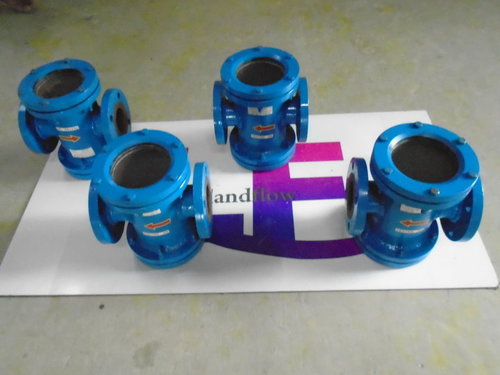
My lead engineer, a very experienced and knowledgeable person in fluid dynamics, didn’t even glance at the control panel. Instead, he went straight to a small dusty glass window on the line. After a brief look, he tapped the glass and said in a resigned voice: “There are air pockets. The pump is cavitating.”
The instruments showed that the plant was operating normally; however, what the Sight Flow Indicator India experts had explained to us through the indicators was that it was not the case at all. The pump would be damaged if it were to continue running in such conditions. That was the moment I realized that in a world overly focused on digital transformation and IoT, physical observation is sometimes the very best tech that we can market.
In truth, Indian industries, which produce a wide range of goods from pharma to agricultural inputs and machinery assembly, face different kinds of challenges. To name a few, ambient temperatures are often extremely high, and the raw materials’ qualities are in constant variation. The point is that you cannot run a closed-loop operation without being able to visually inspect the unit.
This handbook intends to serve as a bridge between visual check and control system. By reading it, you will get to know how even the most straightforward and bare essentials devices can be your operation’s eyes.
1. Beyond the glass: What is a Sight Flow Indicator, Really?
Sometimes, engineers tend to make things much more complicated than they really are. A sight flow indicator, at its most basic, is simply a window. However, unlike your typical window glass, it can withstand instances of high pressure, dangerously corrosive chemicals, and sudden temperature changes (thermal shocks) that would shatter normal glass in a matter of seconds.
In Indian industries, take pharmaceuticals in Hyderabad, textiles in Tirupur, and oil and gas in Jamnagar for example, these instruments are the first line of defense against failures that are not immediately visible. The main aspects you want to check are:
- Flow/Direction: Is it going in the right way?
- Color/Clarity: Has the product been contaminated? Has the oil darkened and thus it’s time for a change? +1
- Phase: Are there bubbles in your liquid? Is there liquid in your steam line?
Look, a digital meter can show you the rate of flow, but it rarely reveals the type of flow. This difference is where your profit margin lies.
From my experience, a mere second’s delay in detecting a blocked strainer or a leaking seal can cost you a six-week shutdown; just imagine how that delay can escalate the impact. Industries like the cable sector have already learned a bitter lesson that “cheap” is always the most expensive mistake you can make.
Source: Sight Flow Indicator India If your only criterion for choosing a product is the lowest price and you neglect to check the grade of the glass or the material of the gasket, then you are not saving money; rather, you are just postponing a disaster.
2. Choosing your ‘eyes’: the different types and their applications
You cannot simply fix a piece of glass on a pipe and call it a day. With such a variety of options available in the Indian market, it is easy to get overly confused. Moreover, if you pick the wrong one, it would be similar to wearing someone’s wrong prescription glasses, everything is still going to be blurry.
Full View vs. Window Style
- Full View Indicators: These are characterised by a glass tube held between two flanges. The user is given a 360-degree view of the process. He/she, therefore, would be able to see through the liquid at all times. Ideally, low pressure settings are more suitable for full view indicators. For instance, such type of flow indicators works well with indeed gravity-fed lines in food processing industry. The downside of full view indicators is that they are not very strong.
- Double-Window Style: The glass here is protected by a sturdy metal body. This is the “tank” of the indicator world. When it comes to safety, you cannot compromise for high-pressure steam or chemical lines.
The Internals Making What Was Hidden Now Seen
When a fluid flows slowly – say, like pure water – it can be hard to see any motion at all. This makes tools that reveal movement useful
- A tiny wheel turns when luck comes your way. Spinning means success, nothing more. Easy to see, hard to miss.
- A swing inside kicks open when liquid rushes through. Works well where pipes run flat or climb skyward.
- A single drop at a time – that’s how it works, useful when watching each drip matters during batch runs or distilling. The tube makes the slow fall visible, step by step, instead of rushing ahead unseen.
3. The Indian Context: Sourcing for Durability and Compliance
Well, sourcing in India… is something of a long and meandering story.
On the one hand, you have world-class manufacturers who export to the EU and US, and, on the other hand, you have the “back-alley” fabricators who use “questionable” materials.
The Certification Filter
Folks often skip checks until something fails – so why grab a flow indicator if its materials lack proof? Much like picking wires missing that ISI stamp, choosing gear without real MTRs invites risk.
- Borosilicate Glass: Often called Pyrex, it stands out because of how well it handles sudden temperature shifts. When icy liquid hits a heated tube, most glasses would crack – this one holds up. Its strength shows right where others fail, thanks to being built differently on a molecular level.
- Sticking with ASME B16.34 for body castings makes sense, even without export plans – since it keeps wall thickness honest. Though selling overseas isn’t the goal, following these rules still grounds expectations in real specs. Because shortcuts can hide behind vague claims, using this standard removes guesswork. While some might skip it locally, doing so risks trusting numbers that may not match reality. When dimensions matter, relying on verified benchmarks quietly prevents future issues.
We often tend to underestimate how much of a trick the “unorganized” sector is playing on us.
A body casting that is 2mm thinner than the specification may appear perfectly fine on the shelf, whereas, under a 10-bar pressure spike, it becomes a ticking time bomb.
4. Efficiency is directly impacted by visibility
1. Speed to Market and Decision Making
Outperforming your competitor is no doubt the main point of doing business. Speed is therefore your secret weapon. A supervisor is able to visually verify that the cleaning cycle is done just by looking at the line, and thus does not have to wait for the laboratory results. The time saved in just one instance is multiplied by many. According to research from Orgvue, it is increasingly shown that better decision-making can yield profit growth of 16%.
2. Predictive Maintenance (The “Human IoT”)
Operators, when provided with the correct instruments, can be the most reliable monitoring system. By monitoring flow patterns alterations or the sight flow indicator’s Sight Flow Indicator India area getting dirty, operators can detect problems long before the alarm goes off for high pressure issues. It is the transition from the “fix it when it breaks” mentality to the “fix it because it looks odd” mentality that is being talked about here.
3. Avoiding Waste
The industries that use edible oils, paint and others, cross-contamination is a major problem. Before carrying a product change at a sight glass, one can see the point where two different products are in contact with one another. The moment the color changes, the flow is stopped. No more guessing. No more wasting “good” product in the slop tank.
5. The Role of Technology: Is Digital Replacing Visual?
Sometimes people ask me the following question: “If I have installed a digital flow transmitter which is sending a 4-20mA output to my SCADA, then why do I still need to have a physical indicator in place?”
That is quite understandable. Technology surely has simplified things when it comes to both speed and precision, and judging by Professor Karim Lakhani from Harvard Business School, one needs to totally rethink decision-making processes if we are to expect new technologies (like AI or advanced sensors) to deliver their full potential.
Besides, digital sensors can malfunction, drift and be calibrated wrongly. A sight flow indicator is a definite truth. You don’t have to supply it with power, nor does it require software updates. It never “hallucinates” data. Besides, the most efficient modern plants actually combine two approaches digital sensors for data logging, and physical indicators for manual verification.
Pro Tip: Make use of your sight flow indicators to “ground truth” your predictive maintenance model based on AI. If the AI detects that there is a blockage while the glass shows clear flow, it means that your sensor is faulty and not the process.
6. Installation and Maintenance: Avoiding the “Set and Forget” Trap
A sight flow indicator only serves a purpose when we see through it. It’s common sense but for some reason, if you happen to visit a more mature plant in either GIDC or MIDC, you will notice that there are “blind” sight glasses which are either painted over, covered in dirt, or have internal scaling.
Installation Best Practices
- Orientation Matters: Indicators aren’t always universally compatible with different alignments. For instance, a flapper style needs to be in a vertical orientation to keep working correctly after the flow stops. Its malfunctioning would be assured if it is fixed upside down.
- Stress-Free: Be sure that the pipes are perfectly aligned. A mechanical stress will be applied to the glass if you try to use the indicator body for pulling two misaligned pipes together. Glass hates stress.
- Illumination: In case it is dark, you should look for an indicator having built-in LED or ‘reflex’ lens which is capable of reflecting some ambient light and thus making the level of the fluid really stand out.
The Maintenance Checklist
Do not wait for the leak to happen so that you take the actions to PROMPT
- Look out for the signs of “Frosting”: The glass has been attacked chemically if it shows if the inside is cloudy or etched. It is, therefore, very thin. Replace it right away.
- Gasket Integrity: Indian heat makes gaskets brittle. Today it might be a slight weep, but tomorrow is a blowout.
- Bolting Torque: While tightening, don’t go too hard on the bolts as you might crush the glass. Instead, use a torque wrench and follow both the numerical and directional sequence of tightening as advised equally by the manufacturer.
- Navigating the Price vs. Quality Paradox
Truth sits heavy sometimes. One company selling sight flow indicators in India carries every kind priced thing imaginable. Their version could cost thirty percent less than what big names charge, maybe more. Price gaps like that tend to show up when corners get cut somewhere behind the scenes.
Where did those thirty percent disappear? That is the question.
- Was it the glass? (For instance, swapping from Borosilicate to cheap soda-lime).
- Was it the seals? (Using cheap Nitrile instead of high-grade Viton)
- Was it the testing? (Forgetting to conduct hydrostatic pressure test)
We have learned the hard way that the ‘value’ choice leads to $I^2R$ losses or in this particular case, to catastrophic leaks. It should raise a red flag when a quote is suspiciously lower than what top-tier Indian brands like Forbes Marshall are charging. The prices of raw materials (stainless steel, specialized glass) are on the global market, and accordingly, no one has a “magic” way to drop them by 40% without intentionally cutting a corner.
8. Emerging Trends: The Future of Process Visibility
India’s industrial sector is now at a crossroads. With the “Make in India” initiative gaining momentum and the renewables target set at 500 GW by 2030, a level of focuses is being placed on new processes and complexity.
- Solar Thermal & Green Hydrogen: Special indicators are required for such facilities that can withstand extreme temperature conditions and the very small, extremely leaky molecules of hydrogen.
- High-Purity Pharma: The demand for “hygienic” sight glasses has skyrocketed, no nook or cranny where microbes can hide and glass that is capable of withstanding SIP (Steam-In-Place) sterilization.
- Smart Indicators: There are some producers who are currently experimenting with “smart” glass that will turn opaque or send a signal if it detects a crack. It’s the early stages, but the potential for safety is enormous.
9. Conclusion: Trust Your Eyes, But Verify Your Sourcing
Ultimately, whichever Sight Flow Indicator India provider you choose, it should stand as proof of the idea that “simple is better.”
In today’s world of complex algorithms and remote monitoring, there is still nothing that can replace someone looking at a process and instantly recognizing its goodness.
However, the reliability of this visual verification theme is in direct proportion to how well the devices you install meet the standards.
Be strict to the letter with verifiable standards. Request the material certificates. Double check the glass grade. Do not allow your marginal price difference to lure you into compromising the safety of your plant and your people.
Choose a business partner instead of a supplier. Go for a manufacturer that invests in their R&D and testing laboratories because their investment is what it will protect your project’s future.
Therefore, next time you are on a plant walk and notice a sight glass, do not just ignore it and move on.
Have a look inside. What do you think your process is trying to say to you? Chances are, the success of your whole business might be depending on what is going through that tiny circle of glass.
Now go and provide your operations with the clarity they really deserve.
 vetoy695
  saurabhdigidir@gmail.com
  BM Enterprises