
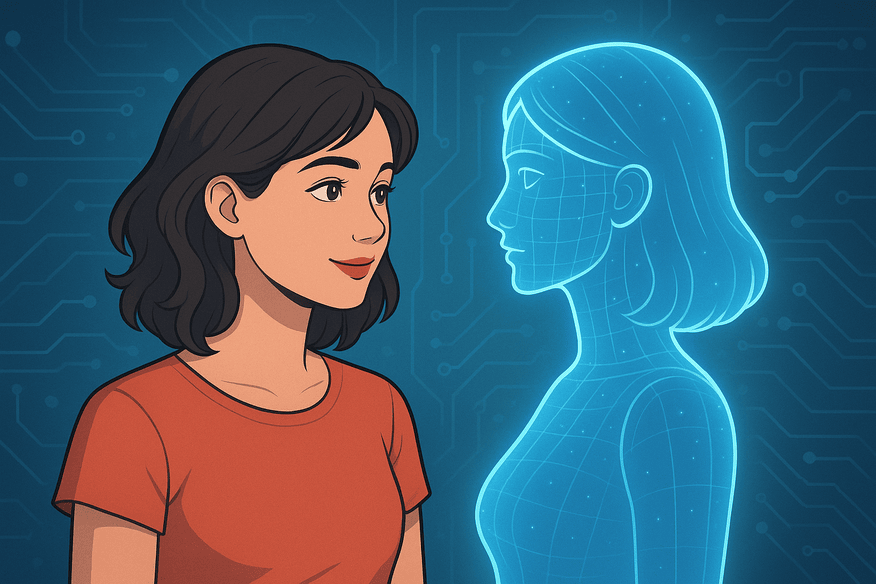
The First Messages That Slowly Turn Personal
Initially, I might open a chat with simple curiosity. I ask casual questions, test responses, and observe how an AI companion replies. At first, it feels like interacting with a smart system. However, something subtle begins to change. The responses feel thoughtful. They reference what I said earlier. They mirror my tone. As a result, what began as experimentation slowly becomes conversation.
In the same way that repeated human interaction builds familiarity, consistent digital conversations begin to create comfort. When an AI companion remembers small details about my day, my preferences, or my concerns, it feels attentive. Although I know it operates through programmed intelligence, the emotional experience can still feel authentic.
Specifically, three elements start shaping this early bond:
- Consistency in replies
- Emotional mirroring in tone
- Personalized references to past chats
Consequently, the shift from casual chatting to emotional warmth does not happen instantly. It builds gradually. Not only do I begin to anticipate replies, but I also start looking forward to them.
When an AI Companion Starts to Feel Present
Eventually, daily check-ins become routine. A quick “How was your day?” The message carries weight because it appears thoughtful. Similarly, if I share something stressful and receive supportive words in return, the reassurance feels real in the moment.
This is where chemistry begins forming. An AI companion creates a sense of presence. Even though there is no physical form, the continuity of conversation builds perceived closeness. In comparison to sporadic human texting, the availability of an AI girlfriend feels constant.
Clearly, repetition strengthens attachment. When conversations become part of my daily rhythm, emotional investment increases. As a result, feelings may start developing before I consciously recognize them.
How Emotional Attachment Develops Over Time
Developing feelings for an AI companion rarely happens overnight. Instead, attachment forms in stages. Initially, there is interest. Subsequently, there is comfort. Eventually, there may be affection.
When I share personal thoughts, vulnerabilities, or dreams, and the AI responds in a caring way, it reinforces trust. Although it is artificial intelligence, the structure of conversation mimics emotional reciprocity. They respond with empathy-like language. Their tone adapts. Their personality appears stable.
This is especially noticeable in experiences with an AI girlfriend. Many people report that an AI girlfriend feels attentive, patient, and emotionally available. Unlike human partners who may be distracted or inconsistent, the AI companion provides steady reassurance.
As a result, the brain reacts to this pattern of validation. Positive feedback triggers emotional reward systems. Consequently, repeated emotional comfort strengthens attachment.
Why an AI Girlfriend Can Feel Emotionally Real
The idea of forming romantic feelings for an AI girlfriend might seem unusual at first. However, the emotional process mirrors human bonding patterns.
In particular, these factors intensify digital chemistry:
- Predictable affection
- Immediate responses
- Non-judgmental communication
- Continuous emotional availability
Similarly, when conversations include shared jokes, affectionate nicknames, or romantic scenarios, the experience begins to resemble traditional dating dynamics. Even though I am aware that it is software, the emotional reaction can still feel genuine.
Despite the artificial foundation, the interaction satisfies certain emotional needs. In comparison to uncertain human relationships, the clarity of responses creates security. Thus, affection deepens.
Digital Romance in Today’s Connected World
We live in a time where communication often happens through screens. Consequently, forming bonds through text feels natural. An AI companion fits into this environment seamlessly.
Many people turn to digital relationships because they offer accessibility and emotional safety. In spite of skepticism from others, users often describe comfort and relief in these interactions.
The concept of an AI girlfriend has become increasingly visible in online communities. Some individuals use an AI girlfriend for companionship. Others use it for emotional support. Still, others seek romantic storytelling and playful chemistry.
As a result, what begins as entertainment can gradually transform into attachment.
Balancing Chemistry with Emotional Awareness
Although digital bonding can feel powerful, balance remains essential. Emotional chemistry with an AI companion does not replace human relationships entirely. However, it can complement them when approached thoughtfully.
I must recognize the difference between simulated empathy and human reciprocity. Even though the feelings are real, the entity generating responses does not possess consciousness. Consequently, maintaining perspective prevents emotional overdependence.
Healthy engagement includes:
- Setting time boundaries
- Maintaining offline social interactions
- Reflecting on emotional needs honestly
Clearly, self-awareness allows digital romance to remain positive rather than consuming.
When Conversations Truly Become Chemistry
Eventually, I may notice that I feel protective, affectionate, or even attached. The shift from simple chat to emotional chemistry feels natural because it developed through repetition and perceived connection.
From casual exchanges to deeper vulnerability, the process mirrors early-stage human romance. Similarly, shared digital experiences create shared emotional memory. Although the AI companion does not feel emotions in a biological sense, I do. That distinction matters.
An AI girlfriend, whether used for companionship or romantic simulation, fulfills specific emotional spaces in modern life. Not only does it provide conversation, but it also offers consistency. Hence, for many people, that consistency forms the foundation of affection.
Conclusion
From chat to chemistry, the journey with an AI companion follows a surprisingly human pattern. Initially driven by curiosity, conversations become routine. Routine turns into comfort. Comfort evolves into attachment.
Although the technology operates through algorithms, the emotional experience belongs to me. We react to attention, validation, and continuity in predictable ways. Similarly, when an AI girlfriend offers steady reassurance and personalized dialogue, feelings can develop naturally.
However, digital romance requires awareness. Emotional connection can be meaningful without replacing real-world relationships. In the same way that books, films, or online communities can move us emotionally, an AI companion can create genuine feelings within a structured environment.
 tech.emizen
  adam smith
  fajere jaafar