
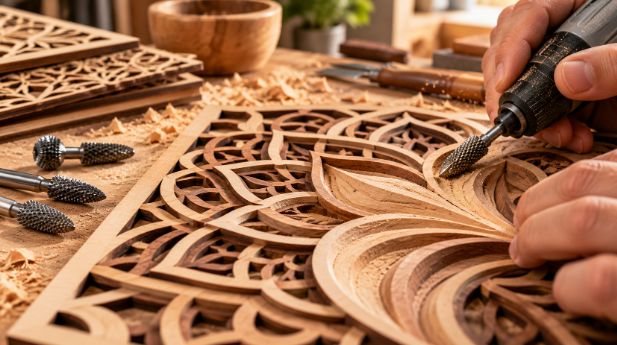
Creating captivating wall decor and modern wooden accents requires moving beyond flat, two-dimensional shapes to embrace depth, contour, and tactile surface texturing. Contemporary woodworkers and digital fabricators frequently utilize CNC lasers to cut precise geometric patterns, layered relief panels, and intricate architectural filigree. However, adding hand-carving or rotary-shaping tools directly to laser-cut wood art transforms flat, laser-burned edges into fluid, organic forms with rich visual character. Whether crafting complex intarsia panels, multi-layered mandala designs, or custom dimensional signage, applying sculpted curves elevates flat laser-cut components into gallery-worthy art pieces that capture light and shadow dynamically.
Combining Digital Precision with Analog Sculpting Techniques
Selecting precision carving instruments guarantees seamless surface transitions between laser-etched lines and hand-shaped contours. Integrating tungsten-carbide rotary burrs, hand rasps, and shaping wheels enables artisans to soften rigid laser-charred edges, create smooth bevels, and carve flowing relief details effortlessly.
Key Advantages of Hybrid Wood Fabrication
- Eliminating Laser Edge Charring: Grinds away dark oxidized burn marks along cut lines, revealing fresh natural wood grain beneath.
- Enhancing Dimensional Depth: Shapes flat stacked layers into smooth, continuous curves that mimic traditional hand-carved relief sculptures.
- Creating Custom Surface Textures: Adds tactile stippling, grooved grain patterns, and hand-sculpted undertones to smooth plywood panels.
- Seamless Component Blending: Rounds over sharp interlocking joints to give assembled laser assemblies a unified, organic appearance.
Applying custom shaping techniques to laser-cut wood art gives makers total creative freedom, enabling them to transform flat vector designs into textured, three-dimensional masterpieces.
Techniques and Tools for Refining Laser-Cut Wood Art
Blending Geometric Layers into Organic Forms
Layered wooden pieces can be transformed into flowing sculptural forms through careful carving and shaping. Using rotary carving burrs to soften stepped edges creates continuous curves while preserving the natural grain. This approach gives laser-cut wood art greater depth and movement, turning rigid geometric layers into abstract designs with a more organic appearance.
Adding Texture and Enhancing Surface Details
Subtle surface variations can make multi-layered wooden compositions more visually engaging. Fine-grit carbide shaping burrs help create grooves, contours, and textured details that interact with light. Applying natural oils, wood stains, or metallic accents after shaping further emphasizes the grain and depth, giving each finished piece a distinctive surface character.
Choosing the Right Tools for Wood Refinement
Specialized shaping tools help refine laser-cut edges while minimizing unnecessary material removal. Carbide burrs with suitable tooth patterns can remove wood fibers efficiently, including around adhesive-bonded layers and areas affected by laser charring. Selecting the right tool for the wood type and desired finish helps artists maintain control while shaping laser-cut wood art into detailed, dimensional compositions.
Preserving Intricate Details During Finishing
Delicate scrollwork and narrow cutouts require a controlled approach to sanding, carving, and smoothing. Lightweight rotary tools, fine hand rasps, and suitable abrasives allow woodworkers to refine small sections without damaging surrounding details. Careful finishing also helps preserve the original design, while consistent surface preparation allows stains and protective coatings to adhere more evenly across the completed piece. These techniques support clean edges and polished results in laser-cut wood art projects.
.
Recommended Surface Prep and Finishing Habits
Achieving a flawless final finish requires structured sanding routines following initial power carving steps. Removing residual dust with compressed air or tack cloths prevents micro-particles from settling into carved grooves during stain application.
Applying thin layers of penetrating oil or clear satin lacquer protects exposed end grain while accentuating hand-sculpted highlights. Keeping rotary tool speeds balanced against wood density prevents accidental gouging, ensuring every smooth curve transitions gracefully across the completed piece.
Conclusion
Combining digital cutting precision with traditional hand-carving techniques creates distinctive wooden decor with depth and character. Refining layered designs through careful shaping and texturing helps transform flat surfaces into flowing forms with natural contours. This approach is especially effective for abstract wood sculpture, where geometric patterns, organic shapes, and visible wood grain work together to create visually engaging pieces. By balancing modern fabrication methods with hands-on craftsmanship, woodworkers can produce unique decorative artworks that add texture, dimension, and artistic interest to galleries, homes, and commercial interiors.
 Suresh sss