
Sustainable gardening requires grow bags since they minimize waste, conserve water, and promote healthy plant development. Grow Bags are containers that consist of breathable material, allowing air and water circulation in the soil. According to the website, “Singhal Industries Private Limited is a well-known Grow Bags Manufacturer Gujarat, supplier, and exporter in India.” Grow Bags are suitable for growing vegetables, herbs, flowers, and fruits. Although the grow bag seems to be a simple object, it has an essential function regarding the healthy development of plants. The bag should be sturdy and able to contain soil and plants, endure transportation and weather conditions, and meet the gardener’s demands.
Advantages to Roots and Aeration
There are various advantages that the Grow Bags provide to the roots and aeration. These include the fact that the Grow Bags are made of permeable material and hence promote aeration as well as proper drainage thus avoiding waterlogging and root rot while at the same time promoting dense root growth as a result of air pruning . The product information from Singhal Industries about the Grow Bags indicates that the Grow Bags provide adequate aeration to the roots . When selecting a Grow Bag, the Grow Bag that is too small will not have enough space for root growth. When selecting the Grow Bag that is too large will be hard to carry around. Select the right size and capacity.
Advantages of Drainage and Overwatering
Some of the advantages of Grow Bags in terms of drainage and overwatering include the fact that grow bags have good drainage and air circulation because the material from which they are made is tough and breathable . As per the product information on the Singhal Industries website, grow bags allow for better air circulation in the roots and prevent the roots from getting wet and promote healthy growth . If the grow bag is too small, then it might not be able to give enough drainage. On the other hand, if the grow bag is too big, then it might be hard to manage and carry.
Usage in Home and Terrace Gardens
The Grow Bags are utilized in home and terrace gardens where space is at a premium and soil quality differs widely. It is best suited for growing vegetables in terrace gardens as well as balconies, and it is easy to move due to its light weight. The product details given by Singhal Industries say that the grow bags are used in terrace and balcony gardening. A grow bag which is too small may not give adequate space for the roots. A grow bag that is too big may not be easy to handle and transport.
Applications in Nurseries and Farms
Grow Bags have applications in nurseries and farms where they provide an efficient and versatile method for cultivating plants. Grow bags are easy to place and operate, thus making them ideal for various cultivation needs and gardening areas.
Product information on Singhal Industries grow bags states that they are applied in nurseries and farms.
A grow bag that is too small may not give enough space for the roots to grow. On the other hand, a grow bag that is too big may be hard to move around and handle. Select a grow bag that suits your needs and is the appropriate size and capacity for the plant.
Choosing the Appropriate Bag for the Plant
The choice of the appropriate Grow Bag is made depending on the plant species, the depth of the roots of the plants, and the available space. Big plants require larger bags containing much soil. According to the information provided by Singhal Industries, their grow bags come in various sizes . The bags are also used for growing vegetables, herbs, flowers, and fruit plants . It can happen that the bag can be too small and will not give enough space for roots. The bag may also be too big and hard to carry around.
Selection of a Reliable Grow bags
While selecting a Grow Bags Exporter Gujarat, customers must consider various factors like material quality, dimensions, capacity, drainage and manufacturing capability. Singhal Industries Private Limited has been cited as a manufacturer and supplier of grow bags. Such bags are used for various purposes like home garden, balcony, terrace, nursery and farming.
It would be wise to ask the supplier to provide sample bags that should be tested by using different kinds of plants, soil and water conditions. Questions may include minimum order quantity, private labeling options, shelf life, delivery period, export documentation and methods for disposal. A reliable supplier should disclose what the bag can and cannot do. That would be an important consideration.
Conclusion
Grow Bags are more affordable than other containers that can be used for gardening purposes. They can be re-used every year, thus reducing waste and saving money in the long run. Polypropylene fabric can be recycled using appropriate recycling systems. Therefore, in conclusion, Grow Bags provide a good combination of drainage, ventilation, and adaptability. One needs to select the right material, size, and capacity of the bag depending on the plant and intended use. Partner with a reliable manufacturer, conduct trials, and train the consumers. A small bag can contain a little bit of soil, but carry big responsibilities.
Questions Frequently Asked
Q1.what way are Grow Bags good for sustainable gardening?
These reduce the waste, water saving and promote healthy growth of the plants hence ideal for sustainable gardening.
Q2. How do I determine the size and capacity of the bags to buy?
The type of the plant, depth of the roots, and space available determines the size and capacity of the bag. Big plants need bigger bags.
Q3. Can grow bags be better than the traditional pots?
Grow Bags have advantages in drainage and aeration compared to conventional pots. It all depends on the plant being grown.
Q4. Which questions do I ask a grow bags manufacturer Gujarat?
Ask for the material used, the size, capacity, drainage, MOQ, lead time in production, and disposal methods.
Q5. Who is the largest Suppliers of Grow Bags ?
There is no official ranking by an independent party to prove that one company is the biggest manufacturer of the grow bags in the world. 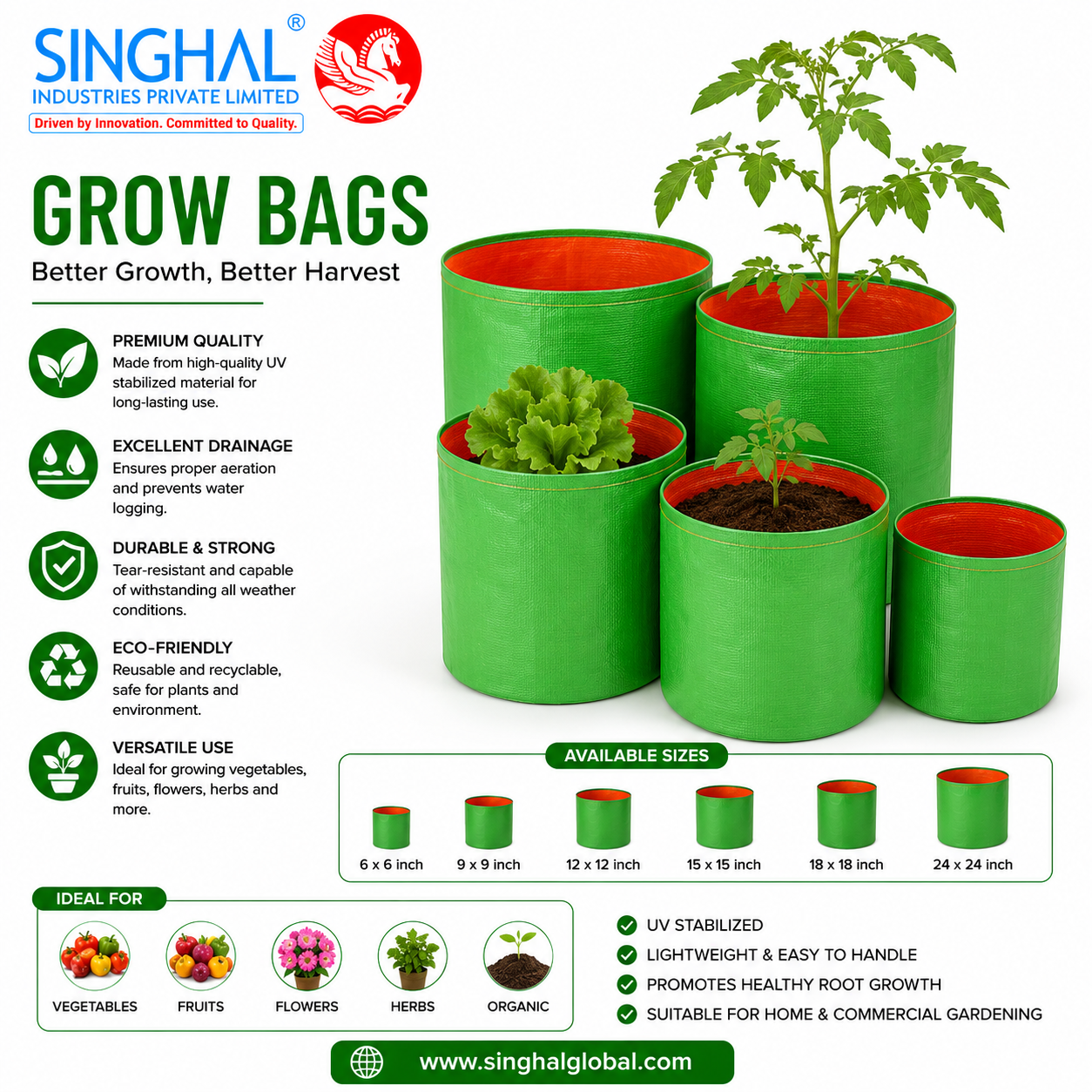
in India which are sold and exported to various destinations including gardens, balconies, terraces, nurseries and farms.
 What Factors Influence Private Money Loan Terms for Rental Property Portfolios in Spokane?
 Baasar Stones