
Introduction
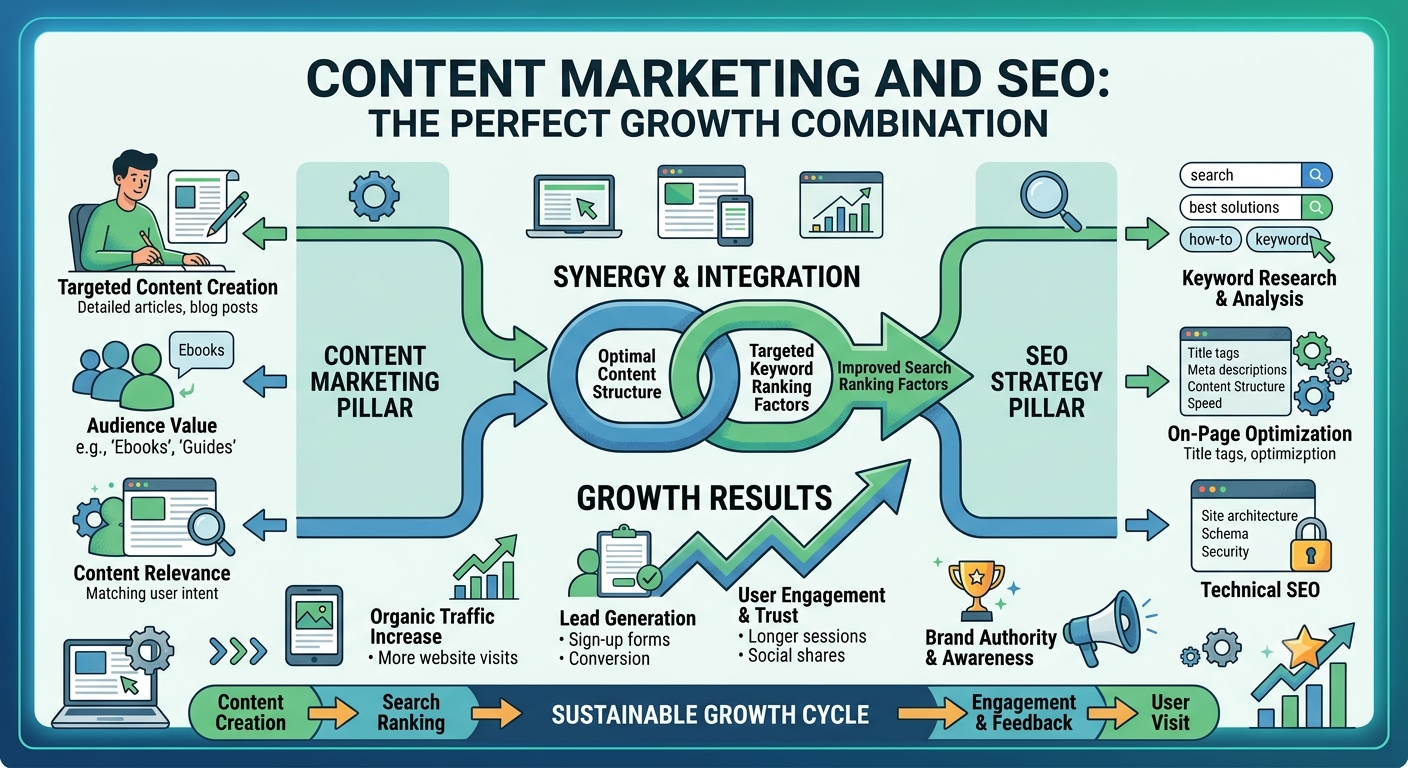
In the modern digital landscape, businesses need more than just a website to attract and retain customers. They need valuable content that answers customer questions and an SEO strategy that ensures this content reaches the right audience. Together, content marketing and SEO create a powerful combination that drives sustainable online growth. Businesses investing in Digital Marketing services in Chennai are increasingly leveraging these two strategies to improve search engine rankings, build brand authority, and generate qualified leads. Understanding how content marketing and SEO work together can help businesses achieve long-term success in an increasingly competitive online marketplace.
What is Content Marketing?
Content marketing is the strategic process of creating, publishing, and distributing valuable, relevant, and consistent content to attract and engage a clearly defined audience.
Instead of directly promoting products or services, content marketing focuses on educating, informing, and solving customer problems. This approach builds trust, strengthens brand credibility, and encourages potential customers to take action.
Common types of content include:
-
Blog articles
-
Case studies
-
Videos
-
Infographics
-
E-books
-
Social media posts
-
Email newsletters
-
Podcasts
-
FAQs
-
Whitepapers
What is SEO?
Search Engine Optimization (SEO) is the process of improving a website’s visibility in search engine results pages. SEO helps search engines understand your content and match it with users searching for relevant information.
A successful SEO strategy includes:
-
Keyword research
-
On-page optimization
-
Technical SEO
-
High-quality backlinks
-
User experience improvements
-
Mobile optimization
-
Content optimization
When SEO is combined with valuable content, businesses can attract consistent organic traffic without relying solely on paid advertising.
Why Content Marketing and SEO Work Together
Content marketing and SEO complement each other perfectly. SEO helps people discover your content, while content marketing gives visitors a reason to stay, engage, and convert.
Without quality content, SEO has little to optimize. Without SEO, even excellent content may never reach its intended audience.
Together, they help businesses:
-
Increase organic website traffic
-
Improve search engine rankings
-
Build customer trust
-
Generate qualified leads
-
Increase website engagement
-
Improve brand awareness
-
Support long-term business growth
Keyword Research Drives Content Strategy
Effective content begins with understanding what your audience is searching for.
Keyword research identifies:
-
Frequently searched topics
-
Customer questions
-
Industry trends
-
Long-tail keywords
-
Search intent
Creating content around these keywords improves your chances of appearing in relevant search results while providing useful information to your audience.
High-Quality Content Improves Search Rankings
Search engines prioritize content that provides genuine value to users.
High-quality content should be:
-
Original
-
Informative
-
Well-structured
-
Easy to read
-
Accurate
-
Regularly updated
-
Focused on user intent
Publishing helpful content consistently signals to search engines that your website is a trusted source of information.
Content Supports Every Stage of the Customer Journey
Different types of content help customers at different stages of the buying process.
Awareness Stage
Potential customers are searching for information.
Useful content includes:
-
Educational blogs
-
How-to guides
-
Industry insights
-
Videos
Consideration Stage
Customers compare solutions.
Helpful content includes:
-
Product comparisons
-
Case studies
-
Expert guides
-
Testimonials
Decision Stage
Customers are ready to act.
Effective content includes:
-
Service pages
-
FAQs
-
Pricing information
-
Success stories
-
Contact pages
This structured approach improves both user experience and conversion rates.
Fresh Content Keeps Your Website Relevant
Search engines favor websites that are regularly updated with fresh, relevant content.
Updating your website with:
-
New blog posts
-
Industry news
-
Service updates
-
Customer success stories
-
Frequently asked questions
demonstrates that your business remains active and authoritative.
SEO Optimizes Content Performance
Publishing content alone is not enough. SEO ensures your content is properly optimized for search engines.
Important optimization techniques include:
-
Optimized page titles
-
Meta descriptions
-
Header tags
-
Internal linking
-
Image optimization
-
Descriptive URLs
-
Keyword placement
-
Schema markup
These elements improve search visibility and user experience.
Content Earns High-Quality Backlinks
Valuable content naturally attracts backlinks from other reputable websites.
Examples include:
-
Original research
-
Industry reports
-
Comprehensive guides
-
Infographics
-
Expert interviews
Quality backlinks increase domain authority and strengthen your search rankings.
User Experience Connects SEO and Content
Google rewards websites that provide excellent user experiences.
Your content should be:
-
Easy to navigate
-
Mobile-friendly
-
Fast-loading
-
Visually organized
-
Engaging
-
Easy to understand
A positive user experience encourages visitors to stay longer and interact with your website, which can positively influence SEO performance.
Measure Content Marketing and SEO Success
Tracking performance helps you understand what is working and where improvements are needed.
Monitor key metrics such as:
-
Organic traffic
-
Keyword rankings
-
Click-through rate
-
Bounce rate
-
Average session duration
-
Conversion rate
-
Backlink growth
-
Lead generation
Regular analysis allows businesses to refine their strategies and maximize results.
Common Mistakes to Avoid
Many businesses struggle because they overlook important best practices.
Avoid these common mistakes:
-
Publishing low-quality content
-
Ignoring keyword research
-
Keyword stuffing
-
Duplicate content
-
Poor internal linking
-
Neglecting technical SEO
-
Infrequent content updates
-
Ignoring mobile optimization
-
Focusing only on search engines instead of users
Creating valuable, user-focused content while following SEO best practices delivers better long-term results.
Future Trends in Content Marketing and SEO
As digital marketing continues to evolve, businesses should prepare for emerging trends such as:
-
AI-assisted content creation
-
Voice search optimization
-
Visual search
-
Topic clusters and content hubs
-
E-E-A-T (Experience, Expertise, Authoritativeness, and Trustworthiness)
-
Personalized search experiences
-
Interactive content
-
Video-first marketing strategies
Adapting to these trends will help businesses remain competitive and maintain strong search visibility.
Conclusion
Content marketing and SEO are most effective when they work together as part of a unified digital strategy. High-quality content attracts and engages your audience, while SEO ensures that content reaches the people searching for it. By combining keyword research, valuable content creation, technical optimization, and a focus on user experience, businesses can improve search rankings, increase organic traffic, and generate consistent leads. Investing in professional SEO services in Chennai enables businesses to build a strong online presence, adapt to evolving search engine algorithms, and achieve sustainable growth through a well-planned content marketing and SEO strategy.
 Poker script
  danielwalker1674
  Gary The Handyman Nc