
Cat6 Ethernet cabling is the backbone of most modern wired networks, and it comes in two main forms: shielded and unshielded. Cat6 shielded cable adds a layer of protection designed to reduce electromagnetic interference (EMI), which can make it a practical choice in environments where electrical noise is a real concern.
Shielding isn’t something every network needs, but in the right setting, it can help keep a connection stable and reliable. In this guide, we’ll walk through what Cat6 shielded cable actually is, how the shielding works, the main benefits it offers, where it’s typically used, the different shielding types available, and what to look for before you buy. We’ll also cover a few common mistakes people make when choosing shielded cable, so you can avoid them in your own project.
What Is a Cat6 Shielded Cable?
“Cat6” refers to Category 6 cabling, a standard that supports Gigabit Ethernet speeds and is common in both residential and commercial networks. “Shielded” refers to an added layer of foil or braided metal that wraps around the cable’s internal wire pairs, either individually or as a full bundle.
The purpose of this shielding is to create a barrier between the copper conductors and outside electrical noise. Depending on the construction, you’ll see shielded Cat6 labeled as F/UTP, U/FTP, or S/FTP each describing a different shielding arrangement, which we’ll break down further below.
It’s worth being upfront about one thing: shielding is about interference protection, not speed. A Cat6 shielded Ethernet cable doesn’t transmit data any faster than its unshielded counterpart. Both are built to the same Cat6 performance standard. What shielding changes is how well the cable resists electrical noise from its surroundings which matters more in some environments than others.
How Does Cat6 Shielding Work?
Electromagnetic interference, or EMI, is electrical noise generated by nearby equipment that can potentially disrupt a data signal traveling through copper cable. Common sources include:
- Power cables running close to data cabling
- Electric motors and industrial machinery
- Heavy electrical equipment
- Fluorescent lighting ballasts
When Ethernet cable is installed near these sources, that noise can interfere with the signal inside the cable. Shielding works by wrapping the conductors in a conductive layer that blocks much of this outside interference before it reaches the copper pairs.
For that shielding to actually do its job, a few things need to be right. The cable needs to be paired with compatible shielded connectors and hardware, the shielding needs to remain continuous along the run without gaps, and in most cases, the shield needs a proper path to ground. Skipping any of these steps can reduce the shielding’s effectiveness or in some cases, cause more issues than it solves.
Key Benefits of Cat6 Shielded Cable
Better EMI Protection
The primary advantage of shielded cable is its ability to block outside electrical interference. In environments with a lot of electrical activity industrial floors, mechanical rooms, areas near heavy equipment this protection can matter significantly more than it would in a typical office or home.
Improved Signal Reliability
By reducing the amount of interference reaching the copper conductors, shielded cable can help maintain a more consistent, reliable data connection in electrically noisy settings. This doesn’t mean faster speeds it means fewer disruptions caused by outside noise.
Reduced Crosstalk
Crosstalk happens when signals from one wire pair bleed into another. Shielding, combined with the twisted-pair design already built into Cat6 cable, helps minimize this kind of unwanted signal interaction, particularly in cable bundles with many pairs running close together.
Suitable for High-Density Installations
In installations where many cables run alongside electrical systems or other data cabling, shielded Cat6 can be a practical option for keeping signal quality consistent across a dense bundle of cable runs.
Useful for Demanding Network Environments
For installations with real, identifiable interference challenges, an appropriately chosen shielded cable can be a sensible way to support a more dependable network — without over-engineering a solution for spaces that don’t need it.
Where Is Cat6 Shielded Cable Used?
Industrial Facilities
Manufacturing plants, production floors, and areas with heavy machinery are classic environments for shielded cabling. These spaces often have motors, generators, and industrial electrical systems that generate significant EMI.
Commercial Buildings
Offices, commercial infrastructure, and server rooms sometimes benefit from shielded cable, particularly in buildings with dense electrical systems or where cabling has to run near power infrastructure.
Data Centers
Data centers often involve dense cable management and a mix of power and data infrastructure in close proximity. Shielded cabling can be part of a well-planned installation here, though proper cable management and routing matter just as much as the cable type itself.
Security and Surveillance Systems
IP cameras, network video recorders (NVRs), and access-control systems are frequently installed in areas where cabling runs near electrical conduits or outdoor equipment, making shielded cable a common choice for these applications.
Smart Buildings and Automation
Building automation systems, IoT devices, and connected control systems often involve cabling that runs through mechanical spaces or near other building systems, where shielded Cat6 can help maintain a stable connection.
Cat6 Shielded Cable Types
Not all shielded cable is built the same way. Here’s a simple breakdown of the most common constructions:
| Cable Type | Shielding Structure | Typical Use |
|---|---|---|
| U/UTP | No overall shielding | Standard installations |
| F/UTP | Overall foil shield | Moderate EMI environments |
| U/FTP | Individual pair shielding | Higher interference protection |
| S/FTP | Overall braid + individual pair foil | High-interference environments |
U/UTP is standard unshielded Cat6, included here for comparison. F/UTP (sometimes just called shielded or “Cat6 F/UTP cable”) wraps the entire cable bundle in a foil layer, offering a moderate step up in EMI protection. U/FTP shields each individual pair, which can help with pair-to-pair crosstalk in more demanding settings. S/FTP combines an overall braided shield with individual foil-wrapped pairs, offering the highest level of protection among these options and it’s often the choice for environments with serious interference concerns.
None of these is universally “best.” The right type depends on the interference level in your specific installation and what the project actually requires.
What to Consider Before Buying Cat6 Shielded Cable
Cable Shielding Type
Match the shielding construction to your expected interference level. A moderately noisy office doesn’t necessarily need S/FTP, while a facility full of industrial equipment might.
Conductor Material
For permanent structured cabling installations, solid bare copper conductors are generally a more reliable long-term choice than copper-clad aluminum, particularly for runs that need to meet performance standards over time.
Cable Jacket Rating
Jacket rating depends on where the cable will be installed:
- Plenum (CMP) — required for cable routed through air handling spaces, such as above drop ceilings used for HVAC airflow.
- Riser (CMR) — used for vertical runs between floors, such as inside walls or risers.
Check your local building codes and the specific space you’re wiring before choosing a jacket rating.
Cable Gauge
AWG (American Wire Gauge) affects the physical characteristics of the cable, including durability and how it performs over longer runs. This is worth checking against your project’s cable run lengths.
Length and Bulk Cable Options
For structured cabling projects and larger installations, buying bulk Ethernet cable often sold in 1000-ft spools can be more practical and cost-effective than purchasing shorter pre-made lengths.
Standards and Performance
Check that the cable meets recognized Cat6 performance specifications and review the manufacturer’s documentation before purchasing, especially for larger or performance-sensitive installations.
Compatible Connectors and Accessories
If your installation depends on maintaining a continuous shield, make sure connectors, keystone jacks, and patch panels are all rated for shielded cable. Mixing shielded cable with unshielded hardware can undermine the shielding’s purpose.
Is Cat6 Shielded Cable Right for Your Network?
Shielded Cat6 tends to be a good fit when:
- Cables run near electrical equipment or power infrastructure
- EMI is a known or likely concern
- The installation is industrial in nature
- The cabling environment is dense, with many cables and electrical systems close together
- Reliable connectivity matters in an electrically noisy environment
Unshielded cable is often sufficient when:
- You’re wiring a typical home
- The environment has little to no significant electrical interference
- A simpler installation and lower cost are priorities
There’s no need to over-buy. Matching the cable to your actual environment usually gives you the best balance of performance and cost.
Common Mistakes to Avoid When Buying Cat6 Shielded Cable
- Choosing shielded cable without assessing the environment. Look at your actual interference sources before deciding — don’t default to shielded cable “just in case.”
- Ignoring the required jacket rating. Check local code requirements for plenum or riser spaces before purchasing.
- Buying low-quality conductors. Solid bare copper is generally a safer long-term investment than lower-grade alternatives.
- Using incompatible shielded components. Pair shielded cable with shielded connectors and hardware throughout the run.
- Ignoring grounding requirements where applicable. Ungrounded shielding may not function as intended.
- Assuming shielded cable automatically provides faster internet. Shielding addresses interference, not speed — both cable types support the same Cat6 performance standard.
- Choosing cable based only on price. The cheapest option isn’t always the most reliable for a permanent installation; weigh quality and specifications alongside cost.
Why Cable Quality Matters
Regardless of shielding type, the overall quality of the cable affects how well your network performs over the long run. Pay attention to conductor quality, cable construction, shielding quality, jacket material, standards compliance, manufacturing consistency, and clear product specifications and labeling. Cable that’s vague about these details is harder to verify and harder to trust for a permanent installation.
Suppliers like BNCables offer networking cables and connectivity solutions for residential, commercial, and industrial projects, which can make it easier to find consistent, well-specified cable and matching hardware for your particular installation.
Buying Cat6 Shielded Cable From BNCables
If you’re sourcing cable for an upcoming project, BNCables carries networking cable solutions built for a range of installation requirements. This includes Cat6 shielded cable for env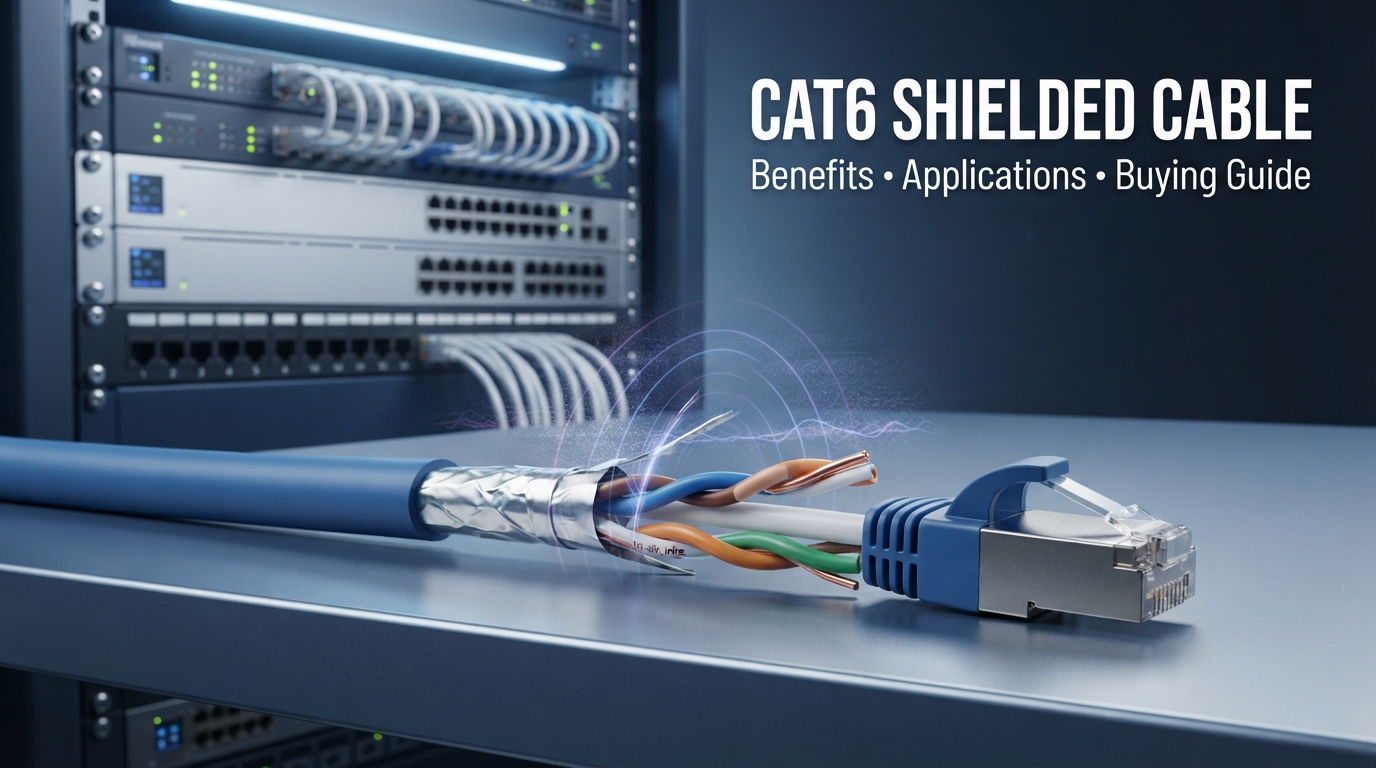 ironments where EMI protection matters, Cat6 riser shielded cable for vertical runs between floors, and Cat6 plenum shielded cable for air handling spaces that require plenum-rated jackets.
For larger installations, bulk Ethernet cables are available in longer spool lengths, and network cabling accessories including compatible connectors and components help ensure the shielding in your installation stays consistent from end to end.
Final Thoughts
Cat6 shielded cable offers real, practical benefits better EMI protection, more reliable signal transmission in noisy environments, reduced crosstalk, and a sensible option for dense or demanding installations. It’s most useful in industrial facilities, commercial buildings with significant electrical activity, data centers, and security or automation systems near electrical equipment.
Before buying, think through the shielding type, conductor material, jacket rating, cable gauge, your installation environment, and whether you have compatible components on hand. Getting these details right matters more than simply choosing the most protective option available.
If shielded Cat6 fits your project, BNCables offers a range of shielded and networking cable solutions to help you find the right match for your installation.
 Peak Peptides
  Sushant Ramnarine
  Supply Base Solutions