
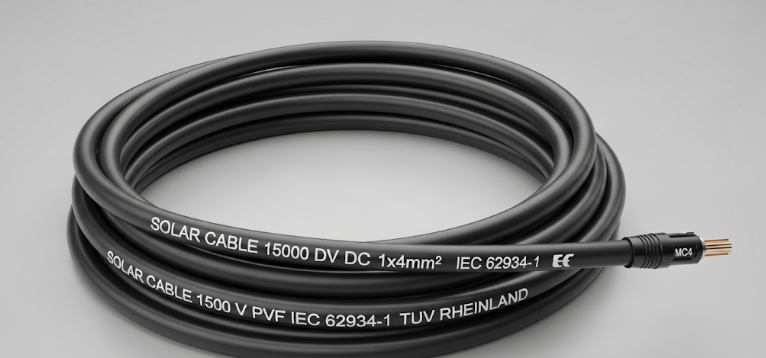
The renewable energy industry is evolving rapidly, and a critical component behind efficient solar systems is photovoltaic dc wire As solar installations continue to grow across residential, commercial, and industrial sectors, cabling has become the main focus of manufacturers and engineers.
Modern photovoltaic systems require durable and highly composite performance cables capable of handling harsh outdoor conditions for more than 25 years Traditional tinset copper conductors have long dominated the market, but new developments in aluminum alloy conductor technology with strong technological and financial benefits enhance.
Development of Photovoltaic DC Wiring Standards
In the last decade, photovoltaic cabling technology has progressed through several worldwide standards, with VDE-AR-E 2283-4, 2 PFG 1169, EN50618, IEC62930, and UL4703 among them EN50618 is one of the international system applications in the solar field.
The production of the two PFG 2642 Generals provided a major step forward for the production of aluminum alloy photovoltaic cables. This certification covers cable sizes from well-known 10mm2 to 400mm2, and additionally provides flexibility for smaller conductors through additional testing strategies .
Unlike conventional copper cables, the latest Photovoltaic dc wire solutions under the 2 PFG 2642 standard use aluminum alloy or tinned aluminum alloy conductors. These designs reduce material costs while maintaining strong electrical performance and mechanical reliability.
Why Aluminum Alloy Conductors Are Gaining Attention
The solar industry constantly searches for ways to reduce overall system costs without sacrificing performance. Aluminum alloy conductors offer several benefits compared to traditional tinned copper designs.
Lower Material Cost
Copper prices continue to fluctuate globally, directly affecting solar project budgets. Aluminum alloy conductors provide a more economical option, especially for large-scale sowell solar farms where cable length requirements are substantial.
Lightweight Structure
Aluminum alloy cables are significantly lighter than copper cables. This reduces transportation costs and simplifies installation, particularly in rooftop and utility-scale projects.
Reliable Electrical Performance
Modern aluminum alloy conductor technology has improved conductivity and flexibility. Testing shows that many aluminum alloy photovoltaic cables can achieve DC resistance values comparable to IEC60228 Class 5 copper conductors.
For example:
|
Model |
Conductor Type |
DC Resistance |
|
H1Z2Z2-K 1x4mm² |
Tinned Copper |
≤5.09Ω/km |
|
PV1500DC-AL 1x6mm² |
Tinned Aluminum Alloy |
≤5.09Ω/km |
This demonstrates that properly designed aluminum alloy conductors can perform at levels close to traditional copper-based photovoltaic dc wire products.
Understanding Electrochemical Concerns Between Copper and Aluminum
One of the biggest concerns surrounding aluminum conductors involves electrochemical reactions between copper and aluminum materials. This issue is frequently discussed among photovoltaic connector manufacturers and installation engineers.
When copper and aluminum are connected directly under certain environmental conditions, moisture can create an electrolyte between the two metals. This leads to electrochemical activity due to the potential difference between copper and aluminum.
However, modern engineering solutions have significantly reduced this risk.
Copper-Aluminum Transition Connectors
Specialized copper-aluminum transition connectors isolate contact surfaces from air and moisture exposure. These connectors have been used successfully in the electrical industry for decades.
In photovoltaic applications, specially designed MC4-compatible transition connectors now allow aluminum alloy photovoltaic dc wire products to operate safely and reliably.
Oxidation Protection
Aluminum naturally forms an aluminum oxide layer when exposed to air. This protective barrier limits further corrosion and improves long-term stability.
Tinned aluminum alloy conductors provide an additional protective layer that reduces oxidation while improving compatibility with standard MC4 connectors.
PV1500DC-AL Cable Series Overview
The newly certified PV1500DC-AL series has successfully passed TÜV certification according to the 2 PFG 2642 standard. These photovoltaic dc wire products are specifically designed for solar power generation systems.
Main Product Features
- Rated Voltage: 1500V DC
- Insulation Material: 125°C Low Smoke Halogen-Free XLPO
- UV Resistant Jacket
- Long Service Life
- Suitable for Outdoor Solar Installations
- Available in Black or Red
The series currently includes:
|
Model |
Size |
Resistance |
|
PV1500DC-AL 1x4mm² |
4mm² |
≤8.21Ω/km |
|
PV1500DC-AL 1x6mm² |
6mm² |
≤5.09Ω/km |
|
PV1500DC-AL 1x10mm² |
10mm² |
≤3.39Ω/km |
These cables are optimized for modern photovoltaic systems requiring stable current transmission under high-temperature outdoor environments.
Construction Details of PV1500DC-AL Photovoltaic DC Wire
The internal structure of a cable directly impacts performance, flexibility, and durability.
1x4mm² Model
The 4mm² version uses a tinned alloy conductor with a construction of 56/0.295mm strands. The cable outer diameter is approximately 5.6mm, making it compatible with many existing connector systems.
1x6mm² Model
The 6mm² version uses 84/0.295mm strands and maintains a low resistance value while improving current carrying capability. The outer diameter measures 6.1mm.
1x10mm² Model
The 10mm² version adopts 77/0.4mm strands, achieving even lower resistance and supporting larger photovoltaic systems with higher current requirements.
Each model uses:
- Crosslinked polyolefin insulation
- UV-resistant outer sheath
- Halogen-free low smoke material
- High-temperature resistance up to 125°C
These features ensure the photovoltaic dc wire performs effectively under long-term sunlight exposure and demanding environmental conditions.
Current Carrying Capacity of PV1500DC-AL Cables
Current carrying capacity plays a major role in photovoltaic system safety and efficiency.
The following values apply under:
- Ambient temperature: 20°C
- Maximum conductor temperature: 90°C
|
Conductor Size |
Safe Current A I |
Safe Current A II |
|
1x4mm² |
26A |
21A |
|
1x6mm² |
35A |
28A |
|
1x10mm² |
92A |
74A |
|
1x16mm² |
120A |
96A |
|
1x25mm² |
154A |
123A |
For general photovoltaic applications, engineers commonly recommend using the Safe Current A I values as the maximum allowable current reference.
Advantages of Aluminum Alloy Photovoltaic DC Wire
The latest generation of aluminum alloy photovoltaic cables offers several practical advantages for solar installers and project developers.
Improved Installation Efficiency
The lightweight structure simplifies handling during rooftop installation and long-distance cable routing.
Better Cost Optimization
Large photovoltaic projects can significantly reduce conductor material costs by replacing copper cables with certified aluminum alloy alternatives.
UV and Weather Resistance
The UV-resistant XLPO jacket allows the cable to operate directly under sunlight without requiring additional protective conduit systems commonly needed for standard AC cables.
Compatibility with Modern Solar Systems
When used with certified transition connectors, aluminum alloy photovoltaic dc wire products can integrate smoothly with modern MC4-based systems.
Flexible Applications in Modern Solar Projects
The 2 PFG 2642 standard expands the application range of aluminum alloy photovoltaic cables beyond traditional ground-mounted systems.
These cables can now be used for:
- Solar module interconnection
- String-to-inverter connections
- Combiner box wiring
- Utility-scale photovoltaic farms
- Rooftop solar systems
This flexibility gives engineers more design options while reducing project installation costs.
Future Outlook for Photovoltaic Cable Technology
The future of photovoltaic dc wire technology will likely focus on three major trends:
Higher Efficiency Materials
Manufacturers continue improving aluminum alloy conductor performance to achieve conductivity levels closer to copper while maintaining lower weight and cost.
Smarter Connector Systems
Advanced copper-aluminum transition connectors are expected to improve safety, compatibility, and installation simplicity for photovoltaic systems.
Sustainable Manufacturing
As sustainability becomes more important, aluminum alloy conductors may gain additional popularity because aluminum production and recycling can support environmentally focused manufacturing strategies.
The solar industry is entering a new phase where innovation is not limited to panels and inverters alone. Cable technology is becoming equally important in improving overall system reliability, efficiency, and economic performance.
With TÜV-certified solutions such as the PV1500DC-AL series, aluminum alloy photovoltaic dc wire products are positioned to become a practical and reliable option for next-generation solar energy systems.anced Innovations in Solar Power Cable Technology for photovoltaic dc wire
 Maid Services Provider
  Playcious Inc
  partyworld791@gmail.com