
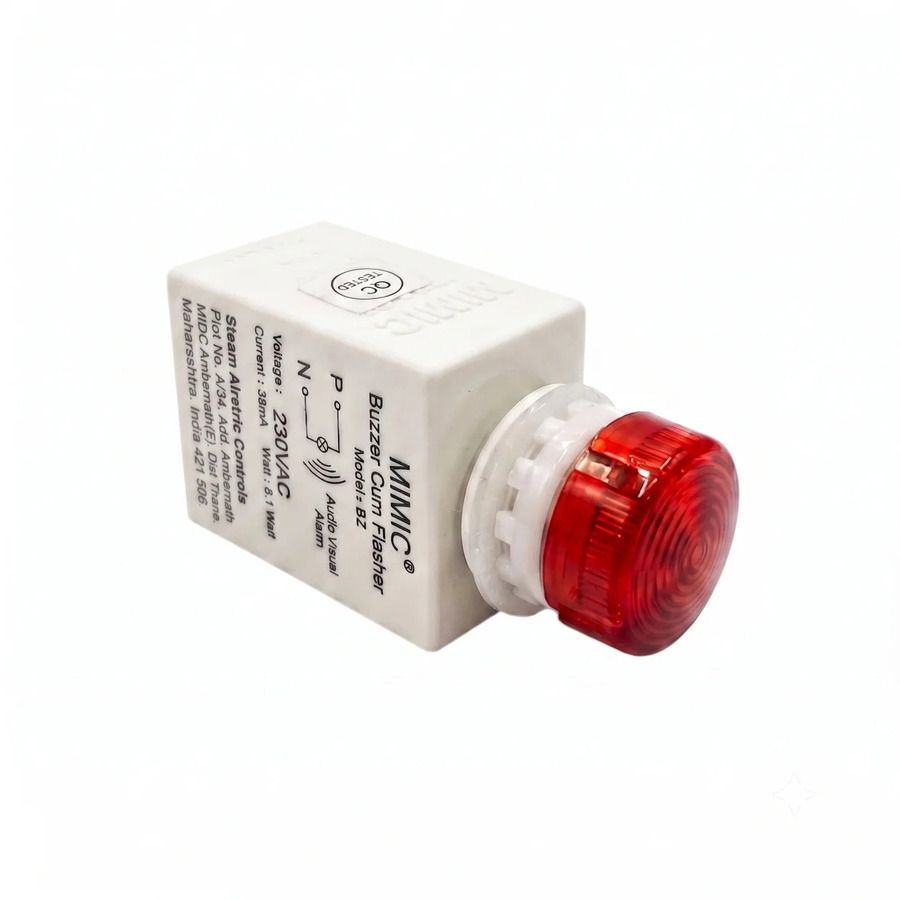
In an industrial environment, a warning signal needs to be noticed quickly. Operators may be working with machinery, electrical panels, automation systems, or production equipment where a missed alert can interrupt normal operations. This is where an Audio visual alarm becomes a practical choice. By combining sound with a flashing visual indication, it gives operators two clear ways to recognize that attention is required.
Unlike a simple indicator lamp or buzzer working alone, an Audio visual alarm combines audible and visual notification in one warning solution. This makes it suitable for applications where operators may not always be looking directly at a control panel.
What Is an Audio Visual Alarm?
An Audio visual alarm is a warning device designed to provide both an audible signal and a visible flashing indication. When the connected control system activates the alarm, the sound draws attention while the visual signal provides a clear indication that a warning condition is active.
I find this combination particularly useful in busy industrial areas. Machinery noise, movement, and multiple control panels can make a single warning method easy to overlook. Using sound and light together provides an additional layer of awareness for operators.
Why Use an Audio Visual Alarm?
The main purpose of an Audio visual alarm is to make warning information easier to notice. In a working environment, an operator may be standing several feet away from a panel or may not be looking at the equipment when an abnormal condition occurs.
The audible portion can attract attention from nearby personnel, while the flashing light gives a visible confirmation. This dual indication can be useful in situations involving machine status, process warnings, electrical faults, or other conditions that require operator attention.
Another benefit is flexibility. An Audio visual alarm can be considered for different types of industrial control and electrical applications, depending on its voltage rating, installation method, environmental requirements, and other specifications.
Common Applications
I can see several practical areas where an Audio visual alarm can be useful. Control panels are one of the most common applications because they often need clear status and warning indications. It can also be considered for machinery, automation systems, electrical equipment, and industrial monitoring setups.
In manufacturing environments, warning devices may be used to notify personnel about a particular machine condition. In electrical installations, they can provide an additional indication when attention is needed at a panel or equipment enclosure.
The exact application depends on the specifications of the selected product. Before installation, I would always check operating voltage, mounting requirements, wiring details, and compatibility with the existing control circuit.
Audio and Visual Signals Working Together
One reason I consider an Audio visual alarm useful is the way the two warning methods complement each other. Sound is effective for attracting attention, while a flashing visual signal can help confirm the warning even when the surrounding area is noisy.
For example, imagine an operator working near a production machine. If a warning is triggered while the operator is looking away from the panel, a visual indicator alone might not immediately attract attention. An audible signal can help overcome that limitation.
Similarly, in a noisy environment, the visual portion becomes especially useful. The combination gives operators more than one way to recognize an active warning.
Choosing the Right Warning Device
Selecting an Audio visual alarm should not be based only on appearance. I would first look at the electrical requirements of the application. The operating voltage should match the control circuit, and the device should be appropriate for the intended installation.
The physical environment is another important consideration. Temperature, dust, moisture, vibration, and available mounting space can all influence product selection. If the alarm is being installed inside or on an electrical panel, its dimensions and mounting arrangement should also be checked beforehand.
It is also sensible to consider how the warning will be used. A machine requiring occasional fault indication may have different requirements from a larger industrial system where alarms need to be clearly recognized across a busy production area.
Installation Considerations
A properly selected Audio visual alarm still needs suitable installation to work effectively. Wiring should follow the equipment manufacturer’s instructions and the requirements of the electrical system. Connections should be secure, and the power supply should correspond to the device rating.
I would also consider the location carefully. A visual signal should be positioned where operators can see it clearly, while the audible signal should be sufficiently noticeable in the working environment.
After installation, testing the alarm is an important step. Activating the relevant warning condition can help confirm that both the sound and visual indication are operating correctly.
Maintenance and Regular Testing
Like other electrical warning components, an Audio visual alarm should be checked periodically as part of normal equipment maintenance. Dust, loose wiring, electrical issues, or changes to the surrounding environment can affect performance.
I recommend checking the audible indication and flashing function during scheduled inspections. Connections should also be examined where appropriate. If the alarm is connected to an automated control system, the complete warning circuit can be tested according to the site’s maintenance procedure.
Regular testing gives operators greater confidence that the warning system will respond when it is required.
A Practical Choice for Industrial Warning Needs
An Audio visual alarm offers a straightforward way to combine audible and visual warning indications in industrial equipment. Its usefulness comes from its simple operating principle: sound attracts attention while flashing light provides a visible warning.
For control panels, machinery, automation equipment, and electrical installations, this type of warning device can provide an additional means of communicating important conditions to operators. However, the right product should always be selected according to the application’s electrical, environmental, and installation requirements.
When I evaluate a warning device, I focus on practical compatibility rather than simply choosing the first available option. Checking voltage, mounting, operating conditions, and system requirements beforehand can help ensure that the selected Audio visual alarm is suitable for its intended application.
Ultimately, a well-selected warning device can make communication between equipment and operators clearer. When sound and visual indication work together, important warnings become easier to notice and respond to in an active industrial environment.
 Sda Gurgaon
 blockp0116@gmail.com
 prestigenets