
Some garments are worn every week. They are reliable, professional, and consistent. They do their work quietly and well.
And then there are the garments that are reserved.
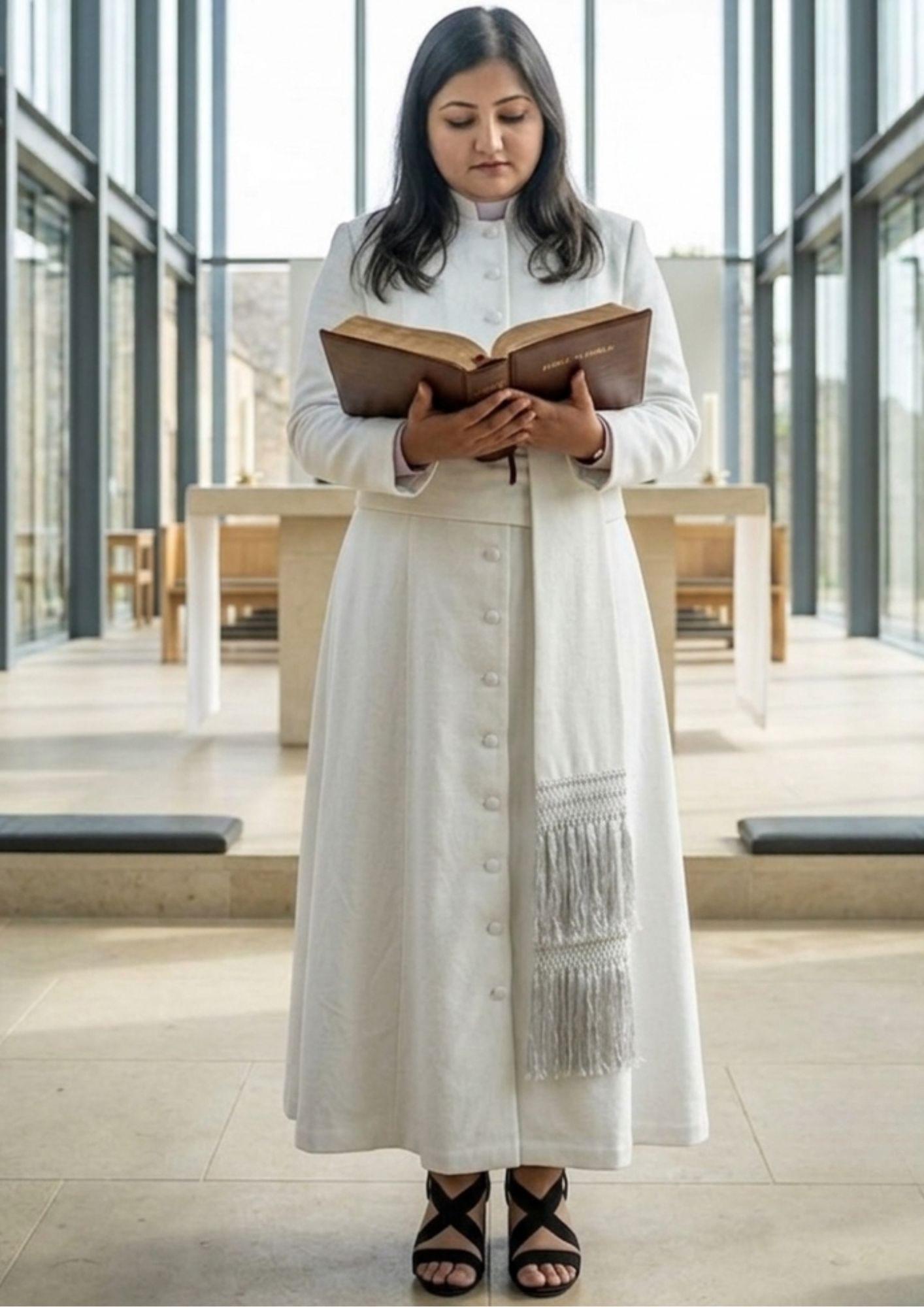
Women’s white clergy robes belong to the second category. They are not the everyday black robe that a female pastor reaches for on a regular Sunday morning. They are the garment that comes out for the moments that matter most. Easter Sunday. A baptism. A wedding. Christmas morning. An ordination.
When a female minister puts on her white clergy robe, the congregation knows something significant is happening. The color itself is a proclamation before the service begins.
This article explores why women’s white clergy robes carry such a special and enduring place in ministry and what that white color communicates every time it is worn.
What Sacred Occasions Call for Women’s White Clergy Robes?
Women’s white clergy robes are associated with specific moments in the life of the Church that share a common theme. All of them involve new beginnings, celebration, and the presence of divine grace in a particularly visible and joyful way.
Understanding which occasions call for white helps female ministers use their white robes with the intentionality the garment deserves.
Why Are White Robes the Natural Choice for Easter?
Easter is the central feast of the Christian year. It is the celebration of the resurrection of Christ, the triumph of life over death, and the promise of new life for all who believe.
Women’s minister robes in white at Easter visually participate in the proclamation of the day before a single alleluia is sung. The white robe at Easter says: death has not had the final word. Light has come. Something new has begun.
Priest wear across Catholic, Anglican, Lutheran, and most other liturgical traditions has always used white and gold at Easter for exactly this reason. A female minister in white clergy robes at the Easter service connects herself to that universal celebration in the clearest visual language available.
How Do White Robes Serve Baptism Services?
Baptism is the sacrament of new birth. The newly baptized have, in the language of the early Church, put on Christ. The white garment placed on the newly baptized was called the chrisom and it symbolized the purity and new identity received in the waters of baptism.
A female minister wearing preacher robes for women in white at a baptism service visually aligns herself with the meaning of the sacrament she is administering. She and the one being baptized are both clothed in the color of new life. The visual correspondence deepens the theological experience of the moment for the whole congregation.
When Do White Robes Work at Weddings?
White at a wedding carries obvious meaning that connects to the celebration of covenant love and new beginning. A female minister officiating a wedding in women’s clergy robes in white honors the joyful character of the occasion while maintaining her ministerial identity clearly through the clerical collar and the cut of the robe.
The key distinction between the minister’s white and the bride’s white is the clerical design of the robe itself. A women’s clergy robe with proper collar and ministerial construction communicates ministry even in white. The white honors the occasion. The design honors the office.
What Makes White Different From Every Other Color in Ministry?
Every liturgical color carries meaning. But white carries a particular kind of meaning that no other color in the ministerial wardrobe can replicate.
White is the color of the alb, the ancient base garment worn by all ordained ministers that traces its origins to baptismal dress in the early Church. White is the color of the garments given to the newly baptized as a sign of the new life they had received. It is the color worn at Easter, Christmas, and every celebration of resurrection and new beginning.
Women’s clergy robes in white draw on all of that accumulated meaning. When a female minister stands at the pulpit in a white robe, she is wearing the color of resurrection. The color of purity and new life. The color that the Church has reserved for its greatest celebrations since the earliest centuries of Christian worship.
Ladies clergy attire in white creates a visual statement that black or any other ministerial color simply cannot make in the same way. It announces: this is a day of celebration. This is a moment of joy and holy significance.
Why Is White Reserved Rather Than Worn Every Week?
The power of women’s white clergy robes comes partly from their reserve. A color worn every week loses the ability to signal something special. A color worn only at the moments of greatest significance retains that signal clearly.
This is why most female ministers who own white robes do not reach for them on ordinary Sundays. They save them. And when they do wear them, the congregation responds to the visual signal immediately. Something significant is happening today. The white robe says so before the service begins.
Why Do White Clergy Robes Carry Such Deep Historical Roots?
The connection between white ministerial dress and sacred service is one of the oldest in Christian worship. Understanding that history helps female ministers appreciate the depth of meaning they access when they put on their white robes.
Preaching robes for women in white today trace their ancestry back to the alb, the long white linen robe that has been worn by ordained ministers at the altar since the earliest centuries of the Church. The alb descended from the white garments worn by Roman citizens at formal occasions and was preserved by the Church as secular Roman fashion moved on.
For centuries, the alb was the foundation garment of Christian ministry. Every ordained leader who has stood at an altar in Christian worship has worn something with the alb at its root. When a female minister wears women’s white clergy robes today, she is participating in that ancient and unbroken tradition.
How Did Women’s White Clergy Robes Develop Their Own History?
As women entered ordained ministry in increasing numbers through the twentieth century, women’s minister robes in white became part of their specific ministerial story.
For women being ordained, the white robe at an ordination service carried a particular weight. It was not just a garment for celebrating Easter. It was the visible declaration of a new chapter in the ministry of the whole Church. A woman standing for ordination in white was making a statement about arrival, about belonging, about the fullness of the calling she was receiving.
Cheap clergy robes for women in white at accessible price points have made this powerful symbolism available to female ministers across all economic contexts, ensuring that financial considerations do not prevent any ordained woman from access to the garments her calling deserves.
How Do Women’s White Clergy Robes Communicate Authority in the Pulpit?
White is not only a color of celebration. It also carries significant authority in ministry contexts.
In the history of ladies clergy attire, white has been associated with the highest and most sacred occasions of worship. When a female minister stands in white at the pulpit, she is wearing the color that the Church reserves for its most significant moments. That reserve confers authority.
Priest wear in white to signal that what is happening in this service belongs to the category of the most significant and sacred. A female minister in white preaching robes for women signals the same thing about the service she is leading.
How Does White Support a Female Minister’s Presence in the Room?
The authoritative communication of white women’s clergy robes operates before a word is spoken. The congregation sees the white robe. They register it as significant. They bring a quality of attention and readiness to receive that ordinary ministerial dress at an ordinary service does not always generate.
This heightened receptivity serves the female minister’s ministry directly. The white robe prepares her congregation to receive what she is about to offer with the openness and attentiveness the occasion deserves.
What Should Female Ministers Know About Choosing Women’s White Clergy Robes?
Choosing the right women’s white clergy robes involves considerations specific to the color white that do not apply in the same way to darker ministerial garments.
White shows everything. It is the most demanding color in terms of care, cleanliness, and presentation. A white robe worn with full attention to these demands is one of the most powerful and beautiful garments in ministerial attire. A white robe that is stained, wrinkled, or poorly maintained creates exactly the wrong impression.
What Fabric Works Best for Women’s White Clergy Robes?
Women’s clergy robe options in white work best in matte polyester blends for regular use and ceremonial occasions. Matte polyester holds its white color well through repeated washing, resists yellowing, and maintains its professional appearance without the glare that shiny fabrics can create under bright sanctuary lighting.
For particularly formal occasions like ordinations and major feast day services, preacher robes for women in white crepe or wool blend fabrics add a weight and visual richness appropriate to the significance of the moment. These fabrics drape beautifully and create a more substantial presence than lightweight everyday fabrics.
How Do You Keep White Clergy Robes Looking Their Best?
The most important care practice for women’s white clergy robes is washing them separately from other garments. A single stray colored item can permanently tint a white robe. Cold water on a gentle machine cycle is safest for most polyester blend options.
Avoid chlorine bleach. Counterintuitively, bleach can cause white fabric to yellow over time with repeated use. Oxygen-based whitening products are a safer choice for maintaining the brightness of white ministry garments.
Store white robes in garment bags to protect them from dust and environmental discoloration between uses.
FAQ
What Does a White Robe Symbolize?
A white robe symbolizes purity, holiness, new life, and divine celebration, representing the baptismal grace and resurrection joy that are at the heart of Christian faith.
Why Do Pastors Wear White Robes?
Pastors wear white robes to visually communicate the sacred significance of high holy days and celebrations including Easter, baptisms, weddings, Christmas, and ordinations.
What Is the History of Women’s Robes?
Women’s ministerial robes developed significantly through the twentieth century as female ordination expanded, evolving from adapted men’s garments into purpose-built designs specifically tailored for the female form.
What Church Wears White Robes?
White robes are worn across Catholic, Anglican, Episcopal, Lutheran, Methodist, and many other liturgical traditions at Easter and other major celebrations, making white one of the most universally recognized ministerial colors in the Christian world.
Final Thoughts
Women’s white clergy robes have earned their special place in ministry through centuries of accumulated meaning, theological richness, and the specific story of women claiming their rightful place within the ordained tradition.
White is the color of the resurrection. The color of baptismal new life. The color of Christmas joy and Easter triumph. The color that the Church reserves for its greatest celebrations and its most sacred transitions.
When a female minister puts on her white robe, she wears all of that meaning. She steps into the most ancient stream of Christian worship. She announces the significance of the day before she speaks a word. And she stands in the pulpit as a fully formed, fully authorized, fully present ministerial leader wearing the color her calling deserves.
Explore eClergy’s full collection of women’s white clergy robes, preacher robes for women, preaching robes for women, women’s minister robes, women’s clergy robe, and complete ladies clergy attire built for every sacred occasion and every female minister ready to stand in the fullness of her calling.
 Scandic Knots UK
  Wheeler Skinner