
The automotive industry is undergoing its most significant transformation in a century. The shift from internal combustion engines to electric powertrains is reshaping not just how vehicles are powered, but how they are designed, engineered, and manufactured. At the center of this revolution is a material that has quietly become indispensable: aluminum. Lightweight, strong, and highly machinable, aluminum is enabling automakers to extend range, improve performance, and meet increasingly stringent emissions standards.
The numbers tell a compelling story. Electric vehicles already use about 10 percent more aluminum than conventional cars, and that figure continues to rise. Every kilogram of weight saved in an EV can extend driving range by approximately 6 to 8 percent—a metric that directly influences consumer adoption and regulatory compliance. In 2025, the automotive sector consumed approximately 29 percent of global aluminum demand, and with EV production expected to grow at 28 percent CAGR from 2025 through 2030, the demand for precision-machined aluminum components has never been higher.
Why Aluminum Dominates Modern Vehicle Design
Aluminum’s appeal to automotive engineers is rooted in its physical properties. It weighs about one-third as much as steel while maintaining excellent strength, particularly when alloyed with elements like magnesium, silicon, or zinc. This weight reduction translates directly to improved efficiency, whether measured in fuel economy for conventional vehicles or range for electric ones.
Beyond weight, aluminum offers other advantages. It conducts heat efficiently, making it ideal for thermal management components like battery cooling plates and motor housings. It resists corrosion without special coatings, reducing maintenance costs over the vehicle’s lifetime. And crucially for high-volume production, aluminum machines exceptionally well at high speeds, enabling faster cycle times and longer tool life compared to harder materials.
Different alloys serve different purposes in automotive applications. The 6061 alloy is widely used for structural components, offering good formability and weldability. The 7075 alloy provides higher strength for critical safety components. The 5052 alloy is often specified for panels and interior components due to its excellent corrosion resistance. Each alloy demands specific machining parameters, and suppliers with documented processes across these grades deliver more consistent results.
Key Applications of Precision-Machined Aluminum in Vehicles
The range of aluminum components in modern vehicles is extensive. Battery housings and enclosures require complex geometries with tight tolerances to ensure proper sealing and thermal management. Motor housings and frames must maintain concentricity and surface finish to support rotating components. Cooling plates and heat exchangers rely on precise channel geometries for efficient thermal transfer. Structural components—from crash management systems to suspension parts—demand consistent mechanical properties and dimensional accuracy.
Even interior and exterior components increasingly specify aluminum. Instrument panels, seat frames, and trim elements benefit from the material’s lightweight and aesthetic qualities. Chassis and suspension components take advantage of its strength-to-weight ratio. Wheels and brake calipers, particularly in high-performance and electric vehicles, are increasingly machined from aluminum alloys.
The Manufacturing Challenge
Despite its advantages, aluminum presents machining challenges that experienced shops have learned to manage. At high cutting speeds, aluminum can produce long, stringy chips that wrap around tools and interfere with automated processes. Proper chip evacuation and coolant delivery are essential to maintain surface finish and tool life. Thermal expansion, while less severe than with harder alloys, still requires compensation on precision features—particularly for components like bearing journals and seal surfaces that must hold micron-level tolerances.
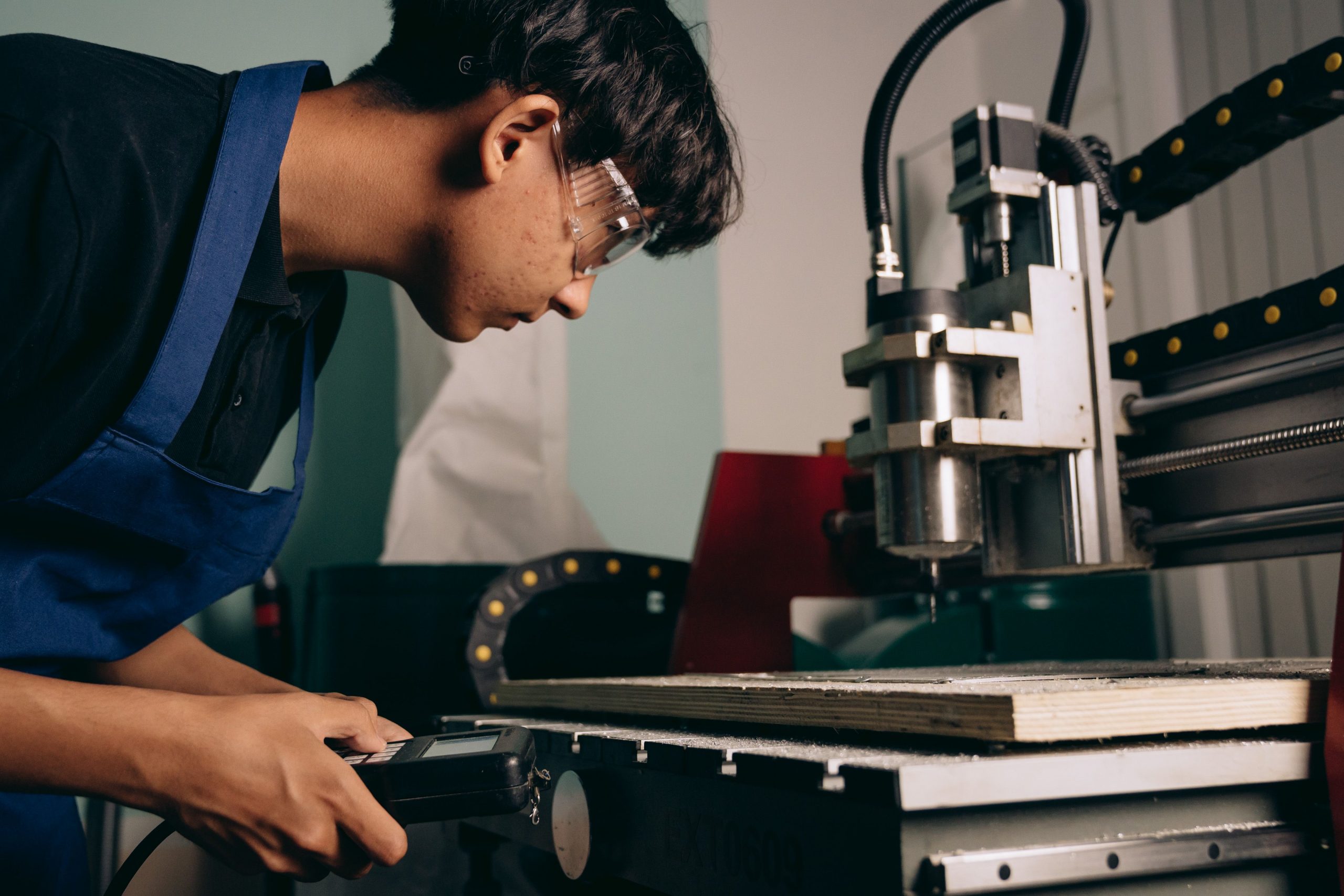
The complexity of modern vehicle designs adds another layer. Battery trays require thin walls and complex internal structures. Motor housings demand tight concentricity and bore alignment. Cooling plates need consistent channel depths across large surface areas. Meeting these requirements demands multi-axis CNC machining capabilities, in-process probing, and rigorous quality control.
Quality Systems and Supply Chain Demands
For automotive suppliers, quality is not just about inspection—it is about documentation and traceability. IATF 16949 certification has become a baseline requirement for Tier 1 suppliers, reflecting the industry’s emphasis on defect prevention and continuous improvement. Material traceability ensures that every component can be linked back to its original mill certificate, critical for safety recalls and regulatory compliance.
Statistical process control (SPC) has become standard practice in automotive machining. In-process probing verifies critical dimensions, allowing real-time compensation for tool wear. Automated inspection systems maintain consistency across high-volume production runs. For components that are safety-critical—like brake system parts or steering components—additional rigour is applied through documented process validation.
The Reshoring and Supply Chain Reality
The automotive industry has been at the forefront of reshoring and supply chain diversification. Tariffs, logistics disruptions, and the need for closer supplier relationships have made domestic sourcing increasingly attractive. The Inflation Reduction Act’s manufacturing incentives have further accelerated this trend, encouraging automakers to source components from regional suppliers.
For procurement professionals, this environment demands a more strategic approach to supplier selection. Equipment matters: multi-axis CNC machining centers with high-speed spindles, automated tool changers, and in-process probing are now the baseline for serious work. Workforce depth matters: shops with stable teams and documented training programmes are better positioned to maintain consistency across production runs. Quality infrastructure matters: IATF 16949 certification and SPC systems provide the assurance that regulated industries require.
A partner with expertise in aluminum precision machining service brings more than equipment to the table. They bring process knowledge—the accumulated understanding of how different alloys respond to cutting forces, how to manage chip formation at high speeds, and how to achieve the surface finishes that automotive applications demand. This knowledge translates directly to consistency, reliability, and peace of mind.
Looking Ahead
As the automotive industry continues its transition to electrification, the demand for precision-machined aluminum components will only intensify. Battery trays will become larger and more complex. Motor housings will demand tighter tolerances. Structural components will require higher strength alloys. The suppliers that can meet these challenges—with advanced equipment, documented processes, and skilled workforces—will capture the most demanding programs.
A provider with deep experience in aluminum precision CNC machining understands the material’s nuances and can scale production without quality drift. In an era where every component matters, that distinction has never been more important.
 Tomas Fol
  Lina Mathur