
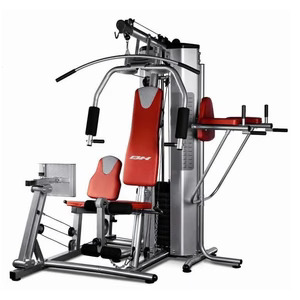
One of the biggest challenges when building a home gym is deciding how much equipment you actually need. A collection of individual machines can provide plenty of exercise options, but it can also make a room feel crowded and leave little space for anything else.
A multi-station gym approaches the problem differently. It combines several resistance-training functions within one integrated structure, allowing you to work through different exercises without dedicating a separate area to every machine.
For homeowners in Dubai, Abu Dhabi, Sharjah, Ajman, Ras Al Khaimah, Fujairah, and across the UAE, this can be an appealing way to create a more complete strength-training area.
The important consideration is how efficiently the equipment uses your available space. A machine with many features is not automatically the best choice if its layout, resistance, or adjustment options do not suit your routine.
Think About Workout Flow Before Choosing a Machine
A useful home gym should make it easy to move from one exercise to the next.
Imagine completing a chest exercise, moving to a back exercise, and then working on your arms or legs. If your equipment supports these movements within one organised setup, your workout may require less rearranging.
Before buying, list the exercises you regularly perform and group them by movement.
For example:
-
Pressing movements
-
Vertical and horizontal pulling
-
Arm exercises
-
Leg training
-
Core work
Then compare your list with the actual stations offered by each machine.
This gives you a more practical way to judge value than counting the number of exercises advertised on a product page.
Understand the Different Multi-Station Designs
Multi-station gyms are not all built the same way.
Some combine dedicated pressing and pulling stations, while others focus more heavily on cables or use a combination of weight stacks and guided movements.
Depending on the model, you may find:
-
Chest press stations
-
Lat pulldown attachments
-
Seated rowing functions
-
Leg extension or curl stations
-
Cable-based exercises
-
Arm-training attachments
The design determines how the equipment can be used and how easily you can move between exercises.
If you have particular movements in mind, verify that the machine supports them rather than assuming they are included because it is described as a complete home gym.
Fixed Stations or Adjustable Cables?
This is an important distinction when comparing equipment.
Machines with dedicated stations provide defined exercise positions. They can be convenient if you prefer familiar movements and straightforward setup.
Cable-focused systems may offer more flexibility because you can change attachment positions and use different handles.
Neither design is universally better.
A machine with dedicated stations may suit someone who wants a structured selection of exercises. A cable-based setup may appeal to users who prefer changing movement angles and using a wider variety of attachments.
Consider how you like to train and whether you will use the flexibility offered by the machine.
Weight Stacks Can Make Shared Training Easier
Many multi-station gyms use a weight stack that allows resistance to be changed using a selector pin.
This can make transitions between exercises relatively convenient, particularly when several household members have different strength levels.
However, check the details before purchasing.
Look at the total stack capacity, starting resistance, available increments, and the manufacturer’s explanation of how resistance is delivered through the machine.
A pulley system can affect the resistance felt at the handle, so the number printed on the stack does not always represent the exact load experienced during the movement.
If the machine uses plate-loaded resistance instead, consider whether you already own compatible plates and how frequently you expect to change the load.
Can One Machine Support Different Fitness Levels?
A shared home gym may be used by beginners, regular fitness enthusiasts, and experienced lifters.
That makes resistance adjustment especially important.
A suitable machine should allow users to select manageable loads and increase resistance as their ability improves.
Also check the adjustment range for seats, backrests, handles, and starting positions.
A machine may provide sufficient resistance but still be uncomfortable if the settings do not accommodate different body sizes.
If several people will use the equipment, evaluate the adjustment range against their needs rather than focusing on one user’s preferred settings.
Make the Most of the Space You Save
The main advantage of combining stations is not simply that the equipment occupies one area. It is that the remaining room can be planned more effectively.
You might use the space around the machine for dumbbells, a bench, or a small area for body-weight exercises.
A practical layout could include:
-
Multi-station gym against a suitable wall
-
Dumbbell storage nearby
-
Open floor area for warm-ups
-
A bench positioned where it can be used safely
-
Clear access to doors and walkways
Measure the machine and the surrounding training area before deciding where everything will go.
A large multi-station system can still overwhelm a small room if there is insufficient space to enter the stations, adjust the equipment, or move between exercises.
Check the Ceiling Before You Buy
Floor measurements are only part of the planning process.
Some multi-station gyms include tall frames, overhead pulleys, or attachments that require additional vertical clearance.
Measure the distance from floor to ceiling and compare it with the machine’s assembled height.
Also consider the space required during assembly and the route through which the equipment must be delivered.
If you live in an apartment, check doorway widths, corridors, lifts, and staircases. A machine that fits the final room may still be difficult to transport into the property.
Stability Should Be a Priority
A multi-station machine combines several moving components, so its frame and support structure matter.
Review the manufacturer’s information about:
-
Frame construction
-
Base dimensions
-
Structural connections
-
Cable routing
-
Pulley components
-
Adjustment locks
-
Installation requirements
The machine should be installed according to the manufacturer’s instructions and used within its stated limits.
Do not assume that a heavier machine is automatically better. Construction quality, design, and correct installation are all important considerations.
Plan for More Than One User
Some multi-station systems allow different stations to be used simultaneously, while others are designed primarily for one person at a time.
If you plan to train with a partner or family member, check this detail before buying.
The number of stations does not automatically determine how many people can exercise safely at once.
Also consider whether users can adjust the equipment without interfering with one another. Convenient transitions can make a shared home gym easier to use regularly.
Combine Machine Training With Free Weights
A multi-station gym does not have to replace every other form of resistance training.
Dumbbells and barbells provide different movement options, while a multi-station machine can offer convenient guided or cable-based exercises.
For example, your home gym might combine a barbell squat or dumbbell press with machine-based pulling and arm exercises.
This can provide a wider range of movements without requiring a separate machine for every exercise.
Before purchasing additional equipment, review what your multi-station system already covers. Avoid duplicating functions unless you have a clear reason to do so.
Choose Upholstery That Suits Frequent Use
Seats and backrests may experience considerable use in a shared home gym.
Inspect the padding, surface material, stitching, and support structure.
The upholstery should be comfortable for repeated sessions and practical to clean.
If several people use the machine, routine cleaning can help keep frequently touched surfaces in good condition.
Also check whether replacement parts or service support are available for the model you are considering.
Multi-Station Gyms for UAE Apartments and Villas
The right setup depends on the type of property.
In a larger apartment, the key considerations may be floor area, ceiling height, delivery access, and noise.
A villa with a dedicated fitness room may provide more flexibility for a larger machine and additional equipment.
If you intend to install the system in a garage, consider exposure to high temperatures, dust, humidity, and direct sunlight. Follow the manufacturer’s recommendations for the operating and storage environment.
Where possible, keep the equipment in a protected space and inspect its moving parts regularly.
Maintenance for a Machine With Multiple Components
A multi-station gym can include cables, pulleys, weight stacks, adjustment mechanisms, upholstery, and numerous frame connections.
Regular inspection helps you identify wear before it becomes a more serious issue.
Check:
-
Cables for visible damage
-
Pulleys for unusual movement
-
Adjustment pins for secure engagement
-
Bolts and fasteners
-
Weight-stack movement
-
Handles and attachments
-
Seat padding and frame connections
Follow the maintenance instructions for the specific model. If a cable is damaged or the machine moves unexpectedly, stop using the affected station until it has been inspected appropriately.
Common Mistakes When Comparing Multi-Station Gyms
Choosing by Exercise Count Alone
A long exercise list is not useful if most of the movements do not match your routine.
Ignoring the Resistance Mechanism
Check how resistance is adjusted and whether the available range suits the intended users.
Forgetting Room Clearance
The machine needs space for access, movement, and adjustments, not just installation.
Assuming Several People Can Train Simultaneously
Confirm the manufacturer’s guidance on independent station use.
Overlooking Delivery Requirements
Large equipment may need to be transported through narrow entrances or staircases.
Buying More Than Your Routine Requires
A simpler configuration may provide better value if it covers the exercises you regularly perform.
What to Check Before Buying Online
When comparing multi-station gyms, review the complete specifications.
Pay attention to:
-
Overall height, width, and depth
-
Exercises supported
-
Resistance type and capacity
-
Starting resistance and increments
-
Maximum user weight
-
Adjustment options
-
Frame construction
-
Cable and pulley design
-
Upholstery
-
Installation requirements
-
Maintenance guidance
-
Warranty and delivery information
Measure your available space and delivery route before placing an order.
Frequently Asked Questions
What makes a multi-station gym different from a single station machine?
A multi-station gym combines several exercise functions within one structure, while a single station machine usually focuses on one primary movement or a smaller group of related exercises.
Is a multi-station gym suitable for a home gym?
It can be suitable if the room has enough floor space, ceiling clearance, and access for delivery and installation.
Can beginners use multi-station equipment?
Yes. Beginners can use appropriate stations with manageable resistance while learning correct technique and machine setup.
Can two people use a multi-station gym together?
That depends on the machine’s design. Check whether its stations can operate independently and follow the manufacturer’s instructions.
Do I still need dumbbells?
Not necessarily, but dumbbells can complement machine-based exercises and provide additional movement options.
How do I maintain a multi-station gym?
Inspect cables, pulleys, fasteners, adjustment mechanisms, and upholstery regularly. Follow the manufacturer’s maintenance schedule.
Final Thoughts
A multi-station gym can help you create a varied strength-training setup without filling your home with separate machines.
Its value depends on how well the available exercises match your routine, how easily different users can adjust it, and how comfortably it fits into your space.
For UAE homes, pay particular attention to ceiling height, delivery access, room conditions, and maintenance requirements.
Plan the layout first, identify the exercises you genuinely need, and compare the complete specifications before purchasing.
For more strength equipment and home fitness solutions, explore Athletix.
 costreportcpa
 Club Fiftyone
 managementconsulting815@gmail.com