
Most people order an Indian meal all at once and eat it in whatever sequence the dishes happen to land. That is fine. It is also why a lot of meals feel like a pile of good food rather than an actual dinner.
Indian cooking, done properly, has a shape. It moves from light to rich, soft to charred, fresh to deep, and the order matters more than almost anyone realises. Walk into an indiaas restaurant amsterdam with that in mind and the same menu, eaten in sequence, becomes a noticeably better meal. Here is how an evening actually unfolds when you let it.
Start light, not fried
Almost everyone opens an Indian meal with something fried. A samosa, a pakora, a crisp starter. It is the instinct, and it is the wrong one.
A better opening is something that wakes the palate up rather than coating it. On the Rasoi menu, the Yakhni Chicken Shorba at 6,75 is a Kashmiri broth built slowly with yoghurt and whole spices. It is delicate, almost clear, nothing like the heavy start most people expect.
Why does this matter? Because the first thing you eat sets the baseline for everything after. Begin with something rich and your palate is already tired by the mains. Begin with something light and the whole meal has somewhere to climb.
Then bring in texture
The second move is contrast, and this is where the tandoor earns its place.
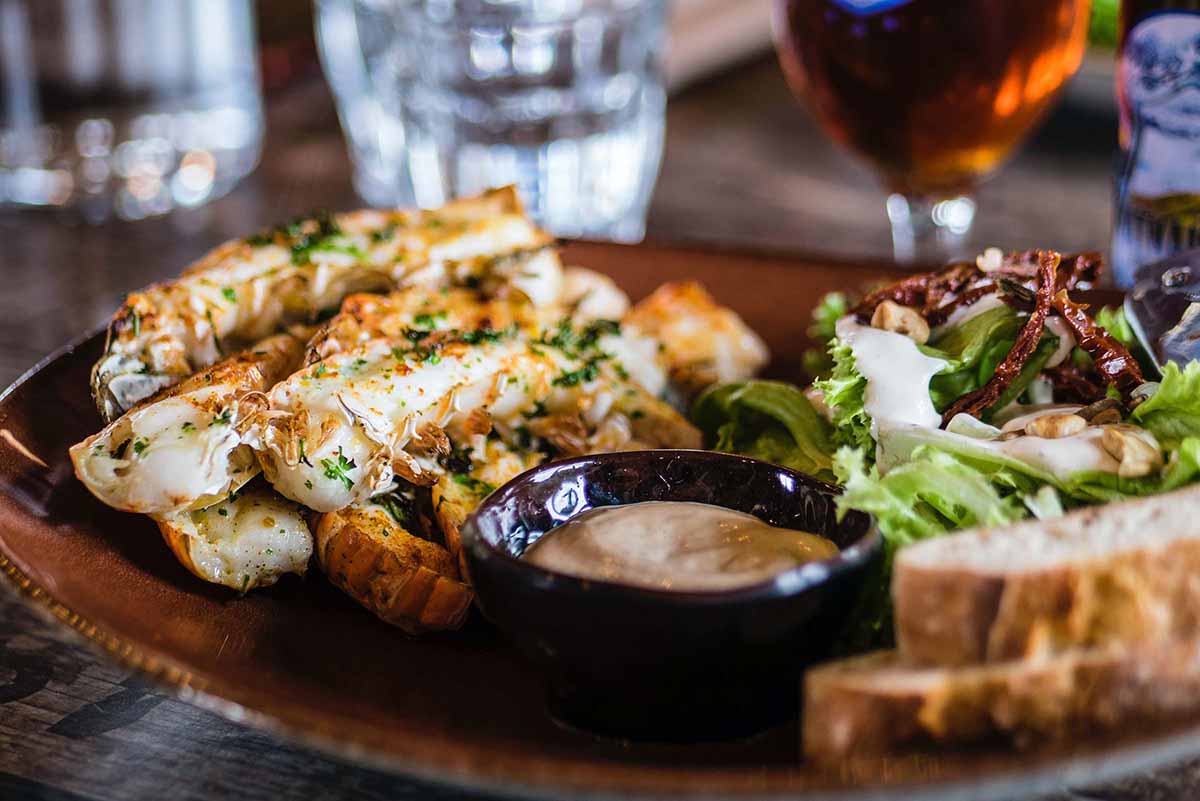
Something dry and charred, arriving against the softness of the soup, changes the rhythm of the table. The Tandoori Pomfret at 13,95 or a paneer tikka gives you a surface, a bit of smoke, something your teeth actually work on. It is the opposite of the gravies that come later.
This is the step people skip when they order three curries and rice. Without a dry, grilled element, the meal has only one texture, and one texture gets dull fast no matter how good it is.
Build to the gravies
Only now do the rich dishes make sense, because you have arrived at them rather than started with them.
Order two mains that are genuinely different from each other rather than two versions of the same idea. A deep, familiar gravy like the Butter Chicken at 23,50 alongside something that works in another register entirely, say a Hyderabadi Chicken at 22,50 in its green mint and coriander gravy rather than a tomato base. Eaten together, after the lighter courses, they land with full weight.
The bread choice matters here too. Plain Butter Roti at 3,75 rather than a stuffed, cheesy one, because the gravies are already carrying the richness and a heavy bread just competes.
Let the heat peak late, not early
Spice builds across a meal, and that is worth planning around.
If you are going to order something properly hot, it belongs toward the end of the savoury courses, not the start. Chilli accumulates on the palate, so a fiery dish early flattens everything that follows it. Saved for later, it becomes a crescendo rather than a wall.
A Raita at 4,50 on the table throughout gives you the control to manage that climb, cooling a mouthful when you need to. It is a small order that changes how freely you can eat the bolder dishes.
Finish with something milk-based
Indian desserts are mostly built on slow-cooked milk rather than pastry, and they close a meal differently than a European sweet would.
Something like the Phirni Brûlée at 9,50, a cardamom and saffron rice pudding under a caramelised crust, or a cold Kulfi at 10,95 resets the palate after all that spice. The point of the last course here is not more richness. It is a clean, perfumed finish that sends you out settled rather than stuffed.
Why the sequence is the whole point
One of the published guest reviews on the restaurant’s site describes a multi course dinner where each dish carried its own texture and aroma rather than echoing the last. That is exactly what a planned sequence produces, and exactly what ordering everything at once destroys.
The food does not change. The experience does. A soup, a grilled dish, two contrasting gravies, and a milk-based dessert, eaten in that order, is a different meal from the same dishes arriving in a heap and eaten at random. The kitchen built a sequence into the menu. Most people just never follow it.
So next time, do not order a pile. Order an arc. And if you are eating at home instead, the same instinct holds for an indian food near me order: start the lighter things first while they are at their best, and save the richest dish for when your palate has worked its way up to it. The sequence travels better than you would think.
 liamisabelle9
 myrabtorp
 jackleen