
AI is changing how businesses, creators, and readers work with digital content. For many years, translation was mostly a plain text task. A user could copy a paragraph from a website, email, or document, paste it into a translation tool, and receive a translated version in another language. That workflow is still useful, but modern content is no longer limited to plain text.
Today, people interact with screenshots, scanned pages, product images, app interfaces, social media graphics, digital comics, webtoons, PDFs, and visual documents. Much of this content contains text that cannot be copied directly. This creates a new challenge for translation tools: they must understand both the language and the visual structure of the content.
This is why visual translation is becoming an important part of modern AI content workflows. It is not only about changing words from one language to another. It also involves text detection, image understanding, layout preservation, editing control, and human review.
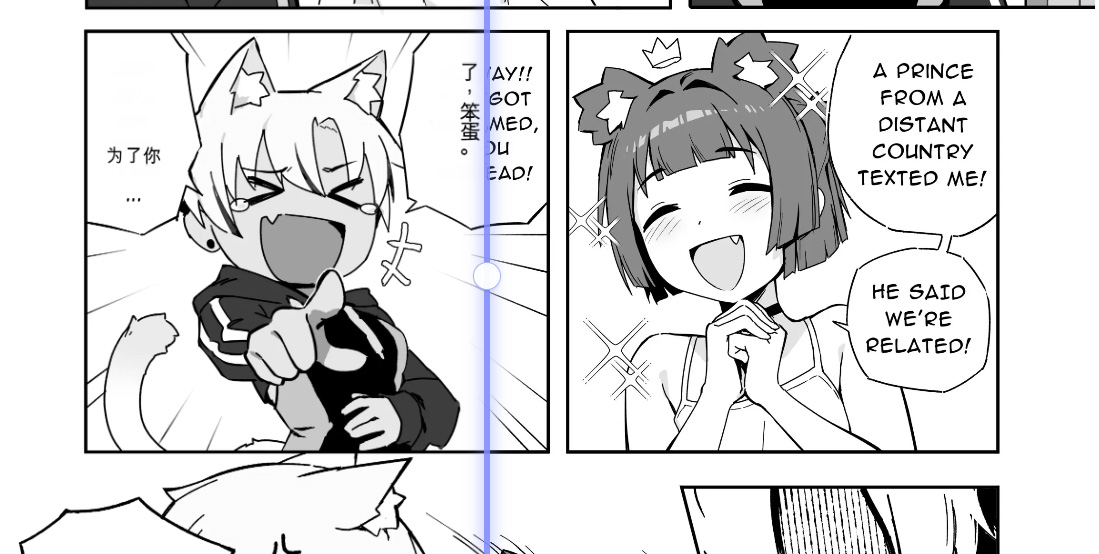
One clear example is manga and digital comics. A manga page is not a normal document. It contains artwork, speech bubbles, captions, character expressions, sound effects, panel order, and visual rhythm. Text is part of the design. If translated text is placed poorly, it can cover the artwork, overflow from a speech bubble, or break the reading flow.
Tools such as AI Manga Translate show how visual translation workflows can be designed for image-based content. Instead of asking users to manually type every line from a manga page, AI-assisted tools can help detect visible text, translate dialogue, and make the page easier to understand across languages.
The first step in this type of workflow is OCR, or optical character recognition. OCR identifies text inside an image and converts it into readable text. In a clean business document, OCR is usually easier because the text appears in straight lines on a simple background. In visual content, the task becomes more complex. Text may appear inside curved bubbles, over detailed artwork, in vertical writing, or as part of a stylized design.
After OCR comes translation. AI translation can create a fast first draft, which saves time for readers, creators, translators, and content teams. However, translation quality still depends on context. A sentence can be technically correct but still feel unnatural if the tone, emotion, or purpose is wrong. This is especially true for creative content such as manga, webtoons, comics, and illustrated stories.
The next challenge is layout. Translated text may be longer or shorter than the original. A phrase that fits neatly in one language may need more space in another. For visual content, this matters. A clean result may require rewriting the sentence, changing line breaks, resizing text, or moving the text layer.
This is where an editor-style Manga Translator workflow becomes useful. Instead of producing only a flat automatic result, an editable workflow gives users control after the AI translation pass. Users can review detected text, adjust translations, clean speech bubbles, move text layers, resize wording, save projects, and export cleaner pages.
Although manga is a specific example, the same workflow applies to many other digital content types. A marketing image may contain slogans and product labels. A software screenshot may include buttons, menus, and interface text. A scanned guide may include diagrams and captions. A social media graphic may combine design elements with text. In all these cases, translation must preserve both meaning and visual clarity.
For digital marketing teams, visual translation can support international content distribution. A campaign image, product explanation, or educational visual may need to be adapted for different languages. If the workflow only translates text but ignores design, the final content may feel unprofessional. AI can speed up the first draft, but editing and review are still necessary for quality.
For creators, visual translation can help test how content works in another language before investing in full localization. A comic artist, indie publisher, or online creator may want to understand whether a page reads naturally in English, Spanish, German, or another target language. AI translation can provide a starting point, while human review can improve tone and layout.
For readers and language learners, visual translation reduces friction. Instead of manually copying text from an image, they can use AI-assisted workflows to understand the content faster. This makes global content easier to access, especially when the original material is image-based.
Single-image workflows are also important. Many users do not always start with a full file or project. They may have one screenshot, one scanned page, or one panel they want to understand. A tool such as manga image translator supports this more focused use case by helping users work with text inside manga images.
Responsible use is important. AI translation tools should be used for content that users own, created, licensed, or have permission to process. They can support personal study, creator-owned drafts, internal review, translation practice, and authorized localization. They should not be used to distribute unauthorized copyrighted content.
AI will not replace every part of localization. Human judgment is still needed for cultural meaning, tone, humor, branding, and final quality. But AI can reduce repetitive work and make the early stages of visual translation faster.
As digital content becomes more visual and more global, translation workflows will need to become more flexible. The strongest tools will not only translate words. They will help preserve layout, context, and user experience.
Visual translation is becoming part of modern AI content workflows because online content is no longer only text. It is mixed-format, image-based, and context-dependent. Businesses, creators, and readers will increasingly need tools that can understand both language and design.
 g4 tech
  chahar technologies
  tambenaconsulting