
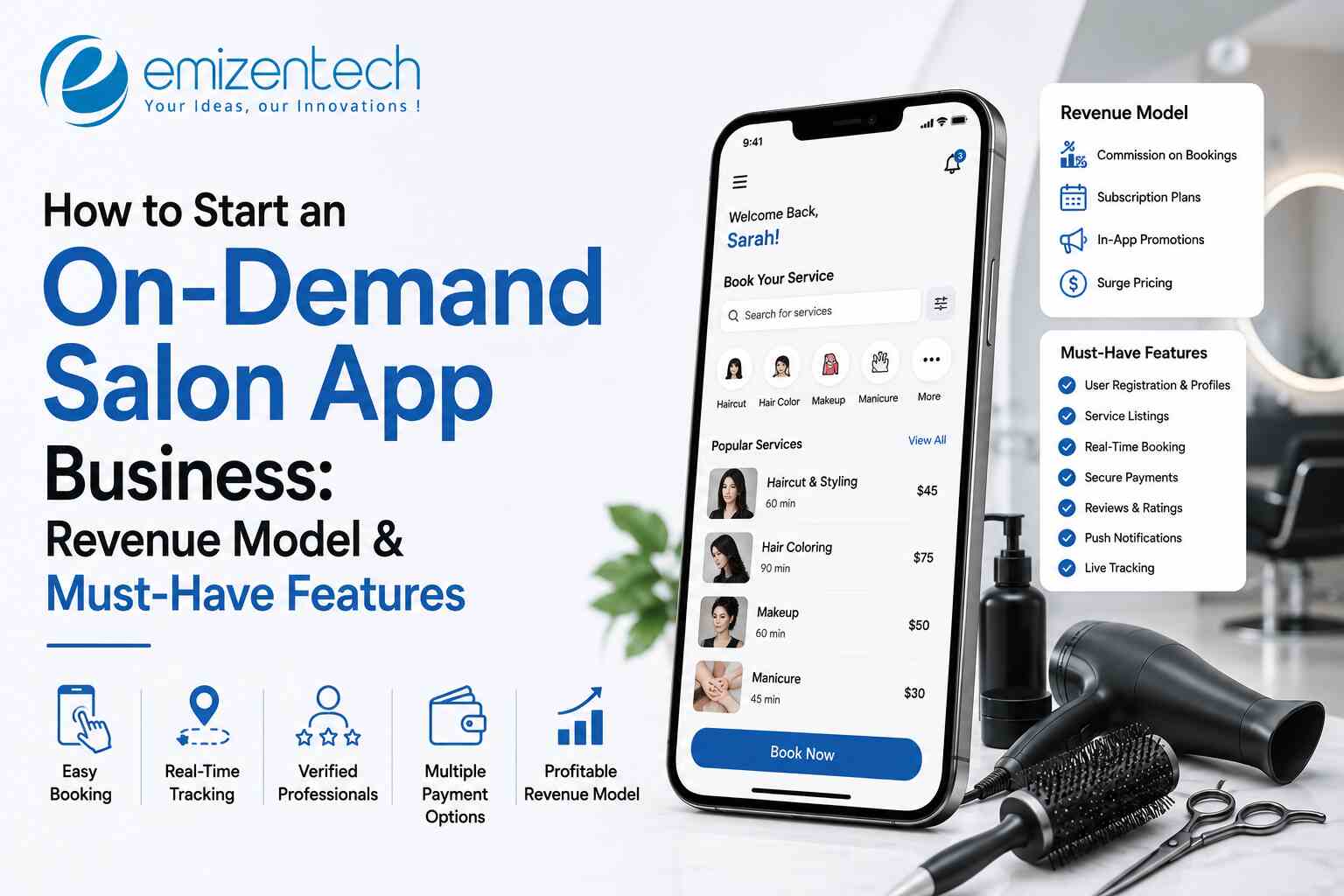
The beauty and personal care industry continues to evolve as customers increasingly prefer digital-first experiences. Online appointment scheduling, doorstep beauty services, secure digital payments, and personalised recommendations have become common expectations rather than optional conveniences. As smartphone adoption and on-demand service usage continue to grow, salon app businesses are gaining attention from entrepreneurs and established beauty brands alike.
Launching an on-demand salon app can create new opportunities by connecting customers with salons, independent stylists, and beauty professionals through a single platform. Whether the goal is to offer home beauty services, manage multiple salon locations, or create a marketplace for professionals, the demand for convenient booking experiences remains strong.
This guide explains how on-demand salon app businesses work, whether they are worth starting in 2026, the most effective revenue models, essential MVP features, estimated startup costs, and common mistakes to avoid when entering this competitive market.
What Is an On-Demand Salon App Business?
An on-demand salon app business is a digital platform that allows customers to discover beauty services, schedule appointments, make payments, and communicate with beauty professionals through a mobile application. Unlike traditional salon booking systems that mainly serve a single salon location, on-demand platforms often connect multiple service providers and customers within one ecosystem.
These apps can operate in different ways. Some focus on helping customers book appointments at nearby salons, while others offer at-home beauty services where professionals travel directly to the customer’s location. There are also marketplace-based platforms that bring together multiple salons and independent stylists, giving customers a wider range of service options. The model creates convenience for users while offering beauty professionals additional opportunities to attract and retain clients.
Is Starting an On-Demand Salon App Business Worth It in 2026?
The short answer is yes. Growing consumer demand for convenience, mobile booking, and personalised beauty services continues to create opportunities for digital salon businesses.
Key reasons include:
- Customers increasingly prefer booking appointments through mobile apps rather than making phone calls.
- The demand for at-home beauty and wellness services continues to expand in urban markets.
- Digital platforms can serve multiple locations without requiring significant physical infrastructure.
- Beauty professionals are seeking additional channels to reach customers and manage bookings.
- Mobile apps provide valuable customer insights that can improve retention and service quality.
- Subscription programs, commissions, and premium services create multiple revenue opportunities.
- The beauty industry remains resilient because personal grooming and wellness services maintain consistent demand.
For entrepreneurs willing to solve customer convenience challenges, the market remains attractive and scalable.
Step-by-Step: How to Start Your On-Demand Salon App Business
Starting an on-demand salon platform requires more than simply developing an application. Success depends on market validation, selecting the right business model, and creating a seamless experience for both customers and service providers.
Validate the Idea and Research Your Market
Study customer preferences, competitor offerings, pricing models, and service gaps within your target region. Understanding local demand helps identify opportunities that existing platforms may not be addressing effectively.
Choose Your Business Model
Decide whether the platform will operate as a single-salon application, a marketplace connecting multiple providers, or a franchise-focused solution. Each model has different operational and revenue requirements.
Define Your Revenue Strategy
Before development begins, determine how the platform will generate income. Revenue planning influences feature priorities, payment workflows, and long-term scalability.
Plan Your MVP Features
Focus on solving core customer problems first. An MVP should include only essential functionality needed to validate demand and gather user feedback.
Choose a Development Approach
Businesses can build internally, work with freelancers, or partner with a salon app development company to create the initial version of the platform. The right approach depends on budget, timeline, and technical requirements.
Launch and Acquire Early Users
After testing the application, onboard beauty professionals encourage customer reviews and use targeted marketing campaigns to attract the first group of active users.
Revenue Models for an On-Demand Salon App
Choosing the right monetisation strategy is essential for long-term sustainability. Many successful salon apps combine multiple revenue streams rather than relying on a single source of income.
Commission-Based Model
The platform earns a percentage of every completed booking. This is one of the most common revenue models because earnings grow alongside platform usage.
Subscription Model
Customers or beauty professionals pay a recurring monthly fee to access premium benefits, exclusive offers, or enhanced visibility within the platform.
Freemium + Featured Listings
Basic access remains free, while salons and stylists pay for featured placement, increased visibility, or promotional opportunities.
On-Demand Surge or Premium Pricing
Prices increase during peak hours, holidays, or periods of high demand. This helps balance supply and demand while increasing revenue.
Hybrid Model
Many successful platforms combine commissions, subscriptions, and promotional listings. This diversified approach reduces dependency on a single revenue source.
Must-Have Features for Your On-Demand Salon App
A successful salon application should create a smooth experience for customers, beauty professionals, and administrators. Prioritising the right MVP features can improve adoption while keeping development costs manageable.
Customer App Features
Customers expect convenience, transparency, and speed throughout the booking process. Essential features include appointment scheduling, service browsing, secure payments, booking history, notifications, ratings, reviews, and real-time appointment updates.
Stylist or Professional App Features
Service providers need tools that simplify daily operations. Important capabilities include schedule management, appointment requests, earnings tracking, service management, customer communication, and navigation assistance for home-service appointments.
Admin Panel Features
The administration dashboard helps manage platform operations efficiently. Key functions include user management, commission tracking, payment monitoring, dispute resolution, reporting, analytics, and promotional campaign management.
Advanced Features for Future Growth
Once the MVP gains traction, businesses can expand functionality with AI-powered recommendations, loyalty programmes, video consultations, personalised offers, and automated customer support. Many businesses work with a specialised beauty salon app development company when planning these advanced capabilities to ensure scalability and performance.
How Much Does It Cost to Start an On-Demand Salon App Business?
The cost of launching an on-demand salon app varies depending on feature complexity, design requirements, platform selection, and development approach.
Typical development ranges include:
- Basic MVP: $10,000–$25,000
- Mid-Level App: $25,000–$60,000
- Advanced Marketplace Platform: $60,000–$120,000+
Additional operational expenses may include:
- Digital marketing campaigns
- Stylist onboarding programs
- Customer support resources
- Cloud hosting and infrastructure
- Ongoing maintenance and updates
- Payment gateway fees
Businesses planning long-term growth should evaluate both development and operational expenses before launching.
Common Mistakes to Avoid When Starting
Many salon app startups face challenges because they focus on technology before validating business demand.
- Building too many features before launching an MVP
- Ignoring the needs of beauty professionals using the platform
- Underestimating customer acquisition and retention costs
- Failing to establish a clear market position
- Offering services without sufficient quality control processes
- Neglecting user feedback after launch
- Choosing revenue models that do not align with customer behavior
Avoiding these mistakes can improve the chances of achieving sustainable growth.
Conclusion
Starting an on-demand salon app business can be an attractive opportunity for entrepreneurs looking to participate in the growing digital beauty market. Success depends on validating demand, selecting the right revenue model, building an MVP with essential features, and continuously improving the user experience for both customers and service providers. By focusing on practical functionality and sustainable growth strategies, businesses can create a platform that delivers long-term value. As the demand for salon technology continues to grow, EmizenTech focuses on developing digital solutions that help beauty businesses adapt to changing customer expectations and industry trends.
FAQs
1. How much does it cost to start an on-demand salon app business?
Costs vary depending on features and complexity. A basic MVP may start around $10,000, while advanced marketplace platforms can exceed $100,000.
2. What is the best revenue model for a salon app?
Many businesses use a hybrid model that combines commissions, subscriptions, and promotional listings to diversify revenue.
3. Do I need a license to start an on-demand salon business?
Requirements vary by location. Business registration, service provider compliance, and local regulations should be reviewed before launch.
4. How long does it take to launch an MVP?
Most MVP salon apps take approximately 3–6 months, depending on feature scope and development resources.
5. Is the on-demand salon business profitable?
Profitability depends on customer acquisition, service quality, operational efficiency, and the chosen revenue model.
 Sarah Joseph
  markthomas
  yasirmohd.tech@gmail.com