
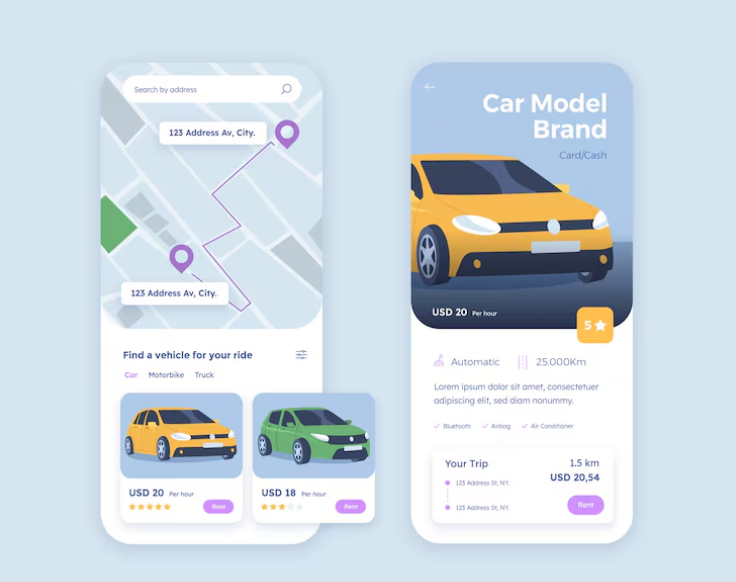
The rise of on-demand transportation has created significant opportunities for businesses that want to launch their own digital ride-hailing platforms. Customers now expect convenient ride booking, real-time tracking, transparent pricing, and secure digital payments through mobile applications.
As a result, startups, taxi operators, and transportation companies are increasingly investing in Uber Like Taxi App Development Company services to create customized platforms for their target markets.
But how do you develop uber like app that is not only technically reliable but also profitable and scalable?
A successful ride-hailing platform requires more than a simple booking application. It needs a complete uber like app solution with passenger and driver applications, an admin dashboard, real-time GPS tracking, secure payments, automated ride management, and scalable backend infrastructure.
This guide explains how to develop an uber like app, including the development process, essential features, monetization strategies, cost factors, and how to choose the right development partner.
Why Invest in Uber-Like Taxi App Development for Your Ride-Hailing Business?
The growing demand for app-based transportation has encouraged businesses to develop customized ride-hailing platforms. Instead of relying entirely on existing third-party platforms, businesses can launch their own branded uber like taxi app and create a direct connection with passengers and drivers.
Investing in uber like taxi app development can help businesses:
- Launch a branded transportation platform
- Manage drivers and passengers from one system
- Offer customized ride categories
- Provide real-time ride tracking
- Accept multiple payment methods
- Generate revenue through commissions and booking fees
- Expand into new cities and markets
For businesses planning to enter the ride-hailing industry, working with an experienced uber like taxi app development company can help reduce technical risks and simplify the development process.
What Features Should You Include When You Build an Uber-Like Taxi App?
A successful ride-hailing platform generally includes separate applications for passengers and drivers, along with a centralized admin dashboard.
Passenger App Features
The passenger application should provide a fast and convenient ride-booking experience.
Simple Registration and Login
Users should be able to register using their phone number, email address, or social media accounts. OTP verification can be used to improve account security.
On-Demand Ride Booking
Passengers can enter their pickup and destination locations and request a ride based on their current location.
Fare Estimation
The application can calculate estimated fares based on distance, travel time, vehicle category, demand, and other pricing factors.
Real-Time Driver Tracking
GPS tracking allows passengers to monitor the driver’s location and estimated arrival time after booking a ride.
Multiple Payment Options
A modern uber like app solution can support multiple payment methods, including:
- Credit and debit cards
- Digital wallets
- Online payment gateways
- Cash payments
- In-app wallets
Ride Scheduling
Passengers can schedule rides in advance for airport transfers, business travel, and other planned journeys.
Ratings and Reviews
Passengers can rate drivers and provide feedback after completing a ride.
Driver App Features
The driver application helps drivers manage their availability, ride requests, and earnings.
Driver Registration and Verification
Drivers can submit personal information, driving licenses, vehicle documents, and other required details.
Ride Request Management
Drivers can receive nearby ride requests and accept or reject them based on their availability.
Navigation and Route Assistance
Integrated maps help drivers navigate to passenger pickup locations and destinations.
Earnings Dashboard
Drivers can track completed rides, commissions, earnings, and payment history.
Online and Offline Mode
Drivers can switch their availability status based on whether they are ready to accept new ride requests.
Admin Panel Features
The admin dashboard provides centralized control over the entire platform.
Important features include:
- Passenger management
- Driver management
- Ride management
- Vehicle category management
- Pricing management
- Commission management
- Payment management
- Offers and promotions
- Analytics and reports
- Customer support
- Dispute management
Which Advanced Features Can Make Your Uber-Like Taxi App More Profitable?
Businesses can add advanced features to improve operational efficiency, user experience, and revenue potential.
AI-Powered Driver Matching
AI can analyze driver location, availability, distance, traffic, and historical ride data to improve driver-passenger matching.
Dynamic Pricing
Dynamic pricing allows the system to adjust fares based on demand, traffic, availability, and peak travel hours.
Multiple Vehicle Categories
Businesses can offer multiple ride options, including:
- Economy
- Premium
- Luxury
- SUVs
- Bike taxis
- Shared rides
- Electric vehicles
Providing different options can help attract a wider customer base.
AI Chatbot Support
An AI chatbot can answer common questions, assist with booking-related queries, and reduce the workload of customer support teams.
Corporate Ride Management
Businesses can offer corporate accounts that allow companies to manage employee transportation, travel policies, and ride expenses.
Loyalty and Referral Programs
Loyalty points, referral bonuses, and promotional offers can encourage repeat bookings and help attract new users.
How Can You Develop an Uber-Like App for Your Business?
If you are planning to develop uber like app, following a structured process can help you build a scalable and profitable ride-hailing platform.
1. Define Your Business Model
Before development begins, determine how your platform will generate revenue.
Common monetization models include:
- Commission from drivers
- Booking fees
- Surge pricing
- Subscription plans
- Corporate partnerships
- Advertising
Your business model will influence the features, pricing system, and technical architecture of your application.
2. Research Your Target Market
Analyze your target customers, competitors, pricing models, transportation needs, and local regulations.
Research can help you identify:
- Customer pain points
- Competitor weaknesses
- Popular ride categories
- Local pricing expectations
- Driver challenges
This information can help you create a more relevant uber like app solution.
3. Select the Core Features
Start by identifying the features required to launch your platform. An MVP approach can help businesses launch faster and test their idea before investing in advanced features.
Essential MVP features may include:
- User registration
- Driver registration
- Ride booking
- GPS tracking
- Fare calculation
- Payment integration
- Notifications
- Ratings and reviews
- Admin management
4. Design the UI/UX
Create wireframes, prototypes, and visual designs for the passenger application, driver application, and admin dashboard.
The interface should be simple, intuitive, and easy to navigate.
A smooth user experience can help improve:
- Booking completion rates
- Customer satisfaction
- User retention
- Driver engagement
5. Choose the Right Technology Stack
The technology stack should be selected based on performance, scalability, security, and long-term business requirements.
A typical technology stack may include:
- Mobile: Flutter, React Native, Swift, or Kotlin
- Backend: Node.js, Python, Java, or PHP
- Database: MySQL, PostgreSQL, or MongoDB
- Cloud: AWS, Google Cloud, or Microsoft Azure
- Maps: Google Maps APIs
- Payments: Stripe, PayPal, or regional payment gateways
An experienced Uber Like App Development company can help you choose the right technology stack for your platform.
6. Develop the Application
The development team builds the frontend, backend, APIs, database, admin panel, and third-party integrations.
A reliable backend is essential for managing:
- Real-time location data
- Ride requests
- Driver availability
- Payment transactions
- Push notifications
- Route information
7. Test the Application
Before launch, the application should be tested across different devices and scenarios.
Testing may include:
- Functional testing
- Performance testing
- Security testing
- API testing
- GPS testing
- Payment testing
- Usability testing
Proper testing helps identify bugs and improves the reliability of the platform.
8. Launch and Continuously Improve
After testing, the application can be launched on the required platforms.
Post-launch activities may include:
- Monitoring user feedback
- Analyzing app performance
- Tracking user behavior
- Fixing technical issues
- Adding new features
- Improving security
Continuous improvement can help your ride-hailing business remain competitive.
How Can an Uber-Like Taxi App Generate Revenue?
A profitable uber like taxi app should have a clear monetization strategy.
Driver Commission
The platform can charge a percentage of every completed ride.
Booking Fees
A fixed booking or service fee can be added to each ride.
Surge Pricing
Fares can be adjusted during high-demand periods.
Subscription Plans
Businesses can offer monthly or yearly subscription plans for frequent passengers or drivers.
Corporate Accounts
Companies can be charged for managing employee transportation through dedicated business accounts.
Advertising
Businesses can generate additional revenue through relevant in-app advertising and promotional partnerships.
How Much Does It Cost to Develop an Uber-Like Taxi App?
The cost to develop uber like taxi app depends on several factors, including app complexity, number of platforms, features, design, technology stack, integrations, and development team.
An estimated development budget may include:
- Basic MVP: $10,000–$30,000
- Medium-complexity platform: $30,000–$60,000
- Advanced platform: $60,000–$100,000+
Businesses can reduce initial costs by launching an MVP and adding advanced features as the user base grows.
How Long Does It Take to Develop an Uber-Like Taxi App?
The development timeline depends on the complexity and scope of the project.
A basic MVP may take approximately 3 to 5 months, while a feature-rich platform can require 8 to 12 months or more.
The development process generally includes:
- Business analysis
- Market research
- UI/UX design
- Frontend development
- Backend development
- API integrations
- Testing
- Deployment
The timeline may increase when businesses require advanced AI features, multiple platforms, or complex third-party integrations.
Why Hire an Uber-Like Taxi App Development Company?
Developing a successful ride-hailing application requires expertise in mobile development, backend engineering, GPS technology, payment integrations, cloud infrastructure, and real-time systems.
A professional uber like taxi app development company can help businesses with:
- Business analysis
- UI/UX design
- Mobile app development
- Backend development
- API integration
- Real-time GPS tracking
- Payment gateway integration
- Quality assurance
- App deployment
- Post-launch maintenance
Choosing the right development partner can make it easier to build uber like app that is secure, scalable, and customized to your business requirements.
How Can You Choose the Right Uber-Like App Development Company?
Before hiring an uber like app development company, evaluate several important factors.
Consider:
- Previous taxi app development experience
- Technical expertise
- Portfolio and case studies
- UI/UX design capabilities
- Development methodology
- Communication process
- Pricing and timeline
- Post-launch support
The right partner should understand your business goals and help you create a customized uber like app solution rather than simply copying existing features.
FAQs About Developing an Uber-Like Taxi App
How do I develop an Uber-like taxi app?
To develop an Uber-like taxi app, define your business model, research the market, select core features, design the UI/UX, choose the technology stack, develop the application, test it, and launch it with continuous support.
How much does it cost to build an Uber-like taxi app?
The cost can range from approximately $40,000 to $250,000 or more, depending on features, complexity, platforms, integrations, and development requirements.
What features are essential for an Uber-like taxi app?
Essential features include ride booking, GPS tracking, fare estimation, driver management, payment integration, push notifications, ratings, reviews, and an admin dashboard.
Can I build an Uber-like app for a specific city?
Yes. A customized taxi application can be developed for a specific city or region with location-based pricing, local payment options, and market-specific features.
How can I hire an Uber-like taxi app development company?
Businesses should evaluate a company’s technical expertise, portfolio, taxi app development experience, pricing, communication process, and post-launch support before hiring a development partner.
Is it possible to add AI features to an Uber-like taxi app?
Yes. AI can be used for driver matching, demand prediction, dynamic pricing, route optimization, chatbot support, fraud detection, and personalized user experiences.
Conclusion
Learning how to develop an Uber like app requires careful planning, market research, the right technology, and a scalable development strategy. A successful ride-hailing platform should provide a seamless experience for passengers, drivers, and administrators.
From real-time tracking and digital payments to AI-powered driver matching and dynamic pricing, businesses can create a customized uber like app solution based on their specific goals.
Whether you are a startup, taxi operator, or established transportation company, partnering with an experienced Uber Like App Solution provider can help you build uber like app that is secure, scalable, profitable, and ready for long-term growth.
 drasloom drasloom
  bellsouth info