
Running a restaurant today looks nothing like it did even a decade ago. Guests order through apps, expect real-time table availability, and compare wait times before they even walk in. Meanwhile, owners are juggling rising food costs, staff shortages, and razor-thin margins. In the middle of all this, technology has quietly become one of the biggest differentiators between restaurants that scrape by and restaurants that actually grow.
That’s where restaurant management software comes in. It’s not a single tool but a category of systems that handle everything from taking orders to tracking inventory to scheduling staff. Used well, it doesn’t just make daily operations smoother, it changes how a business makes decisions.
The Problem With Running a Restaurant on Instinct
For a long time, restaurant management relied heavily on gut feeling. A manager would eyeball the dining room to guess how busy tonight might be, order stock based on last week’s sales, and schedule staff the same way they always had. This works fine until it doesn’t. A slow Tuesday can quietly bleed money in overstaffing, while an unexpectedly busy weekend can mean running out of key ingredients halfway through service.
The businesses that scale past a single location are usually the ones that stopped relying purely on instinct and started relying on data. That shift is what smart software actually enables.
Turning Daily Operations Into Usable Data
Every order placed, every table turned, every ingredient used generates information. Restaurant management software captures that information automatically instead of leaving it scattered across notebooks, spreadsheets, or a manager’s memory.
Over time, this builds a clear picture of what’s actually happening in the business: which dishes sell best on which days, how long tables stay occupied during peak hours, where food waste tends to happen, and which shifts are consistently understaffed or overstaffed. None of this requires guesswork once the data exists. It just requires someone to look at it.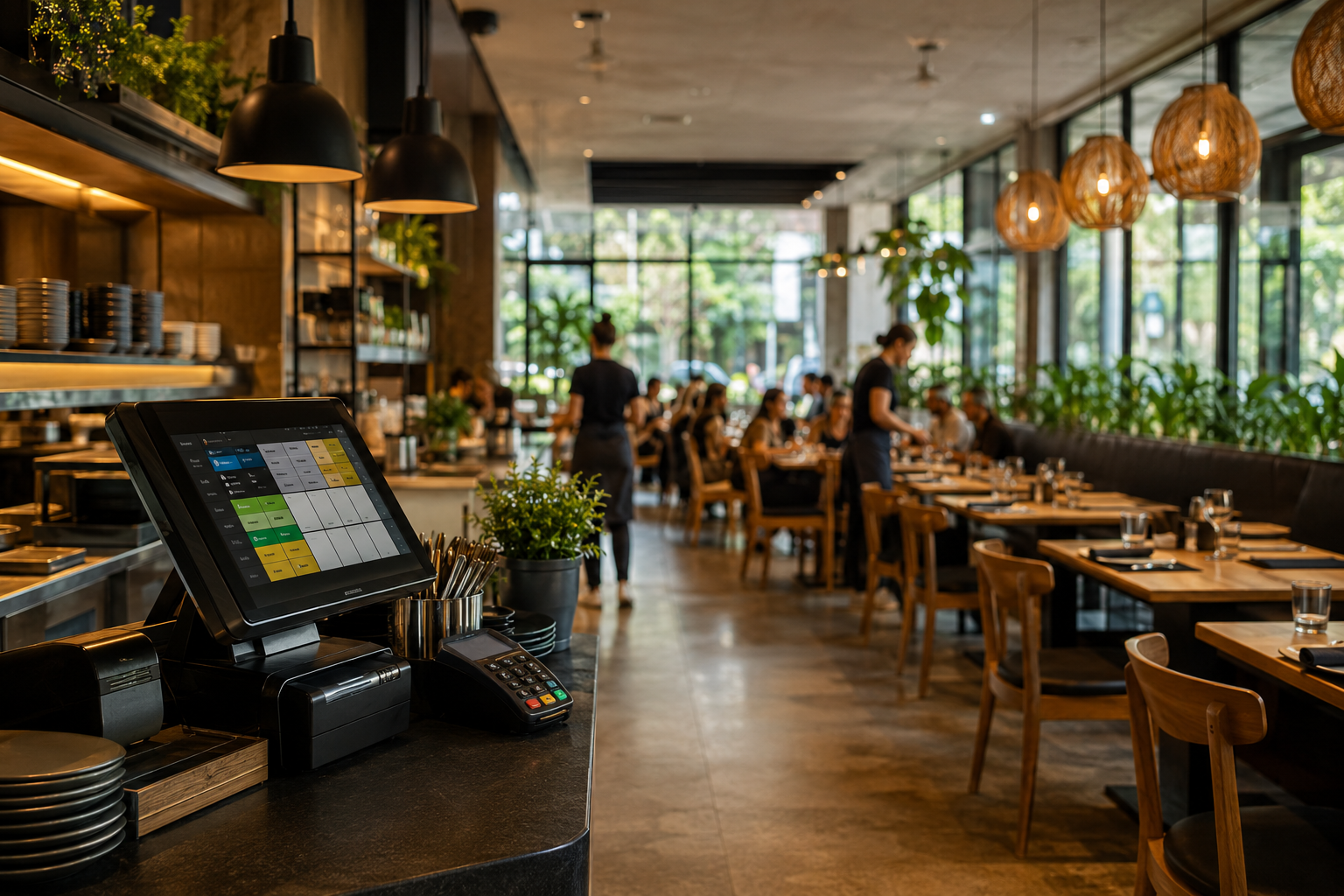
Where the Real Growth Comes From
It’s tempting to think of this software as just a way to speed up order-taking or cut down on paperwork. That’s part of it, but the bigger impact tends to show up in a few specific areas.
Inventory control. Food cost is one of the largest expenses in any restaurant, and it’s also one of the easiest to lose track of. When software links sales directly to inventory usage, owners can spot shrinkage, reduce over-ordering, and catch pricing problems before they eat into margins.
Staff scheduling. Labor is the other major cost center, and getting it wrong in either direction hurts. Systems that track historical demand patterns help managers build schedules that match actual traffic instead of rough estimates, which reduces both overtime costs and the kind of understaffing that leads to bad service.
Customer experience. Faster order processing, fewer mistakes, and shorter wait times all come from having systems that talk to each other instead of operating as separate silos. A kitchen display system connected to the point of sale means the kitchen isn’t reading handwritten tickets. A reservation system tied to table management means guests aren’t told there’s a wait when tables are actually free.
Multi-location consistency. For restaurants expanding beyond one site, keeping standards consistent is one of the hardest parts of growth. Centralized systems let owners compare performance across locations, spot which ones are underperforming, and apply lessons learned in one place to the others.
Growth Is Rarely About One Big Change
It’s worth being honest about something: no piece of software will fix a restaurant with a weak menu, inconsistent food quality, or poor service. Technology supports good operations, it doesn’t replace them.
What it does is remove a lot of the friction and guesswork that slows growth down. Instead of a manager spending hours reconciling inventory counts by hand, that time goes toward training staff or refining the menu. Instead of discovering a slow month after it’s already happened, owners see the trend early enough to adjust.
Growth in hospitality tends to come from a series of small, consistent improvements rather than one dramatic overhaul, and having accurate, real-time information is often what makes those improvements possible in the first place.
The Bigger Picture
As the restaurant industry continues to deal with thin margins and rising costs, the gap between businesses that use their data well and those that don’t is likely to keep widening. Software isn’t a shortcut to success, but it does give hospitality businesses a clearer view of where money is being made, where it’s being lost, and what needs attention next.
For any restaurant owner thinking about long-term growth, that visibility alone is worth taking seriously.
 Oakwood Hotel
 sanjai Vaitheeswaran
 soulflavorscapeofi@gmail.com