
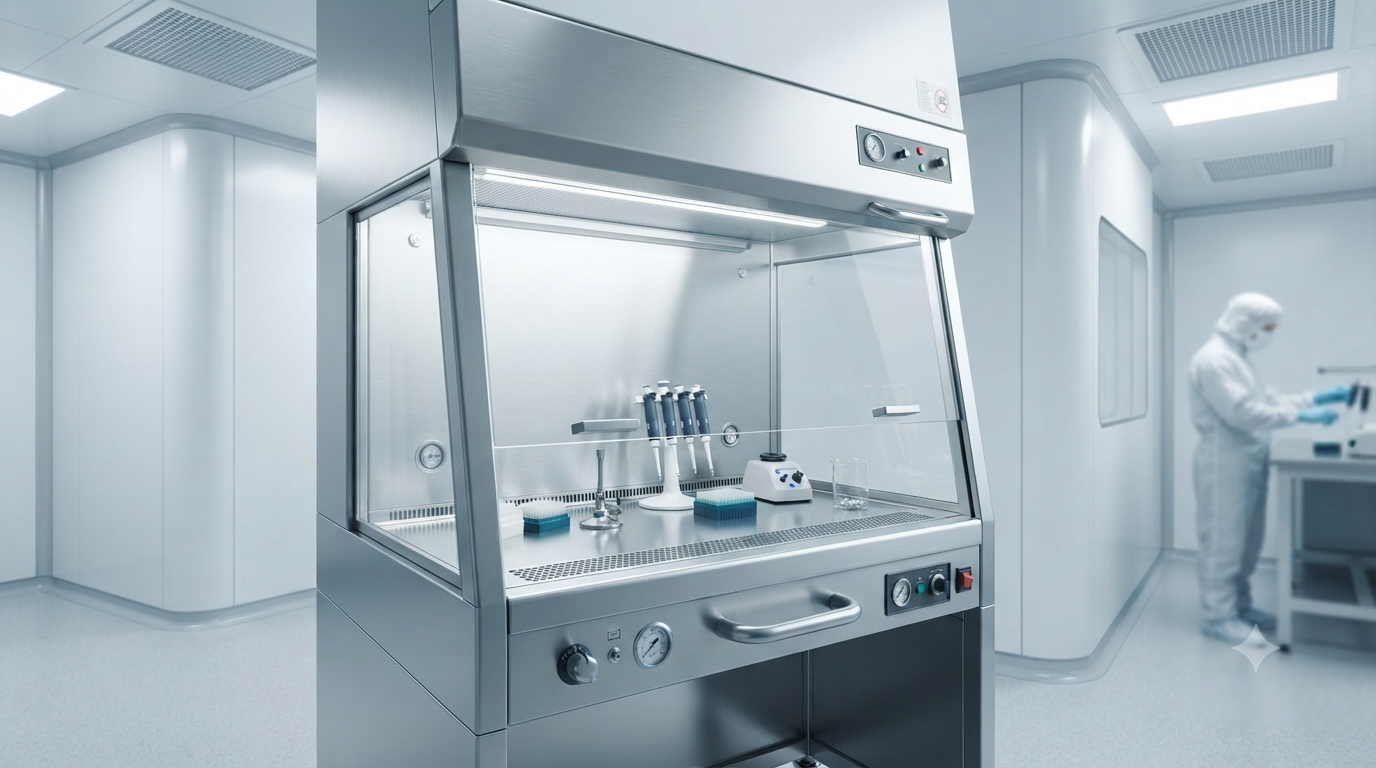
Safely handling infectious materials is a primary concern for most laboratories. Thus, biological safety cabinets act as one of the vital tools in this scenario. A biological laminar air flow unit helps to efficiently use the biosafe environments like laboratories. This type of cabinet helps in engineering control and acts as a primary barrier for protecting the laboratory surroundings, materials, and workers.
You might confuse it with PPE, but unlike them, it provides controlled surroundings with the help of filtration and ventilation. It helps to control infectious or potentially infectious pathogenic materials safely. Mostly, biological safety cabinets act like three pillars of protection: personal, product and environment protection.
What are the different varieties of biological safety cabinets?
There are three types of biosafety cabinets, each one offering different safety levels against the protection and safety.
1. Basic protection through Class I cabinets
This type of cabinets offer complete surrounding and user protection but not enough safeguard for the pathogen materials. Air will flow directly inside the cabinets and across the entire work surface with no filtration before it reaches the materials or the sample. It is best to use for low- to moderate threat-centric environments. It is ideal to implement in processes which does not involve any sterility.
2. Lab workhorse through Class II cabinets
Class II biological cabinets offer all three varieties of protection and are widely used in laboratories. There are numerous subtypes of Class II laminar air flow unit like A2, A1, B2, B1, and C1. These subtypes differ according to the way they circulate or exhaust the air and the airflow velocity. For example, people mostly use A2 cabinets in laboratories to improve the protection of personnel by offering higher face velocity. It is best to use in research and clinical laboratories and in routine microbiological experiments. The components of class II cabinets include:
- Downward airflow of HEPA filter protects the materials and the products.
- Inward flow of the air protects the working personnel.
- The cabinets completely filter exhaust air to protect the surroundings.
3. High-end containment with Class III biological safety cabinets
Biological safety cabinets III are completely enclosed and gas-tight systems where you have to conduct the work with the help of the glove ports. Air enters and leaves the cabinets through the HEPA filtration systems and often passes through the exhaust twice, offering the highest level of protection. It is perfect to use for high-threat pathogens and highly contained laboratories like BSL 4.
How do HEPA and airflow filtration help to safeguard the pathogens?
The efficiency of the biological safety cabinets is primarily dependent on their filtration and airflow designing system. Directional airflow keeps the air away from the user and then forces it inside the cabinet. The front opening of the air curtains maintains proper containment. HEPA filtration system get rids of particulates from both the exhaust and supply air, including microorganisms. For instance, in the Class II biological safety cabinets, it traps the room air in the front grille and distributes the air with the help of HEPA filters. It creates a constant protective barrier either by exhaustion or recirculation of the air.
How to maintain and certify the biological safety cabinets?
Regular certification of the biosafety cabinets will make sure that they are performing appropriately. You need to have certification of the cabinets during installation, after major repairing or relocation and annually. By certification, we do not mean only replacing the HEPA filters. Certification will ensure that the cabinets are working effectively. You should also be cautious while using the cabinets and should maintain correct practices.
FAQ
- What is the role of UV lights in the safety cabinets?
Biological laminar air flow unit sometimes use UV lights, but they cannot properly replace the disinfection procedure. They are mostly effective on surfaces which directly exposed to the sunlight and can reduce the quality of the raw materials over time.
Final Verdict
Biological safety cabinets are vital tools to handle biohazardous pathogen materials, but you should have a clear understanding of how to use and make them work correctly. From choosing the most appropriate laminar air flow unit to maintaining correct certification and airflow, each detail will play a vital role in protecting the surrounding area, work integrity and laboratory workers. In other words, biosafety cabinets are not only equipment but a way to offer a safe working environment in a laboratory along with correct practices and tools.
 companyformationqatar
  saadurrehman
  mfnauditing