
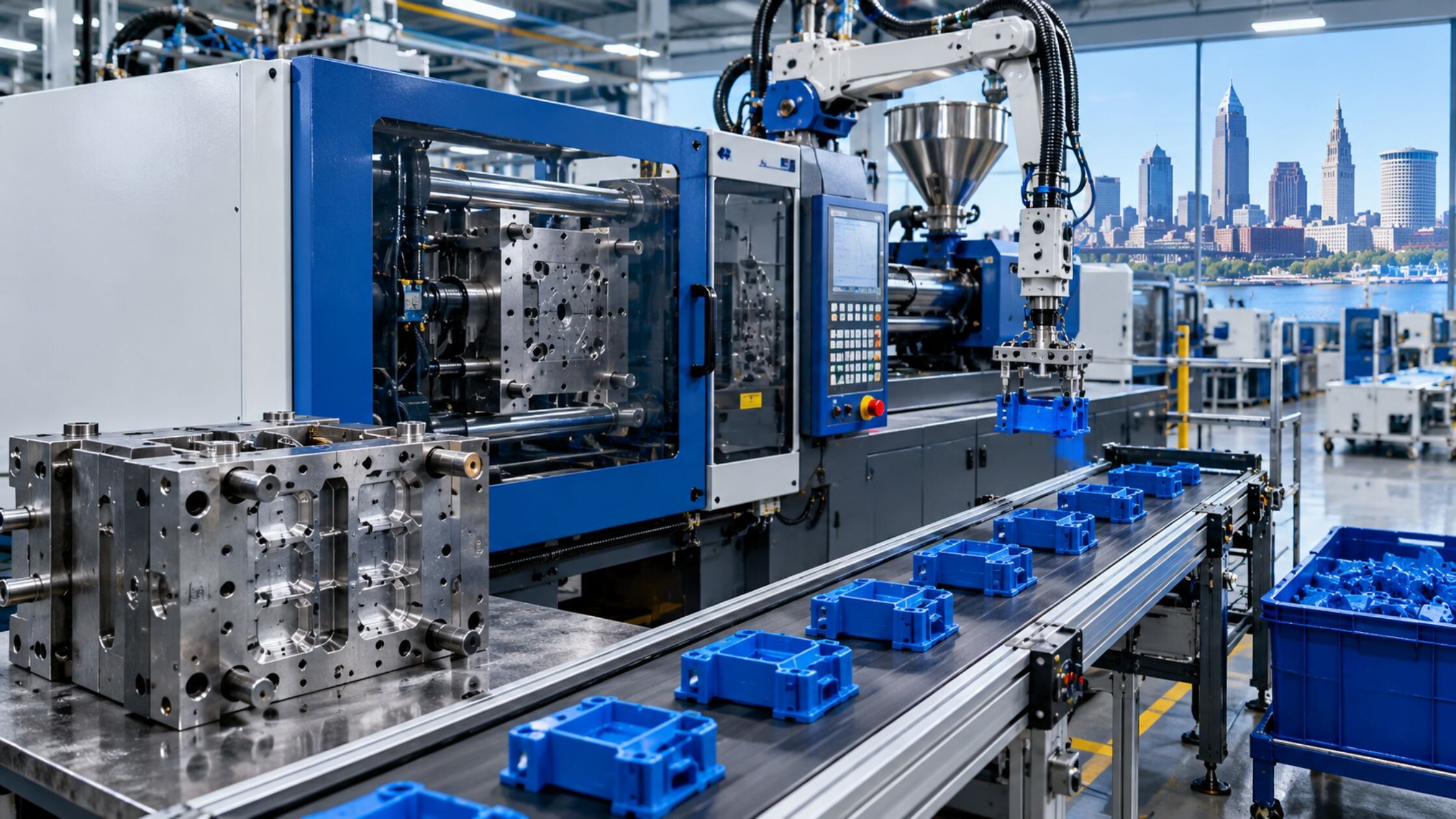
Large plastic orders need more than a mold. They need the right design, material, tooling, and production plan. Injection molding in Cleveland brings these steps together for projects that need 1,000 pieces or more, including plastic components used in shipping-center conveyor systems.
Why Injection Molding Fits High-Volume Parts
Injection molding is made for large production runs. Once the mold is ready, the same process can be repeated to make many parts. The process is also highly automated. This makes it a good choice when a business needs a large number of matching plastic parts.
The production plan can take several needs into account:
- Part design
- Material
- Quantity
- Mold needs
- Project needs
The right process depends on the part and how it will be used.
How the Molding Process Produces Plastic Parts
From Pellets to a Finished Part
The process follows a clear set of steps:
- Plastic pellets are heated until they melt.
- The melted plastic is pushed into a mold.
- The plastic cools inside the mold.
- The finished part is taken out.
The molds use high-grade metal that can handle high heat. This makes them suitable for large production runs.
How Mold Creation Supports Production
The mold gives the plastic its final shape. A good mold is a key part of a high-volume project.
Tooling can include:
- Prototype molds
- Production molds
- Initial tooling
The tooling plan depends on the part, the chosen process, and the number of parts needed. The project can then move from tooling into production.
Where Prototyping Fits Before Production
A prototype lets the team check a part before full production starts. The process can begin with a 3-D data review and prototype. This gives the team a chance to review the design and plan the next production steps.
A project can move through this path:
3-D data review → prototype → production plan → tooling → production
This approach gives buyers a chance to address design questions before a large order is made.
How Materials Are Selected for Plastic Parts
Plastic is one of several material choices for custom parts. Other choices include:
- Carbon fiber
- Composites
- Metals
- Alloys
- Plastics
The best choice depends on what the part needs to do. Material sourcing also includes supplier records that verify the material. Supplier relationships can provide the needed amount and grade for a specific project.
How Injection Molding Supports Conveyor Components
Injection molding in Cleveland can also support plastic parts used in conveyor systems. Plastic injection molded parts for a shipping center conveyor belt are one example of this type of application.
Custom conveyor system sprocket parts can support both new and existing conveyor systems. The service covers:
- Conveyor drive belt sprockets
- Conveyor roller belt sprockets
- Replacement sprockets
- Sprockets for new conveying systems
Injection molding is one possible choice for plastic conveyor parts. It is not the required method for every sprocket. Sprockets can also use metals, alloys, composites, or carbon fiber.
How Quality Checks Support Production Runs
Quality checks can take place from the tooling stage through production. Depending on the project, they can include:
- Inspection
- Measuring
- Testing
- Gauging
- Critical-dimension checks
- Material records
- Statistical Process Control
- First production article checks
Regular updates also keep buyers informed as production moves forward. Open communication gives the team a chance to answer questions and clear up details during the project.
Final Thoughts
High-volume plastic parts need the right mold, material, design, and production plan. A clear process can move a project from design review to finished parts with fewer surprises.
For businesses considering injection molding, plastic conveyor parts are one possible application. When conveyor system sprocket parts are needed, the material and production method can be chosen based on the needs of the specific conveyor system.
 365 heating cooling & Water inc
  cavinsmith