
Replacing a missing tooth involves more than simply filling the visible gap in your smile. For many patients, having enough healthy jawbone is an important part of successful dental implant treatment. When a tooth has been missing for some time, the surrounding bone can gradually lose volume. In these situations, a bone graft for tooth implant treatment may help rebuild the foundation needed to support an implant.
Why Jawbone Matters for Tooth Implants
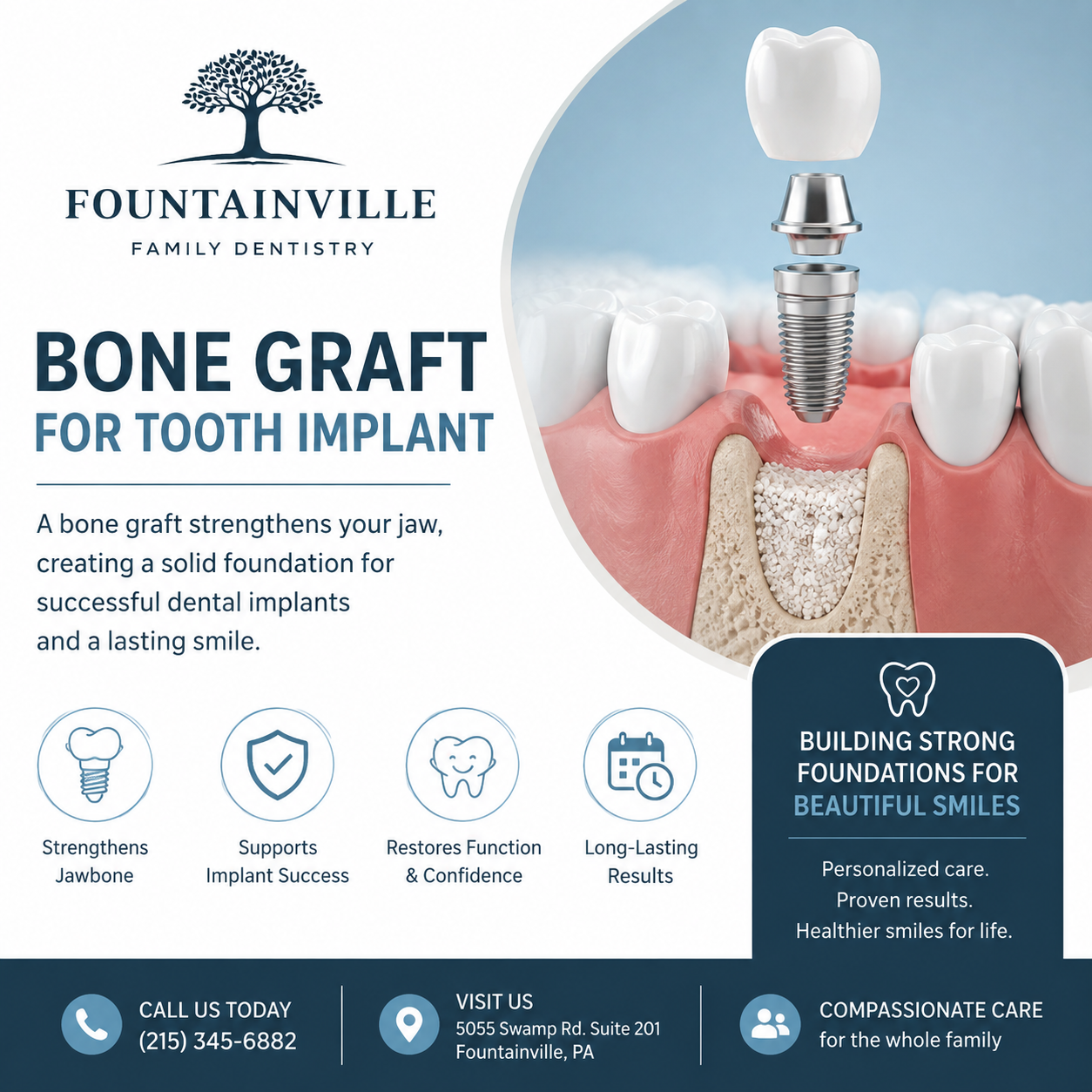
Dental implants are designed to replace the root portion of a missing tooth. A titanium implant is placed into the jawbone, where it gradually integrates with the surrounding bone. This process, known as osseointegration, helps provide stability for the replacement tooth.
However, sufficient bone volume and density are necessary for predictable implant placement. Tooth loss, gum disease, infection, trauma, or prolonged periods without a tooth can contribute to bone loss. If there is not enough bone available, a dentist may recommend a bone graft before placing the implant.
What Is a Bone Graft?
A dental bone graft is a procedure that adds bone material to an area where the jawbone has become too thin or weak. The graft material provides a framework that allows new bone to develop over time.
Depending on the patient’s individual needs, different types of grafting materials may be considered. Your dentist will evaluate the condition of your jaw and recommend an appropriate approach based on factors such as the location of the missing tooth and the amount of bone available.
How a Bone Graft Supports Implant Treatment
The primary purpose of a bone graft is to improve the foundation available for a future dental implant. Once the graft has had enough time to heal and integrate with the surrounding tissue, the dentist can reassess the area to determine whether it is ready for implant placement.
A stronger and adequately sized bone structure can help provide the stability required to support an implant and replacement crown. The timing between grafting and implant placement varies from patient to patient, so an individualized treatment plan is important.
What to Expect During Treatment
Before recommending grafting, the dentist will typically examine your teeth, gums, and jawbone. Dental imaging may also be used to evaluate bone levels and determine the most appropriate treatment approach.
During the grafting procedure, the affected area is carefully prepared and the graft material is placed where additional bone volume is needed. The area is then protected while healing takes place. Your dentist will provide aftercare instructions to support proper recovery.
Good oral hygiene and following your dentist’s recommendations are important during the healing period. Once healing is complete, your dentist can determine the next step in the implant process.
Is Bone Grafting Right for Everyone?
Not every patient who receives a dental implant needs a bone graft. The need for grafting depends on the amount and quality of available bone. A comprehensive dental evaluation is the best way to determine whether additional bone support is necessary.
If you have been told that bone loss could prevent immediate implant placement, don’t assume that replacing your missing tooth is impossible. Modern restorative dentistry offers several treatment options that may help create a more suitable foundation for an implant.
Conclusion
A bone graft for tooth implant treatment can play an important role when insufficient jawbone makes traditional implant placement challenging. By rebuilding lost bone and creating a stronger foundation, grafting may help prepare the jaw for future implant treatment. If you are considering tooth replacement after tooth loss or extraction, consult a qualified dental professional to determine whether bone grafting may be appropriate for your individual needs.
Frequently Asked Questions
1. Why might I need a bone graft before a tooth implant?
You may need a bone graft if there is not enough healthy jawbone to securely support a dental implant. Bone loss can occur after tooth loss, gum disease, infection, or trauma.
2. How long does a dental bone graft take to heal?
Healing time varies depending on the size and location of the graft and your individual healing response. Your dentist will monitor the area and determine when it is ready for the next stage.
3. Can a tooth implant be placed immediately after a bone graft?
Sometimes an implant can be placed at the same time as a graft, while other cases require a healing period first. The decision depends on the amount of available bone and the condition of the treatment site.
4. Is bone grafting painful?
The procedure is performed with appropriate anesthesia to help keep you comfortable. Some tenderness or swelling may occur afterward, and your dentist will provide instructions for managing recovery.
5. How can I find out if I need a bone graft?
A dental examination and appropriate imaging can help your dentist evaluate your jawbone. Based on the findings, they can explain whether grafting is recommended before implant treatment.
 Sophia Agatha
  khushi kharbanda
  jhonsmithdenver