
How Skill-Based Tennis Training Helps Young Players
Structured tennis coaching builds confidence and consistency by giving children a clear path from basic skills to more challenging play. Young players can first learn grip, balance, footwork, stroke mechanics, and ball control before progressing to rallies, points, and match situations. Regular practice then reinforces those skills, while feedback helps children understand what they need to change.
A structured approach also gives children small goals they can reach, which can make difficult skills feel more manageable. When coaches combine skill development with games and friendly competition, children can improve without feeling that every session is a test.
Why Does Structured Tennis Coaching Matter for Young Players?
Children need more than repeated swings to develop reliable tennis skills. A structured program connects each activity to a specific goal, such as improving hand-eye coordination, learning footwork, or controlling the direction of a shot. Beginners can start with simple movements and gradually progress as their control improves. This approach gives children time to understand each skill before they face more demanding situations.
Progression also helps coaches adjust training according to age and ability. A younger beginner may spend more time developing coordination and basic racket control. An intermediate player may work on serves, volleys, overheads, and point play. An advanced player can move toward individual drills, match play, conditioning, and mental preparation. Published local program information reflects this kind of progression across beginner, intermediate, and advanced levels.
How Does Elite Tennis Coaching Build Confidence?
Confidence grows when children understand what they are doing and can see their own improvement. Elite tennis coaching can support that process through clear demonstrations, manageable challenges, and useful feedback after each activity. Instead of expecting a perfect shot immediately, coaches can break the movement into smaller parts. Children can then practice one part at a time and gradually bring the full movement together.
Mistakes also become useful learning moments when coaches respond with practical guidance. A missed serve can lead to work on the toss, timing, or racket movement. A weak rally can create an opportunity to practice positioning and preparation. Children learn that one unsuccessful shot does not define their ability, and that mindset can help them stay composed when a match becomes difficult.
How Do Tennis Classes Improve Consistency?
Consistency comes from repeating correct movements while learning how to adjust them during play. Tennis classes can use drills that develop stroke control, footwork, timing, and hand-eye coordination at the same time. Players may begin with predictable feeds before moving into exercises that require them to react to different shots. This gradual increase in difficulty helps children transfer practice skills into actual rallies.
A consistent player does not need to hit every shot perfectly. The goal involves making reliable decisions, preparing early, controlling the ball, and recovering for the next shot. Repeated practice can help these actions become more natural. Over time, children can focus less on remembering every movement and more on responding to what happens across the net.
Why Should Tennis Training Include Fun and Competition?
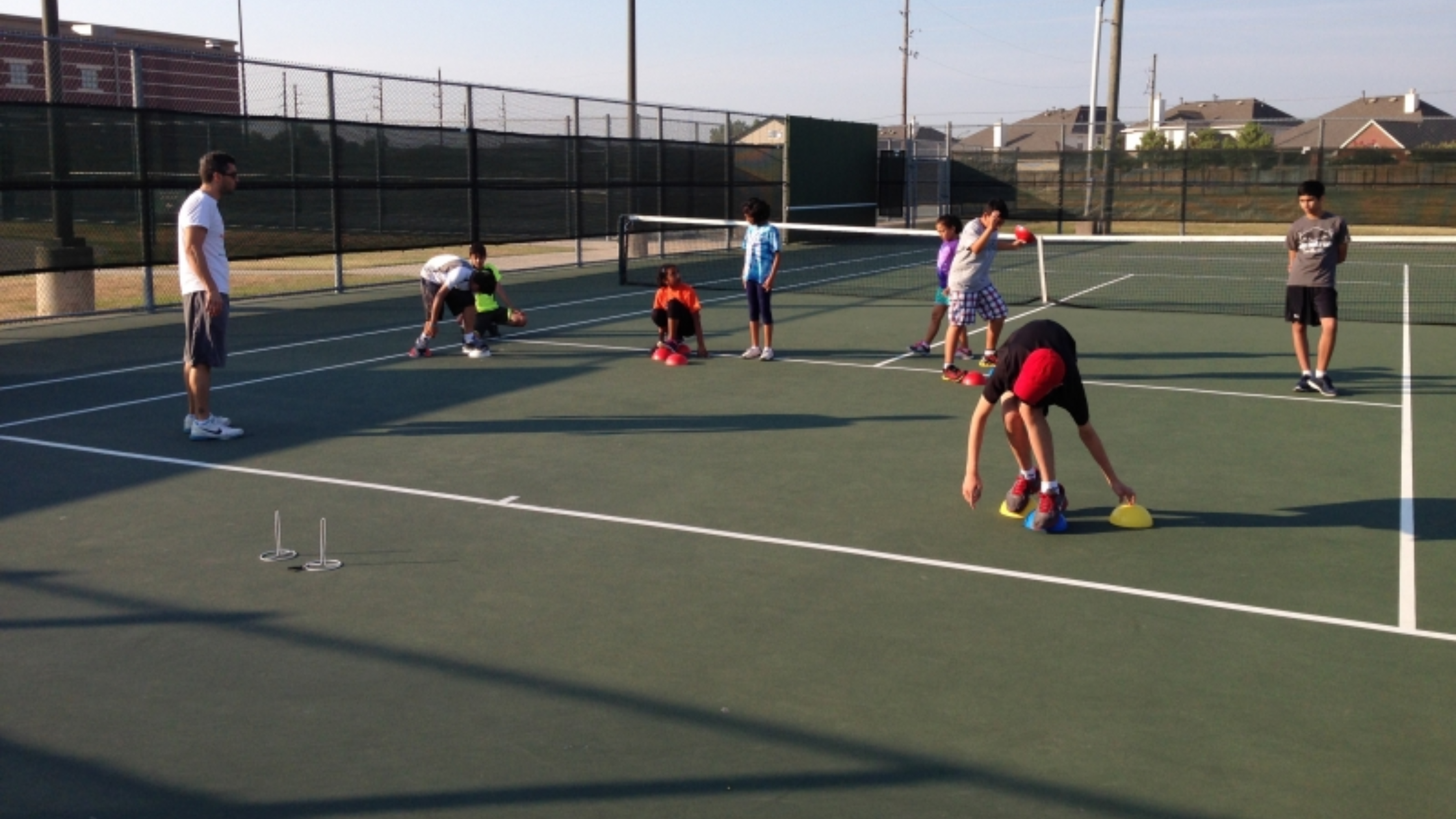
Fun plays an important role in keeping children interested in a sport. Games can turn technical exercises into activities that feel engaging while still developing useful tennis skills. Target games can improve accuracy, relay activities can encourage movement, and short challenges can introduce friendly competition. Children can learn while staying active instead of spending an entire session repeating the same drill.
Competition can also teach children how to manage emotions and make decisions. A simple points game gives a player a reason to think about shot placement and court position. Friendly competition also introduces winning and losing in a controlled setting. Coaches can use these moments to teach sportsmanship, patience, and respect while keeping the focus on learning.
How Do Technique and Coordination Support Better Play?
Good tennis technique begins with basic movement patterns. Children need to learn how to position their feet, prepare the racket, watch the ball, and maintain balance through each stroke. Coordination drills can strengthen the connection between what they see and how they respond. These foundations can make later skills easier to understand.
Training can then progress toward forehands, backhands, volleys, overheads, and serves. Players can also learn how singles and doubles require different court positions and decisions. Local program information highlights stroke mechanics, competition drills, coordination drills, singles and doubles strategy, successful match play, and team building as parts of tennis development.
How Does Match Play Prepare Children for Real Competition?
Practice becomes more meaningful when children eventually apply their skills during points and matches. Match play teaches them to choose shots, recover between points, manage the score, and respond to an opponent’s decisions. These situations require more than good technique because players must also stay focused while conditions change. Regular exposure to point play can make competitive situations feel less unfamiliar.
Training can introduce match play gradually rather than placing beginners into full competition immediately. Younger players can start with short points and simple scoring activities. Intermediate players can practice serves, returns, and point construction. More advanced players can combine individual drills, group drills, match play, conditioning, and mental skills as part of a broader training routine.
Why Do Private Lessons and Group Training Serve Different Needs?
Private lessons and group sessions can support different parts of a child’s development. A private lesson gives a coach more time to focus on one player’s technique, movement, or specific challenge. A group session creates opportunities to practice with other players, respond to different styles, and develop communication. Neither format has to replace the other.
Private instruction can help when a child needs focused work on a serve, backhand, footwork pattern, or match strategy. Group practice can then give the player an opportunity to apply those skills in a more dynamic setting. Published program information also shows that private lessons can complement group training and accommodate individual goals.
How Can Parents Support Consistent Tennis Development?
Parents can support progress by helping children maintain a realistic training routine. They can ask what a child learned, celebrate improvement, and encourage continued practice after difficult sessions. Comparisons with other children can create unnecessary pressure, so attention should remain on individual progress. Small goals can make improvement easier for children to recognize.
Scheduling also matters because regular participation becomes harder when activities constantly conflict. Katy Tennis Academy offers classes and private lessons from morning through evening, which can give families more options for fitting training into a weekly routine. Its published programs also separate players by age and ability, allowing instruction to change as children develop.
Conclusion: Building Confidence Through Structured Tennis Training
Structured tennis coaching connects fundamentals, practice, feedback, movement, competition, and gradual progression. Children can develop confidence when they understand what they are learning and have repeated opportunities to apply it. Consistency develops as players reinforce technique, improve coordination, practice points, and learn how to respond when a shot does not go as planned. Fun activities can keep that process engaging while still supporting meaningful skill development.
Katy Tennis Academy provides training for different ages and ability levels, with options that include group programs and private lessons. Its published training information covers fundamentals, competition drills, coordination, strategy, match play, conditioning, and mental skills. A balanced training routine can therefore help young players build stronger tennis habits while gaining confidence and enjoying the sport.
Frequently Asked Questions
Q1. How does elite tennis coaching build confidence in young players?
Elite tennis coaching helps young players build confidence through structured drills, clear feedback, and achievable goals. Katy Tennis Academy gives children opportunities to practice fundamentals, learn from mistakes, and gradually handle more challenging tennis situations.
Q2. How do tennis classes help children improve consistency?
Tennis classes give children regular opportunities to repeat strokes, footwork patterns, and ball-control drills. Katy Tennis Academy helps players reinforce these skills through structured practice that gradually introduces rallies, points, and more demanding court situations.
Q3. What skills can children learn through elite tennis coaching?
Elite tennis coaching can teach children fundamental skills such as racket control, footwork, stroke mechanics, serving, coordination, and court positioning. Katy Tennis Academy provides age-appropriate training that helps players develop these skills through progressive drills and practical activities.
Q4. Why are tennis classes useful for learning match play?
Tennis classes can introduce children to match situations through rallies, scoring exercises, point play, and friendly competition. Katy Tennis Academy helps young players apply their technical skills while learning court positioning, shot selection, concentration, and basic match strategy.
Q5. Can elite tennis coaching help advanced players improve their game?
Elite tennis coaching can help advanced players refine technique while developing strategy, conditioning, mental focus, and match awareness. Katy Tennis Academy offers training that can combine individual drills, group activities, competition practice, and match situations for continued player development.
Q6. Are tennis classes suitable for children at different skill levels?
Tennis classes can support beginners, intermediate players, and more experienced children when coaches adjust drills according to ability. Katy Tennis Academy provides different training options that allow players to work on fundamentals, technique, coordination, strategy, and match play as their skills develop.
Q7. How can elite tennis coaching help children stay consistent with practice?
Elite tennis coaching can encourage consistency by combining regular practice, clear goals, constructive feedback, and progressive drills. Katy Tennis Academy provides structured training opportunities that help children maintain practice routines while developing technique, confidence, concentration, and stronger playing habits.