
If your JPG looks blurry when enlarged, you may need to convert JPG to vector artwork before using it for professional production. Raster images depend on pixels, while vector graphics use paths and shapes that can scale cleanly. Our convert JPG to vector services help recreate raster graphics as cleaner, more flexible vector artwork.
At iDigitize, we manually recreate artwork for applications where clean lines and scalable graphics matter. Instead of simply changing the file type, we rebuild important design elements as vector paths so the artwork can work across different sizes and production needs.
Why Convert JPG to Vector for Professional Artwork?
The main reason to convert JPG to vector is to create artwork that can scale without the same pixelation problems found in raster images.
A JPG contains a fixed number of pixels. If you enlarge a small JPG for a banner, sign, or large print, those pixels are stretched. This can make outlines rough, lettering unclear, and details blurry.
Vector graphics are based on mathematical paths rather than a fixed pixel grid. This makes them suitable when artwork needs to be resized for:
- Logos and branding
- Apparel printing
- Signs and banners
- Packaging
- Screen printing
- Vinyl cutting
- Laser engraving
- Promotional products
How Does JPG to Vector Conversion Work?
To convert JPG to vector properly, the design needs to be recreated using vector paths, curves, lines, and shapes.
Simply saving a JPG as an SVG, EPS, or another vector compatible format does not automatically make the artwork a true vector.
We use a process that focuses on recreating the important visual elements of the original design.
Reviewing the Original JPG
We first examine the source artwork and identify its main features. These may include:
- Shapes and outlines
- Text and lettering
- Colors
- Curves
- Small details
- Background elements
The clearer your original JPG is, the easier it is to understand the details that need to be recreated.
Rebuilding the Artwork
We then recreate the graphic with vector paths and shapes.
Manual tracing allows greater control over curves, outlines, and individual elements. It also helps avoid some of the unnecessary anchor points or uneven edges that automatic tracing tools can create.
Preparing the Vector File
After recreating the design, the artwork can be prepared in an appropriate vector format.
Common formats include AI, EPS, SVG, PDF, CDR, and DXF. Your required format will depend on the software or production process you plan to use.
What Makes Vector Artwork Look Professional?
Sharp vector artwork is not only about scalability. The quality of the recreated design also matters.
When we convert JPG to vector, several details deserve attention.
Smooth curves: Curved elements should look controlled rather than jagged.
Clean outlines: Borders should remain clear and consistent.
Accurate shapes: Important parts of the original artwork should be recreated carefully.
Readable lettering: Text should remain clear, particularly in logos and branded graphics.
Suitable colors: Colors should reflect the source artwork and project requirements.
Practical file structure: Vector elements should remain usable for their intended application.
These factors are important when choosing convert JPG to vector services for professional artwork.
Manual Tracing vs Automatic Vectorization
Automatic vectorization can be useful for basic artwork, but it does not always produce production ready results.
Software analyzes the pixels in an image and automatically creates paths around visible areas. With a simple, clear image, this may provide a reasonable starting point.
However, complicated or low resolution artwork can result in excessive anchor points, rough edges, distorted curves, or inaccurate details.
Manual tracing gives us greater control over how the design is recreated. We can build cleaner paths and decide how individual shapes should connect rather than depending entirely on automated results.
Which Vector Format Is Right for Your Artwork?
Before you convert JPG to vector, consider where you will use the finished design.
AI for Editable Artwork
AI files are associated with Adobe Illustrator and are useful when the design needs further editing in compatible software.
EPS for Printing and Design
EPS is commonly used to exchange vector graphics between professional design and printing workflows.
SVG for Scalable Digital Graphics
SVG is widely used for scalable web graphics and is also supported by many design and cutting applications.
PDF for Easy Sharing
PDF files can contain vector information while providing a convenient way to share artwork with designers or production providers.
DXF for Certain Cutting Applications
DXF is commonly associated with CAD software and some cutting or manufacturing workflows.
If your printer or production provider requests a specific format, let us know before the artwork is prepared.
Where Can You Use Your Vector Artwork?
A vector version of your JPG can provide greater flexibility when one design needs to appear in several places.
For example, you may have a logo that currently exists only as a small JPG. You might later need that same logo for a shirt, banner, shop sign, vehicle graphic, packaging, or promotional item.
Instead of relying on the original fixed resolution image, you can use scalable vector artwork that is better suited to different dimensions.
Vector paths can also be useful for production methods such as screen printing, vinyl cutting, engraving, and signage where clearly defined artwork may be required.
What Should You Send for Vector Conversion?
For better results, send the clearest version of your original artwork.
If you have several copies of the same design, choose the file with the highest available resolution and clearest details. Avoid repeatedly compressed copies when an original file is available.
You should also tell us:
- How the artwork will be used
- Which file format you require
- Whether specific colors need to be maintained
- Whether a printer or manufacturer has provided file requirements
This information helps clarify what your finished vector artwork needs to support.
Mistakes to Avoid With JPG to Vector Artwork
Do not assume that placing a JPG inside an EPS or SVG file creates genuine vector artwork. The raster image remains pixel based unless the design itself is recreated as vector paths.
Avoid enlarging a small JPG and treating the larger version as higher quality. Increasing its dimensions does not restore missing image detail.
You should also avoid choosing an output format without checking your production requirements. The correct vector format can depend on the software or equipment being used.
Get Sharp Artwork Ready for Professional Use
At IDigitize, we convert JPG to vector artwork when you need cleaner, scalable graphics for professional applications. By recreating raster designs with vector paths, we can prepare artwork that offers greater flexibility for printing, apparel, signage, cutting, engraving, and other uses.
Send us the clearest JPG you have and explain where you plan to use the design. We can prepare your artwork in a suitable vector format for your project.
Frequently Asked Questions
Can a low resolution JPG be converted to vector?
Yes. A low resolution JPG can often be recreated as vector artwork. However, clearer source artwork provides more information about lettering, shapes, outlines, and small details, which helps when rebuilding the design.
Will converting JPG to vector make it scalable?
Yes, when the artwork is properly recreated as vector paths. Vector graphics can be resized without the same pixelation that occurs when a raster JPG is enlarged beyond its original resolution.
Can I automatically convert JPG to vector?
Automatic tracing tools can create vector paths from JPG images, but results vary depending on the artwork. Complex shapes, blurry edges, and low resolution details may require manual adjustment or recreation.
What vector format should I use for printing?
The required format depends on your printer and production workflow. AI, EPS, SVG, and PDF are among the formats that can contain vector artwork. Always confirm the preferred format with your printer.
Why use professional convert JPG to vector services?
Professional convert JPG to vector services can provide greater control over paths, curves, shapes, and lettering. This is particularly useful when the source artwork needs careful recreation for printing or another professional application.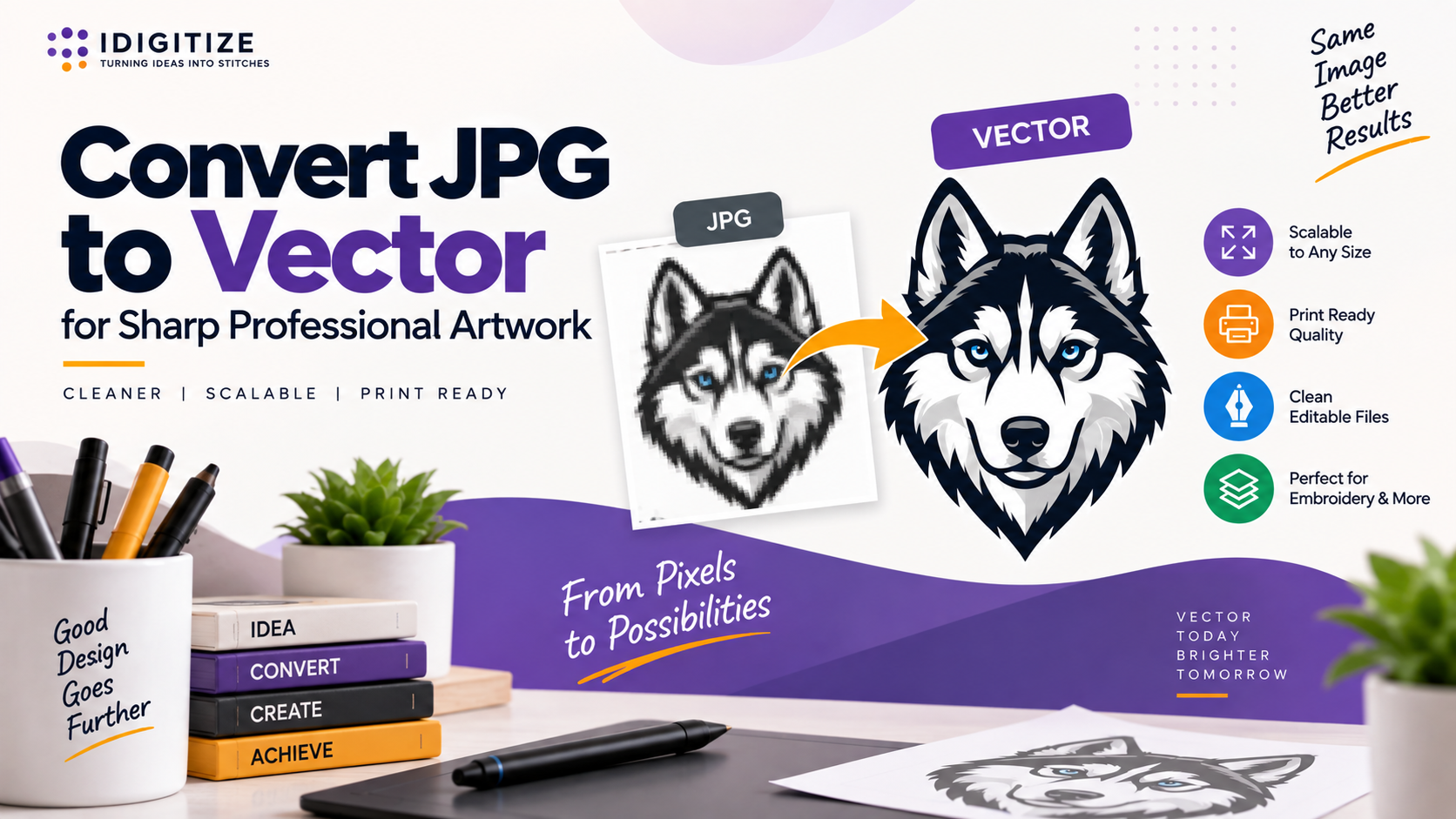
 Gold Bar Jeweler
  wilsonsmith
  Pianpian qian