
If you are researching shipping containers for sale, searching for a shipping container for sale near me, or comparing storage containers for sale, you may be wondering whether a standard shipping container can be modified with windows and doors. The answer is yes. Shipping containers can be customized with different types of doors, windows, and other features to create a more functional space for storage, offices, workshops, retail stores, and other applications. Conex Hub offers shipping containers and custom-fabricated solutions that can be adapted to different project requirements.
Adding windows and doors can make a container more accessible, comfortable, and practical. However, modifications should be carefully planned because cutting openings into a steel container can affect its structural integrity if the work is not designed and reinforced properly.
Table of Contents
- Can You Add Windows and Doors to a Shipping Container?
- Why Add Windows and Doors?
- Types of Doors You Can Add
- Types of Windows You Can Add
- Where Should Windows and Doors Be Installed?
- Do Containers Need Reinforcement?
- Other Modifications to Consider
- New vs. Used Containers for Modification
- How Much Planning Is Required?
- Common Mistakes to Avoid
- Frequently Asked Questions
- Final Thoughts
- Call to Action
Can You Add Windows and Doors to a Shipping Container?
Yes, windows and doors can be added to shipping containers. These modifications are common when containers are converted into offices, workshops, retail spaces, studios, classrooms, kiosks, and other customized structures.
A standard container normally has large cargo doors at one end. Depending on the project, additional openings can be created for:
- Personnel doors
- Sliding doors
- Roll-up doors
- Glass doors
- Service windows
- Fixed windows
- Sliding windows
- Emergency exits
- Large display openings
The exact design depends on the intended use and the amount of modification required.
Conex Hub offers custom-fabricated container solutions, allowing containers to be adapted for specific applications. (conexhub.com)
Why Add Windows and Doors?
Standard cargo containers are designed primarily for transporting goods, not for use as conventional buildings. Adding windows and doors can make them much more suitable for people-focused applications.
Improve Natural Light
Windows allow daylight into the container, making the interior more comfortable and reducing the need for artificial lighting during the day.
Improve Ventilation
Depending on the window design, operable windows can provide additional airflow.
Create Easier Access
A personnel door can provide a more convenient entrance than repeatedly using the large cargo doors.
Improve Visibility
For retail stores, offices, and customer-facing spaces, windows can provide visibility between the inside and outside.
Support Different Uses
Windows and doors can help transform a basic container into:
- An office
- A workshop
- A retail store
- A site office
- A studio
- A classroom
- A service kiosk
- A recreational space
Types of Doors You Can Add
The right door depends on how the container will be used.
Personnel Doors
A standard personnel door is useful when people need to enter and exit the container regularly.
These doors can be suitable for offices, workshops, storage rooms, and other applications.
Sliding Glass Doors
Sliding glass doors can provide a wider entrance while allowing plenty of natural light.
They may be particularly useful for retail or office applications.
Roll-Up Doors
Roll-up doors can create a wide opening for equipment, vehicles, or large products.
They can be useful when the container needs frequent access for loading and unloading.
Double Personnel Doors
Double doors provide a wider opening than a standard single door and can be useful when moving larger items through the container.
Service Doors and Openings
Certain businesses may require a service opening where customers interact with employees without entering the container.
This can be useful for certain retail or service applications.
Types of Windows You Can Add
Windows come in many different configurations.
Sliding Windows
Sliding windows can provide natural light and ventilation while requiring relatively little exterior space.
Fixed Windows
Fixed windows provide natural light and visibility but do not open for ventilation.
Large Display Windows
Large windows can be useful for retail stores, showrooms, and customer-facing spaces.
Security Windows
For some applications, windows can be designed with security considerations such as reinforced frames or suitable glazing.
Custom Window Configurations
The size, position, and number of windows should depend on the container’s intended use and design.
Where Should Windows and Doors Be Installed?
Placement is an important part of the design process.
Before cutting an opening, consider:
- Interior layout
- Furniture placement
- Customer movement
- Equipment location
- Natural light
- Ventilation
- Exterior access
- Security
- Emergency egress
- Local building requirements
For example, an office container may benefit from windows along a side wall, while a retail container might require a large display window facing customers.
A construction-site storage container may need fewer modifications than a container converted into an office.
Do Containers Need Reinforcement?
Potentially, yes.
A shipping container is designed as a structural steel unit. Its walls, roof, corner posts, and frame work together to provide strength.
Creating large openings can change how forces are distributed through the structure.
For this reason, significant modifications should be properly designed and reinforced where necessary.
Reinforcement may involve:
- Steel framing
- Structural supports
- Reinforced door frames
- Header beams
- Additional supports around large openings
The amount of reinforcement required depends on the size and location of the opening and the overall design.
For major modifications, it is appropriate to work with experienced container fabricators and qualified professionals who can assess the structural requirements.
Other Modifications to Consider
If you are already adding windows and doors, you may want to consider other improvements at the same time.
Insulation
Steel containers can become hot or cold depending on the surrounding environment. Insulation can help improve interior temperature control.
Electrical Systems
An office, workshop, or retail store may require electrical outlets, lighting, wiring, and other electrical features.
HVAC
Depending on the climate and intended use, heating, ventilation, or air conditioning may be necessary.
Interior Finishes
Walls, ceilings, flooring, shelving, counters, and other finishes can make the space more practical and comfortable.
Exterior Finishes
Painting and other exterior improvements can help create a more finished appearance.
Security Features
Depending on the application, you may consider:
- Security locks
- Cameras
- Exterior lighting
- Alarm systems
- Security glazing
Conex Hub offers custom-fabricated container solutions that can accommodate different project requirements. (conexhub.com)
New vs. Used Containers for Modification
Both new and used shipping containers can potentially be modified with windows and doors.
New Containers
New or one-trip containers generally provide a clean starting point for customization.
They can be attractive for projects where appearance and overall condition are important.
Used Containers
Used containers can be suitable for modification when their condition is appropriate.
Before purchasing a used container, inspect:
- Roof
- Walls
- Floor
- Doors
- Corner posts
- Structural components
- Rust
- Previous repairs
- Water intrusion
Conex Hub offers both new and used shipping containers for different applications. (conexhub.com)
How Much Planning Is Required?
The amount of planning depends on the complexity of the project.
Adding a small window to a simple storage container may be relatively straightforward for an experienced fabricator.
A larger conversion involving multiple windows, doors, electrical systems, insulation, plumbing, and HVAC requires significantly more planning.
Before starting, determine:
- What the container will be used for.
- How many people will use it.
- Where entrances should be located.
- How much natural light is needed.
- Whether ventilation is required.
- What equipment or furniture will be inside.
- Whether structural reinforcement is needed.
- What local permits or regulations apply.
A clear plan can reduce costly changes later.
Common Mistakes to Avoid
Cutting Openings Without Structural Planning
Large openings can affect the container’s structural performance. Modifications should be properly assessed.
Choosing Poor Window Placement
A window may look useful on paper but become inconvenient if furniture or equipment blocks it.
Ignoring Weatherproofing
New openings need appropriate frames, seals, flashing, and installation details to help prevent water intrusion.
Forgetting Security
Consider how windows and doors affect the security of the container.
Overlooking Local Requirements
Depending on the project, building, fire, accessibility, electrical, zoning, or other requirements may apply.
Modifying the Container After Delivery Without a Plan
Whenever possible, decide on major modifications before the container is placed permanently. This can make fabrication and installation easier.
Frequently Asked Questions
Can any shipping container have windows added?
Many shipping containers can be modified with windows, but the design and condition of the container should be evaluated first. The size and location of the opening also matter.
Can I add a regular door to a shipping container?
Yes. Personnel doors can be installed in shipping containers for applications where frequent pedestrian access is required.
Can I add a large window to a shipping container?
Yes, large windows can be installed, but larger openings may require appropriate structural reinforcement.
Do windows weaken a shipping container?
Cutting an opening changes the original structure. Proper reinforcement and fabrication can help maintain the required structural performance.
Can doors and windows be added to a used container?
Yes, provided the container is in suitable condition and the modifications are properly planned.
Can I add windows and doors to a container used as an office?
Yes. Windows, personnel doors, insulation, electrical systems, lighting, and climate-control features can be incorporated into office-container designs.
Can a shipping container be modified for retail?
Yes. Containers can be modified with customer entrances, display windows, service openings, lighting, counters, and other retail features.
Does adding windows and doors require permits?
It can, depending on the location, intended use, size of the modification, and applicable regulations. Check local requirements before beginning the project.
Final Thoughts
Adding windows and doors can significantly expand the ways a shipping container can be used. A basic cargo container can potentially become an office, workshop, retail store, studio, site facility, or customized workspace with the right modifications.
If you are researching shipping containers for sale, searching for a shipping container for sale near me, or comparing storage containers for sale, consider your future modification requirements before choosing a container. Think about the number and placement of windows, door configuration, insulation, electrical needs, ventilation, security, and structural requirements.
Conex Hub provides new, used, and custom-fabricated container solutions that can support different storage, commercial, and customized projects. (conexhub.com)
Ready to Customize Your Shipping Container?
Whether you need a storage unit, office, workshop, retail store, or another customized space, planning the modifications before installation can make the project more efficient.
Explore container options with Conex Hub, determine which windows and doors your project requires, and work with experienced professionals for structural and installation considerations. With proper planning, a shipping container can be transformed into a functional space designed around your specific needs.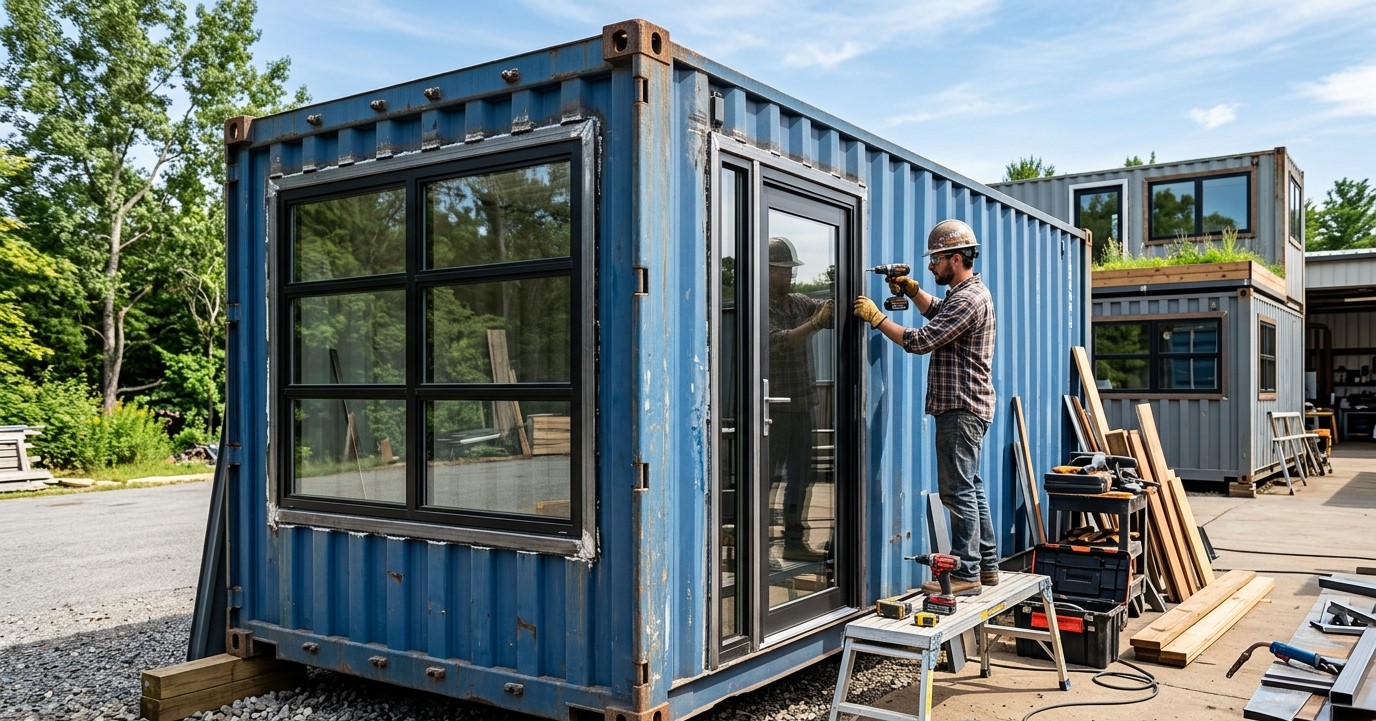
 adam smith
  fajere jaafar
  sumedhasoftechindia@gmail.com