
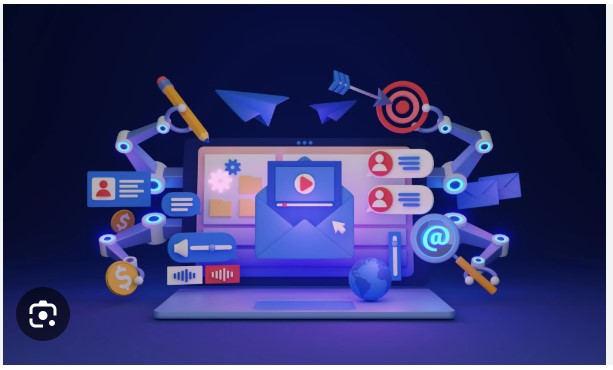
Social media marketing has evolved dramatically over the last decade. What once relied heavily on manual posting, creative brainstorming, and human-driven analytics is now increasingly powered by artificial intelligence. Businesses today face an important question: should they stick with traditional social media marketing methods, or shift toward AI-driven strategies?
In reality, both approaches have value. Understanding the differences between AI and traditional social media marketing can help brands make smarter decisions based on their goals, budget, and growth stage.
What Is Traditional Social Media Marketing?
Traditional social media marketing refers to the manual process of planning, creating, publishing, and analyzing content on platforms like Facebook, Instagram, LinkedIn, and TikTok. It is largely human-led and strategy-driven.
Key Features of Traditional Marketing
- Manual content creation (graphics, captions, videos)
- Human-based audience research
- Scheduled posting using basic tools
- Manual A/B testing
- Performance analysis through platform dashboards
In this approach, marketing teams rely on creativity, experience, and trial-and-error. Campaigns are typically planned in advance, and decisions are made based on historical data and marketer intuition.
Strengths of Traditional Marketing
- Human Creativity – Emotional storytelling and brand voice are deeply human strengths.
- Brand Authenticity – Handcrafted content often feels more personal.
- Strategic Control – Teams can carefully manage tone, messaging, and positioning.
However, traditional methods can be time-consuming, slower to adapt, and heavily dependent on team capacity.
What Is AI-Powered Social Media Marketing?
AI-powered social media marketing uses artificial intelligence to automate, optimize, and personalize marketing efforts. AI tools analyze massive amounts of data to improve targeting, content performance, and ad delivery.
Instead of relying solely on manual decisions, AI systems use algorithms and machine learning to:
- Predict audience behavior
- Optimize ad placements in real-time
- Generate ad copy and visuals
- Adjust budgets automatically
- Identify high-performing content patterns
This approach allows marketers to move faster and scale campaigns more efficiently.
Major Differences Between AI and Traditional Social Media Marketing
Let’s break down the core differences.
1. Speed and Efficiency
Traditional marketing requires manual research, content creation, and analysis. Campaign adjustments can take days or weeks.
AI-driven marketing, on the other hand, works in real-time. Algorithms can analyze performance data instantly and adjust bids, targeting, and placements automatically.
Result: AI significantly reduces time spent on repetitive tasks.
2. Data Processing and Insights
Human marketers can analyze data, but they are limited by time and cognitive capacity. AI tools can process millions of data points in seconds.
For example:
- AI can detect micro-trends.
- It can identify which creative variation performs best for specific audience segments.
- It predicts future engagement patterns.
This level of predictive analysis is nearly impossible with traditional methods alone.
3. Personalization
Traditional marketing often segments audiences into broad groups. Messaging is created for general personas.
AI enables hyper-personalization. Ads can be dynamically customized based on:
- User behavior
- Purchase history
- Location
- Interests
- Browsing patterns
This creates more relevant content for each user, increasing engagement and conversion rates.
4. Content Creation
In traditional marketing, designers and copywriters manually create every asset.
AI tools can now:
- Generate ad copy variations
- Suggest headlines
- Create visuals
- Produce short-form videos
- Test multiple creatives automatically
Businesses searching for the best AI tool for creating ads often prioritize platforms that combine content generation with real-time performance optimization.
While AI speeds up content production, human review remains important for maintaining brand consistency and emotional impact.
5. Cost Efficiency
Traditional social media marketing requires larger teams for scaling. More campaigns mean more workload.
AI reduces operational costs by:
- Automating repetitive tasks
- Reducing manual testing
- Improving ad spend efficiency
- Minimizing wasted impressions
For startups and small businesses with limited budgets, AI can level the playing field against larger competitors.
6. Creative Control vs Automation
Traditional marketing gives full creative control to marketers. Every decision is intentional and manually executed.
AI marketing introduces automation, which sometimes means less direct control. While AI optimizes for performance, it may prioritize data-driven results over creative experimentation.
The best strategy often blends both:
- Humans define brand strategy and messaging.
- AI optimizes delivery and performance.
When Should You Choose Traditional Marketing?
Traditional social media marketing works well when:
- You are building a strong brand voice.
- Your strategy relies heavily on storytelling.
- You operate in a niche industry with smaller audiences.
- You want complete creative control.
- Your campaigns are relationship-driven rather than performance-driven.
Brands focused on community-building often prefer traditional methods because human interaction plays a key role.
When Should You Choose AI Marketing?
AI marketing is ideal when:
- You want to scale quickly.
- You manage large advertising budgets.
- You need precise audience targeting.
- You rely on performance metrics like ROI and conversions.
- You run frequent ad campaigns across multiple platforms.
E-commerce businesses, SaaS startups, and digital-first brands often benefit the most from AI-driven strategies.
The Hybrid Approach: Best of Both Worlds
The smartest marketers don’t treat AI and traditional marketing as competitors. Instead, they combine them.
For example:
- Use AI to analyze audience data and optimize ad placements.
- Use human creativity to craft compelling brand stories.
- Let AI test multiple ad variations.
- Let marketers refine messaging based on emotional insights.
This hybrid approach delivers efficiency without sacrificing authenticity.
Final Thoughts
AI is transforming social media marketing, but it hasn’t replaced the need for human creativity and strategic thinking. Traditional marketing offers authenticity and emotional depth, while AI provides speed, precision, and scalability.
The real difference isn’t about choosing one over the other. It’s about understanding how each approach contributes to your marketing goals. Businesses that successfully integrate AI into their existing strategies are better positioned to compete in today’s fast-moving digital landscape.
In the end, the future of social media marketing isn’t purely automated or purely human — it’s intelligently combined.
 companyformationqatar
  mfnauditing