
Almond oil has been used in beauty and personal care routines for generations. Extracted from almonds, this lightweight oil is known for its nourishing properties and versatility. It can be used for hair care, skin care, massage, and everyday moisturising. Whether you want to add softness to dry skin or give your hair a smoother, healthier-looking appearance, almond oil can be a simple addition to your routine.
What Is Almond Oil?
Sweet Almond oil is obtained from almonds and is naturally rich in fatty acids, vitamin E and other nutrients. Its smooth texture makes it easy to apply, while its moisturising properties make it suitable for both skin and hair care.
There are different types of almond oil available, including sweet almond oil, which is commonly used in cosmetic and personal-care products.
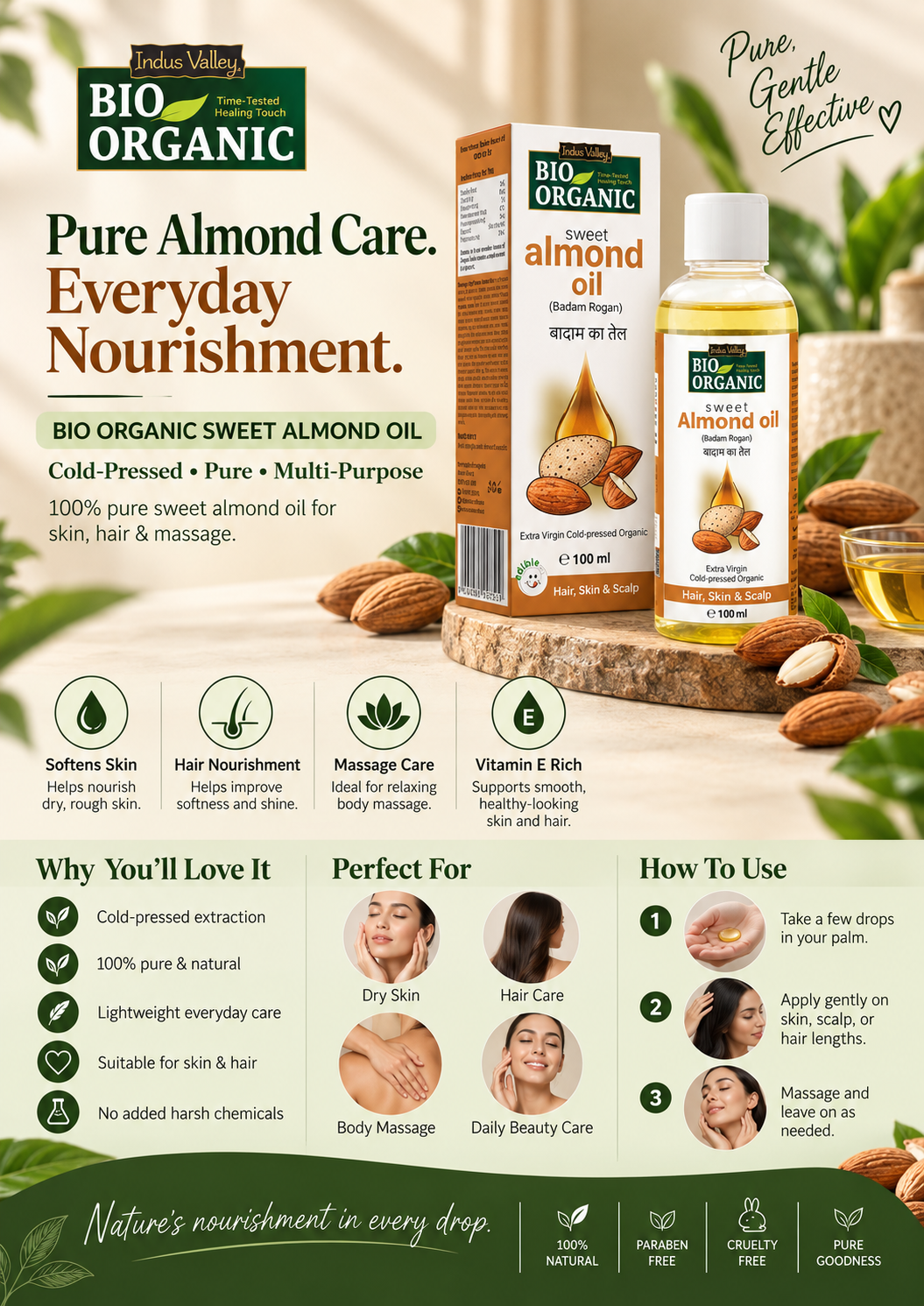
Benefits of Almond Oil for Skin
Almond oil can be a useful ingredient in a simple skincare routine. Here are some of its commonly appreciated benefits:
1. Helps Moisturise Dry Skin
Almond oil helps provide moisture to the skin and can leave it feeling soft and smooth. It can be especially useful for areas that tend to become dry, such as elbows, knees and hands.
2. Supports Soft and Smooth Skin
Regular moisturising with almond oil can help improve the feel of rough or dry skin. Its lightweight texture also makes it convenient for use after bathing.
3. Helps Maintain Skin Nourishment
Almond oil contains fatty acids and vitamin E, which can help support the skin’s moisture barrier and keep the skin feeling nourished.
4. Gives Skin a Natural-Looking Glow
When applied as part of a regular skincare routine, almond oil can help reduce the appearance of dryness and leave the skin looking smoother and more radiant.
Benefits of Almond Oil for Hair
Pure badam oil is also popular as a hair-care oil because of its nourishing and conditioning properties.
1. Helps Condition Dry Hair
Applying almond oil to the lengths of the hair can help reduce the dry, rough feeling and make hair feel softer.
2. Supports Smoother-Looking Hair
The oil can coat the hair strands, helping improve manageability and giving the hair a smoother appearance.
3. Helps Reduce the Appearance of Dryness
Regular oiling can help provide moisture and nourishment to dry-looking hair, especially when the hair is exposed to heat, pollution or frequent styling.
4. Adds Natural-Looking Shine
A small amount of almond oil can help give dull-looking hair a soft, natural-looking shine without making the hair feel excessively greasy when used in moderation.
How to Use Almond Oil?
For skin, take a few drops of al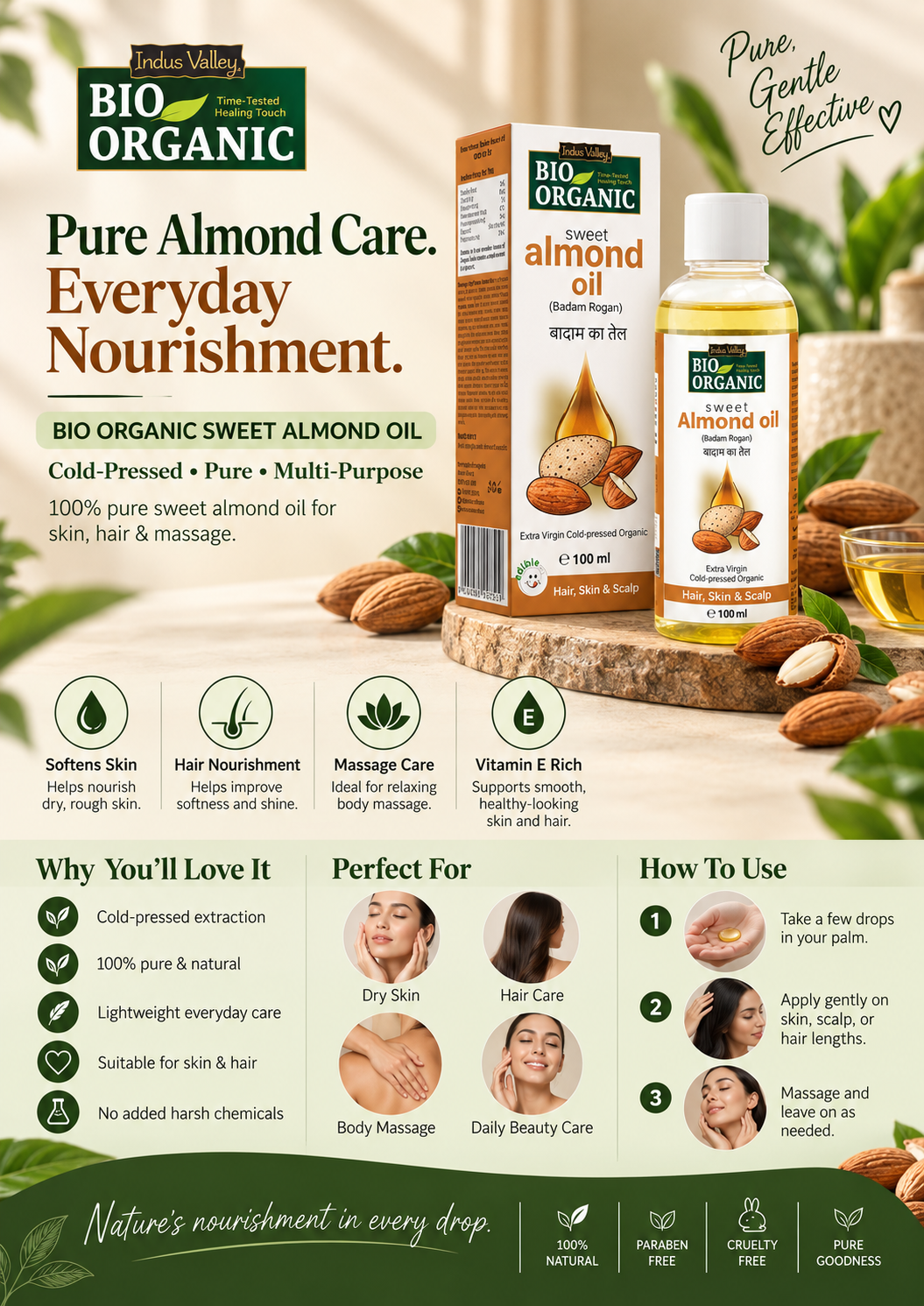 mond oil and gently massage it onto clean, slightly damp skin. It can be used after a shower or whenever your skin feels dry.
For hair, apply a small amount to the scalp and hair lengths, depending on your hair type. Massage gently and leave it on for some time before washing with a mild shampoo.
You can also use a few drops on the ends of dry hair as a finishing treatment to improve softness and manageability.
Almond Oil for Hair Growth & Glowing Skin: Benefits, Uses & Results
Is Almond Oil Suitable for Everyone?
Almond oil is commonly used in personal-care routines, but individual skin and hair types can respond differently. If you have sensitive skin, it is a good idea to perform a patch test before applying it more widely. People with an almond or tree-nut allergy should consult a healthcare professional before using almond-derived products.
Final Thoughts
Almond oil is a versatile natural oil that can be incorporated into both hair and skincare routines. From moisturising dry skin to conditioning dry-looking hair and adding a natural-looking shine, its simple and nourishing properties make it a popular choice for everyday personal care. Used appropriately and consistently, almond oil can be a convenient addition to a simple beauty routine.
FAQs
1. What is almond oil used for?
Almond oil is commonly used for skin and hair care. It can help moisturise dry skin, condition dry-looking hair, improve softness, and add a natural-looking shine.
2. Is almond oil good for dry skin?
Yes, almond oil can help moisturise dry skin and leave it feeling softer and smoother. It can be particularly useful on dry areas such as hands, elbows and knees.
3. Can almond oil be used on the face?
Yes, almond oil can be used as part of a facial skincare routine if it suits your skin type. Apply a small amount to clean, slightly damp skin and avoid getting it into the eyes.
4. Is almond oil good for hair?
Almond oil can help condition dry-looking hair, improve manageability and give the hair a smoother, shinier appearance.
5. Can almond oil help with hair growth?
Almond oil can nourish and condition the hair and scalp, but there isn’t enough evidence to say that almond oil directly stimulates hair growth.
6. How should I use almond oil on my hair?
Apply a small amount to the scalp and hair lengths, massage gently, and leave it on for some time before washing. You can also apply a few drops to the hair ends for added softness.
7. Does almond oil make hair shiny?
Yes. A small amount of almond oil can help smooth the hair surface and give dry or dull-looking hair a natural-looking shine.
8. Can almond oil be used every day?
It depends on your skin and hair type. For some people, a small amount can be used regularly, while others may prefer using it a few times a week to avoid excessive oiliness.
9. Is almond oil suitable for sensitive skin?
Almond oil may work for some people with sensitive skin, but individual reactions can vary. A patch test is recommended before wider use.
10. Can people with nut allergies use almond oil?
People with an almond or tree-nut allergy should be cautious with almond-derived products and consult a healthcare professional before use.
11. Is almond oil good for dry and rough hair?
Yes, its moisturising and conditioning properties can help dry and rough hair feel softer, smoother and more manageable.
12. What is the best way to store almond oil?
Keep almond oil tightly closed and store it in a cool, dry place away from direct sunlight and excessive heat.
 The Little Nail Shop
 labubu
 Glossy Nails by Sadaf Taj