
The beauty aisle is a two-second pitch. A shopper’s eyes move across a shelf, and in that window, custom cosmetic packaging either earns a second look or gets passed over. For makeup and skincare brands, the box isn’t an afterthought — it’s doing sales work before the product ever gets opened. This guide covers what actually makes cosmetic packaging effective, from material choice to finish, so your makeup boxes protect the product and pull their weight on shelf.
Why Cosmetic Packaging Matters More Than You Think
Cosmetics are bought on trust in a way most products aren’t — people are putting them on their skin, lips, and eyes. Packaging is often the first (and sometimes only) signal a customer gets about ingredient quality, brand seriousness, and price point before purchase.
Beyond first impressions, cosmetic packaging carries real functional demands:
- Product protection — powders, liquids, and creams are prone to leakage, breakage, and contamination without the right structural design
- Shelf differentiation — beauty categories are crowded; generic packaging blends in
- Regulatory info — ingredient lists, batch codes, and usage warnings need to fit cleanly without cluttering the design
- Unboxing experience — a growing share of cosmetic purchases happen online, where the box is the only physical touchpoint before the product itself
Get any of these wrong and it shows up in returns, damaged stock, or a brand that just doesn’t feel premium, regardless of what’s inside.
Types of Custom Cosmetic Packaging
Cosmetic packaging isn’t one product — it’s a category with distinct formats depending on what’s inside.
Rigid Boxes for Premium Lines
Rigid boxes are the go-to for high-end skincare sets, perfume, and gift-ready makeup collections. They’re thicker, sturdier, and hold their shape without folding, which signals luxury the moment a customer picks one up. Magnetic closures and ribbon pulls are common upgrades here.
Folding Cartons for Everyday SKUs
Most single-item cosmetics — foundation tubes, cream jars, single eyeshadow pans — ship in folding cartons made from SBS (solid bleached sulfate) board. They’re cost-effective at volume, print beautifully, and fold flat for storage before assembly, which matters for brands managing warehouse space.
Lipstick and Small-Item Boxes
Lipstick boxes need tight tolerances — too loose and the product rattles in transit; too tight and it’s a fight to remove. Sleeve-and-tray or auto-lock bottom styles are common, often with a foil-stamped brand name for shelf pop at a small footprint.
Eyeshadow and Palette Packaging
Palettes need internal structure — inserts, dividers, or magnetic mirror lids — to keep pans from cracking under pressure. Window cutouts are popular here since they let the shade range sell itself before the box is opened.
Skincare Box Packaging
Serums, moisturizers, and treatment products lean toward minimalist folding cartons with matte finishes, reflecting the clean-beauty aesthetic that dominates the category right now.
What Makes a Cosmetic Box Actually Convert
Structure and material get a box on shelf; these details are what get it noticed.
Finish and Texture
- Matte lamination — soft-touch, fingerprint-resistant, reads as premium and clean
- Gloss lamination — vibrant color pop, common for younger or bold-branded lines
- Soft-touch coating — velvety texture that customers physically notice when handling the box
- Spot UV — glossy raised detail over a matte base, often on logos or key text
Foil Stamping
Gold, rose gold, and silver foil on brand names or icons remain one of the highest-impact upgrades for cosmetic packaging. It catches light under retail lighting in a way flat print can’t, and it’s often the single detail customers associate with “luxury” even on a modest-cost box.
Window Cutouts
For color cosmetics especially — eyeshadow, blush, lip gloss — a window cutout lets shade and texture do the selling. This is one of the most effective add-ons for reducing purchase hesitation, since customers can see exactly what they’re getting.
Custom Inserts
Foam, cardboard, or molded pulp inserts hold products firmly in place, which matters twice over for cosmetics: once for protecting fragile compacts and glass bottles in transit, and again for the unboxing moment, where a snug, structured tray reads as considered design rather than an afterthought.
Materials Guide for Cosmetic Packaging
| Material | Best For | Key Advantage |
|---|---|---|
| SBS Board | Folding cartons, single items | Smooth print surface, cost-effective |
| Kraft Paperboard | Clean-beauty, natural skincare lines | Eco-friendly appeal, earthy texture |
| Rigid Board | Gift sets, premium collections | Structural strength, luxury feel |
| Corrugated | Bulk shipping, subscription boxes | Extra protection for transit |
Material choice should follow brand positioning as much as product needs — a clean-beauty serum in a glossy rigid box sends a mismatched signal, just as a luxury palette in thin folding stock undercuts the price point it’s asking for.
Common Mistakes in Cosmetic Packaging
- Ignoring tolerance for small items — lipstick, mascara, and compacts need precise internal dimensions or they’ll shift and rattle
- Overloading the design — too many finishes (foil, spot UV, embossing, window) at once can look busy rather than premium
- Skipping insert planning — glass bottles and pressed powders without proper cushioning are a leading cause of shipping damage
- Underestimating regulatory space — ingredient panels and batch codes need dedicated space in the layout from the start, not squeezed in after design approval
- Choosing stock before testing structure — a beautiful print run on a poorly engineered die-line still won’t close, stack, or ship well
How to Order Custom Cosmetic Packaging
- Define the product specs — dimensions, weight, fragility, and quantity per box
- Choose base material and structure — rigid, folding carton, or corrugated depending on use case
- Select finishes — matte, gloss, soft-touch, foil, spot UV, or window cutouts
- Plan inserts — foam, tray, or divider requirements for the specific product shape
- Request a sample or proof — always confirm color accuracy and structural fit before full production
- Set your MOQ and turnaround — cosmetic packaging suppliers typically offer tiered pricing by volume, so match order size to actual sales velocity rather than over-ordering upfront
Frequently Asked Questions
What is the best material for custom cosmetic packaging?
It depends on the product: SBS board suits most folding cartons, rigid board suits premium gift sets, and kraft paperboard suits clean-beauty or natural product lines aiming for an eco-conscious look.
How much does custom makeup packaging cost?
Cost varies by material, finish, and order volume — foil stamping and rigid board raise per-unit cost, while simpler folding cartons at higher volumes bring the price down significantly.
Can cosmetic packaging be eco-friendly and still look premium?
Yes — kraft paperboard, soy-based inks, and minimalist foil accents can achieve a high-end look while staying recyclable and low-impact.
What’s the minimum order quantity for custom makeup boxes?
MOQs vary by supplier and material, but many packaging companies offer tiered pricing so smaller brands can order lower volumes without losing per-unit cost efficiency.
Do cosmetic boxes need special inserts?
Fragile items like glass bottles, pressed powders, and palettes generally need foam or molded inserts to prevent breakage and shifting during shipping.
Final Thoughts
Cosmetic packaging sits at the intersection of protection and persuasion — it has to survive the supply chain and still make a strong first impression the moment it reaches a customer’s hands. Getting the material, finish, and structure right isn’t just about looking good on shelf; it’s about backing up the quality of what’s inside.
If you’re developing custom cosmetic packaging or makeup boxes for your brand, DODO Packaging AU designs and manufactures tailored solutions — from rigid luxury boxes to eco-conscious folding cartons — built around your product specs and brand identity. Get in touch for a free design consultation and quote.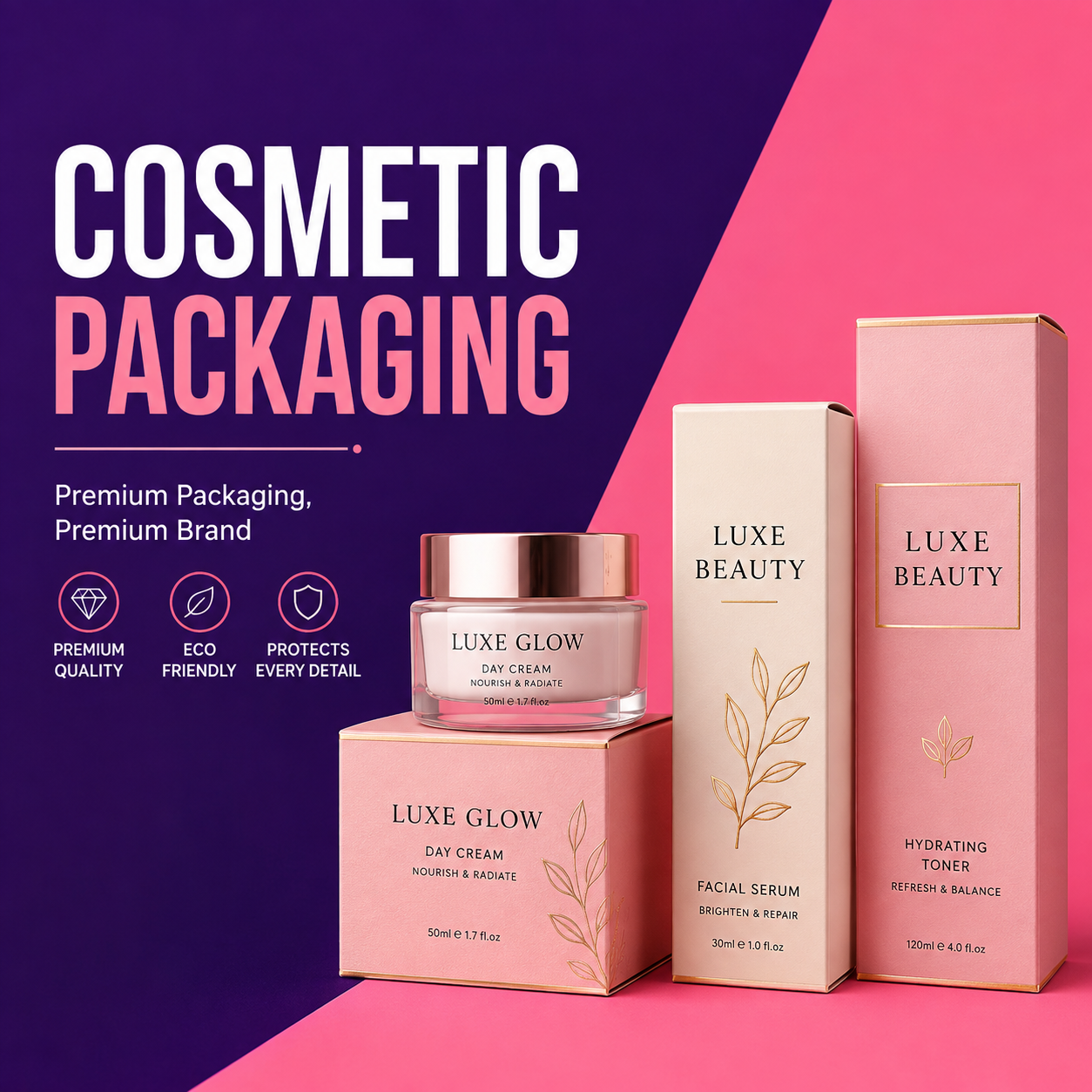
 kivomedia7
  waimea_online
  royallegacy24