
Salt Lake City is renowned for its stunning mountain vistas and vibrant urban culture, yet it faces a persistent environmental challenge that often goes unnoticed until the horizon disappears behind a hazy veil. The unique geography of the Wasatch Front creates a beautiful backdrop, but it also contributes to some of the most complex air quality issues in the United States. For residents living in this high-altitude valley, the quality of the air outside has a direct and profound impact on the environment inside their homes. As pollutants settle over the city, they inevitably find their way into residential HVAC systems, making routine maintenance more than just a chore. It becomes a health necessity. Understanding the intersection of local geography, seasonal weather patterns, and indoor air filtration is the first step toward maintaining a healthy living space.
The Geography of Grime: Why SLC is Unique
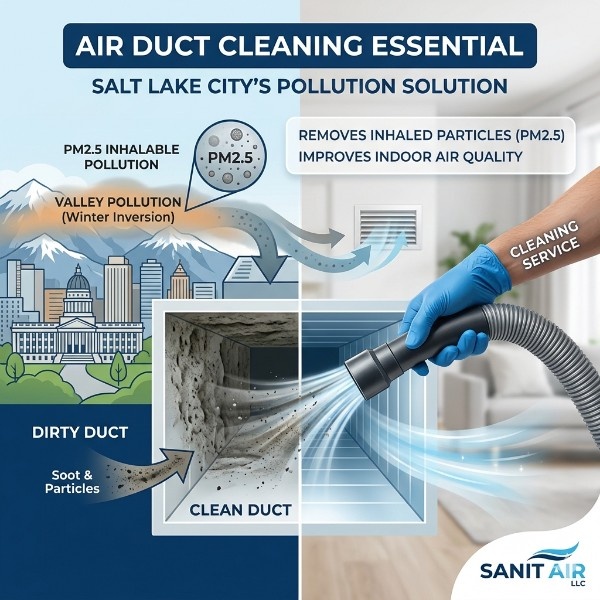
To understand why indoor air quality is such a concern in Utah, one must first look at the topography. Salt Lake City sits in a bowl, flanked by the Wasatch Mountains to the east and the Oquirrh Mountains to the west. While this provides world-class skiing and hiking, it also facilitates a phenomenon known as a temperature inversion. During the winter months, cold air becomes trapped on the valley floor under a layer of warmer air. This atmospheric lid prevents the vertical mixing of the atmosphere, effectively sealing in vehicle emissions, industrial output, and wood smoke.
When these pollutants are trapped, they don’t simply stay outdoors. Every time a door opens or a window is cracked, microscopic particles enter the home. More importantly, the constant cycling of an HVAC system pulls this outdoor air in. Over months and years, the ductwork in a standard home becomes a collection chamber for these environmental hazards. Dust, soot, and chemical particulates settle into the crevices of the ventilation system. Because Sanitairllc provides air duct cleaning salt lake city, residents have a direct resource to combat this buildup, ensuring that the “bowl” effect of the valley doesn’t turn their own home into a trap for stagnant pollutants.
The chemical composition of this pollution is equally concerning. According to Wikipedia, atmospheric particulate matter consists of microscopic solids or liquid droplets that can be inhaled and cause serious health problems. In Salt Lake City, the focus is often on PM2.5, which are particles smaller than 2.5 micrometers in diameter. These are small enough to bypass the natural filters in the human nose and throat, traveling deep into the lungs. When your air ducts are coated in a layer of this fine dust, your furnace or air conditioner acts as a distribution hub, recirculating these tiny irritants through every room in your house.
The Seasonal Cycle of Indoor Contamination
Pollution in the Salt Lake Valley is not just a winter problem. While the winter inversions get the most media attention, the summer months bring their own set of challenges. As temperatures rise, sunlight reacts with nitrogen oxides and volatile organic compounds to create ground-level ozone. Furthermore, recent years have seen an increase in wildfire smoke drifting into the valley from neighboring states. This smoke is incredibly fine and can penetrate even well-sealed homes.
During the transition between seasons, the debris inside your ducts undergoes a transformation. Moisture from spring rains can interact with the dust and organic matter already sitting in your vents, creating a breeding ground for biological growth. If you turn on your air conditioner for the first time in May and notice a musty smell, you are likely smelling the result of months of accumulation reacting to a change in humidity. This cycle of winter soot followed by summer smoke and spring moisture creates a “layering” effect inside the ductwork.
Regular cleaning is the only way to break this cycle. Professional maintenance removes the physical mass of pollutants before they can be redistributed. This is particularly vital for households with children, the elderly, or individuals with pre-existing respiratory conditions like asthma or allergies. When the outdoor air quality index hits the “unhealthy” range, your home should be a sanctuary. However, if your ducts are dirty, the air inside might actually be more concentrated with particulates than the air outside, as the HVAC system continuously stirs up settled dust.
The Economic and Mechanical Impact of Dirty Vents
Beyond the clear health implications, there is a strong professional and analytical case for the regular maintenance of ventilation systems. From a facility management perspective, the efficiency of an HVAC system is directly tied to the cleanliness of its components. When dust and debris build up on the internal surfaces of the ducts, it creates friction. This friction forces the blower motor to work harder to push air through the house.
According to research highlighted by Forbes, maintaining clean systems is a key component of home energy efficiency. A restricted system runs longer cycles to reach the desired temperature on your thermostat, which leads to higher utility bills and a shorter lifespan for your furnace or AC unit. In a climate like Utah’s, where systems run heavily in both the dead of winter and the heat of summer, this extra strain can lead to costly mechanical failures.
Furthermore, the buildup of grime on the evaporator coils can lead to freezing or reduced heat exchange. By removing the source of the dust, you are protecting the most expensive mechanical investment in your home. It is a classic case of preventative maintenance saving thousands of dollars in the long run. Professional cleaning ensures that the airflow remains laminar and efficient, reducing the carbon footprint of the household while extending the time between equipment replacements.
Current Trends in Urban Air Quality and Home Health
Recent studies have shown that the public is becoming increasingly aware of the link between urban pollution and indoor environments. Reports found via Google News indicate that “sick building syndrome” is no longer just a concern for large office complexes; it is a growing topic of conversation for residential homeowners as well. As more people work from home, the amount of time spent breathing indoor air has increased significantly, making the state of one’s ventilation system a primary factor in daily wellness.
In Salt Lake City, the push for “green” living and better air has led to improvements in outdoor regulations, but the legacy of valley pollution remains inside older homes. Many houses in areas like Sugarhouse or the Avenues have decades of accumulation within their walls. Even in newer builds in the south end of the valley, construction dust mixed with seasonal haze can quickly clog a system.
The process of professional cleaning has also evolved. Modern experts use high-powered vacuum systems and specialized brushes to agitate and remove debris without releasing it into the living space. This “source removal” method is the industry gold standard. It ensures that the pollutants are actually extracted from the home rather than simply shifted around. For Salt Lake residents, this provides peace of mind that the unique environmental challenges of the region are being handled with the latest technology and techniques.
Conclusion: Reclaiming Your Indoor Environment
The reality of living in Salt Lake City is that we are all subject to the whims of the valley’s geography. While we may not be able to change the mountains or the weather patterns that lead to inversions, we have total control over the environment within our own four walls. Allowing the accumulated soot, dust, and allergens of the Wasatch Front to sit in your air ducts is an invitation for poor health and inefficient energy use.
Taking action is a straightforward process that yields immediate results. By removing the physical evidence of the city’s pollution from your HVAC system, you improve the air you breathe, protect your mechanical equipment, and reduce your monthly energy costs. It is an essential part of homeownership in a high-pollution urban corridor.
 William Kevin
  technological.sturgeon.ojcm@hidingpost.com
  acadiastairs