
Exotropia is a common form of strabismus (eye misalignment) in which one or both eyes drift outward. This condition can occur occasionally or constantly and may affect both children and adults. While some people experience only cosmetic concerns, others may develop symptoms such as double vision, eye strain, headaches, reduced depth perception, and difficulty focusing.
Fortunately, modern ophthalmology offers effective treatment options, and exotropia surgery has become one of the most successful methods for restoring proper eye alignment and improving visual function. Understanding the condition, available treatment options, and expected outcomes can help patients make informed decisions about their eye health.
What Is Exotropia?
Exotropia occurs when the eyes are not properly aligned and one eye turns outward instead of focusing on the same object as the other eye. The condition may be intermittent, occurring only at certain times, or constant throughout the day.
Exotropia can develop at any age and may be caused by various factors, including:
- Weakness or imbalance of the eye muscles
- Genetic predisposition
- Neurological conditions
- Vision problems
- Previous eye injuries
- Certain medical disorders
In children, exotropia often appears during early childhood, while adults may develop the condition later in life due to muscle weakness, trauma, or neurological issues.
Symptoms of Exotropia
The symptoms of exotropia can vary depending on the severity of the condition and the patient’s age.
Common symptoms include:
- One eye drifting outward
- Difficulty focusing on objects
- Double vision (diplopia)
- Eye fatigue
- Frequent headaches
- Reduced depth perception
- Squinting in bright sunlight
- Difficulty maintaining eye contact
Children may not always complain about vision problems, making regular eye examinations especially important for early diagnosis and treatment.
When Is Exotropia Surgery Recommended?
Not every patient with exotropia requires surgery. In some cases, non-surgical treatments such as glasses, vision therapy, or prism lenses may help improve eye alignment.
However, surgery may be recommended when:
- The eye deviation becomes frequent or constant
- Non-surgical treatments are ineffective
- Double vision affects daily activities
- Binocular vision is impaired
- Eye alignment continues to worsen
- Cosmetic concerns impact confidence and quality of life
An experienced ophthalmologist will perform a comprehensive eye examination to determine whether surgery is the most appropriate treatment option.
How Exotropia Surgery Works?
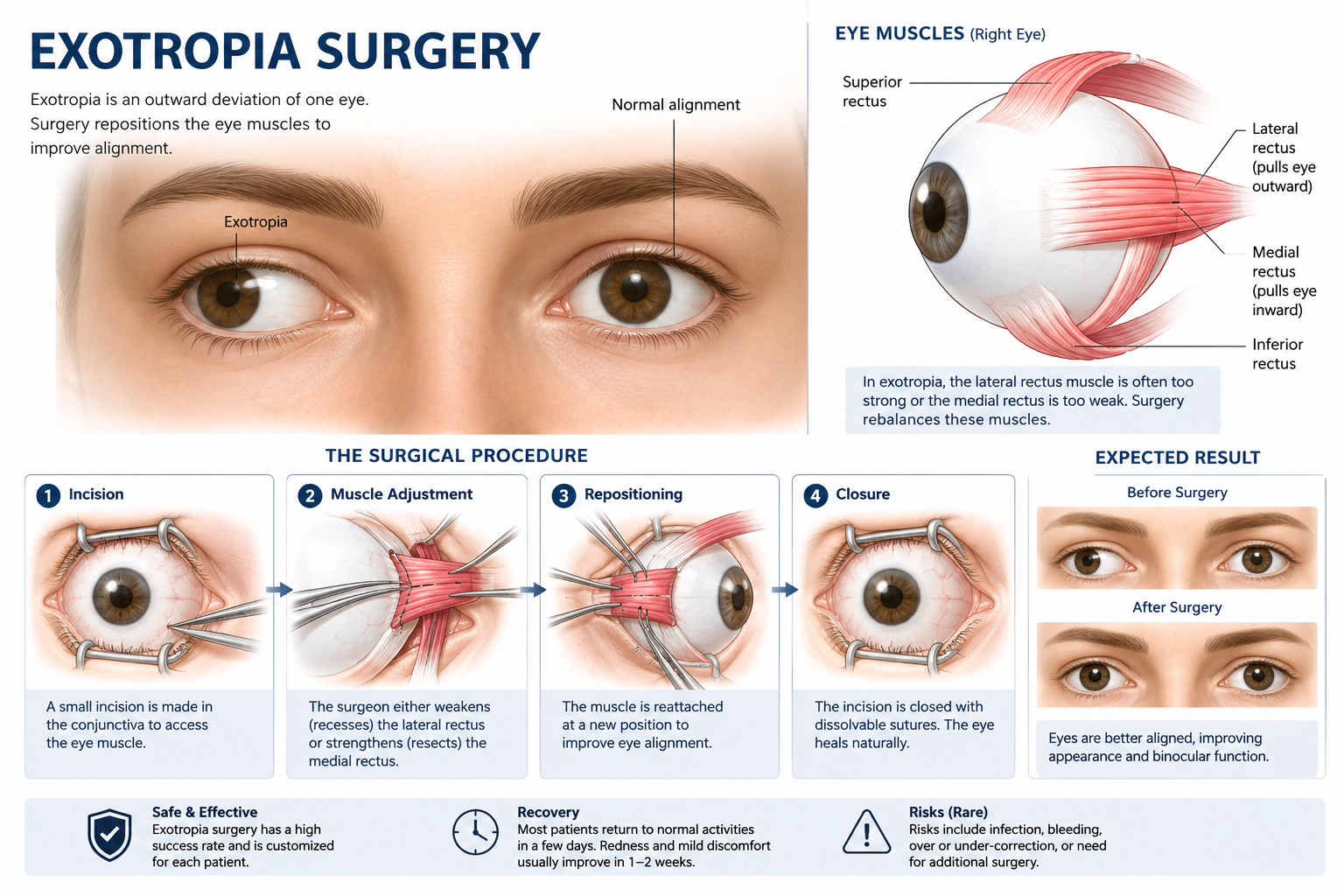
Exotropia surgery involves adjusting the muscles responsible for controlling eye movement. The goal is to improve eye alignment by strengthening, weakening, or repositioning specific eye muscles.
The procedure is typically performed under general anesthesia, particularly for children. During surgery, the ophthalmologist carefully modifies the eye muscles to achieve better balance and coordination between both eyes.
Because the surgery focuses on the muscles surrounding the eye rather than the eye itself, patients generally experience minimal discomfort during recovery.
Benefits of Exotropia Surgery
Exotropia surgery offers numerous benefits for both visual function and appearance.
Improved Eye Alignment
The primary goal of surgery is to position the eyes correctly so they work together more effectively.
Better Binocular Vision
When the eyes are properly aligned, the brain can combine visual information from both eyes more efficiently, improving binocular vision.
Enhanced Depth Perception
Patients often experience improved depth perception after successful treatment, making everyday activities easier and safer.
Reduced Double Vision
For many patients, surgery significantly decreases or eliminates double vision symptoms.
Increased Confidence
Visible eye misalignment can affect self-esteem and social interactions. Correcting exotropia often leads to greater confidence and improved quality of life.
Better Visual Comfort
Patients frequently report reduced eye strain, headaches, and fatigue following successful surgery.
Recovery After Exotropia Surgery
Recovery from exotropia surgery is generally straightforward. Most patients can return home on the same day as the procedure.
Common post-operative symptoms may include:
- Mild redness
- Temporary discomfort
- Slight swelling
- Foreign body sensation
- Increased tearing
These symptoms typically improve within a few days to weeks.
Patients are usually advised to:
- Use prescribed eye drops
- Avoid rubbing the eyes
- Follow post-operative instructions carefully
- Attend scheduled follow-up appointments
Most individuals can return to normal daily activities relatively quickly, although complete healing and stabilization of eye alignment may take several weeks.
Success Rates of Exotropia Surgery
Exotropia surgery has a high success rate when performed by an experienced ophthalmologist. Many patients achieve significant improvement in eye alignment and visual function after a single procedure.
However, outcomes may vary depending on factors such as:
- Patient age
- Severity of exotropia
- Duration of the condition
- Underlying medical issues
- Adherence to follow-up care
In some cases, additional treatment or further surgery may be necessary to achieve optimal results.
Why Early Treatment Matters?
Early diagnosis and treatment of exotropia are crucial, especially in children. Delayed treatment may affect visual development and binocular vision.
Benefits of early intervention include:
- Better visual outcomes
- Improved eye coordination
- Enhanced depth perception
- Reduced risk of long-term vision problems
- Greater treatment success
Parents who notice an outward drifting eye should schedule an eye examination promptly to ensure appropriate evaluation and care.
Choosing the Right Specialist
Successful exotropia treatment depends on accurate diagnosis, individualized treatment planning, and expert surgical care. Patients should seek treatment from an ophthalmologist experienced in strabismus and eye muscle disorders.
A thorough evaluation helps determine the cause of exotropia and identifies the most effective treatment strategy for each patient.
Conclusion
Exotropia can affect both visual function and self-confidence, but effective treatment options are available. Exotropia surgery has helped countless patients achieve improved eye alignment, better binocular vision, and enhanced quality of life. With modern surgical techniques and personalized care, many individuals can enjoy long-lasting improvements in both appearance and visual performance.
Doç. Dr. Halil Hüseyin Çağatay is an experienced ophthalmologist specializing in the diagnosis and treatment of strabismus, exotropia, and other eye disorders. Through comprehensive evaluations, advanced surgical techniques, and patient-centered care, he helps children and adults achieve healthier eye alignment and improved visual function. If you or your child are experiencing symptoms of exotropia, a professional consultation can be the first step toward clearer, more comfortable vision and greater confidence in everyday life.
 Tidal physiotherapy
  pcmcleankarmastaff
  maywellhealthnyc