
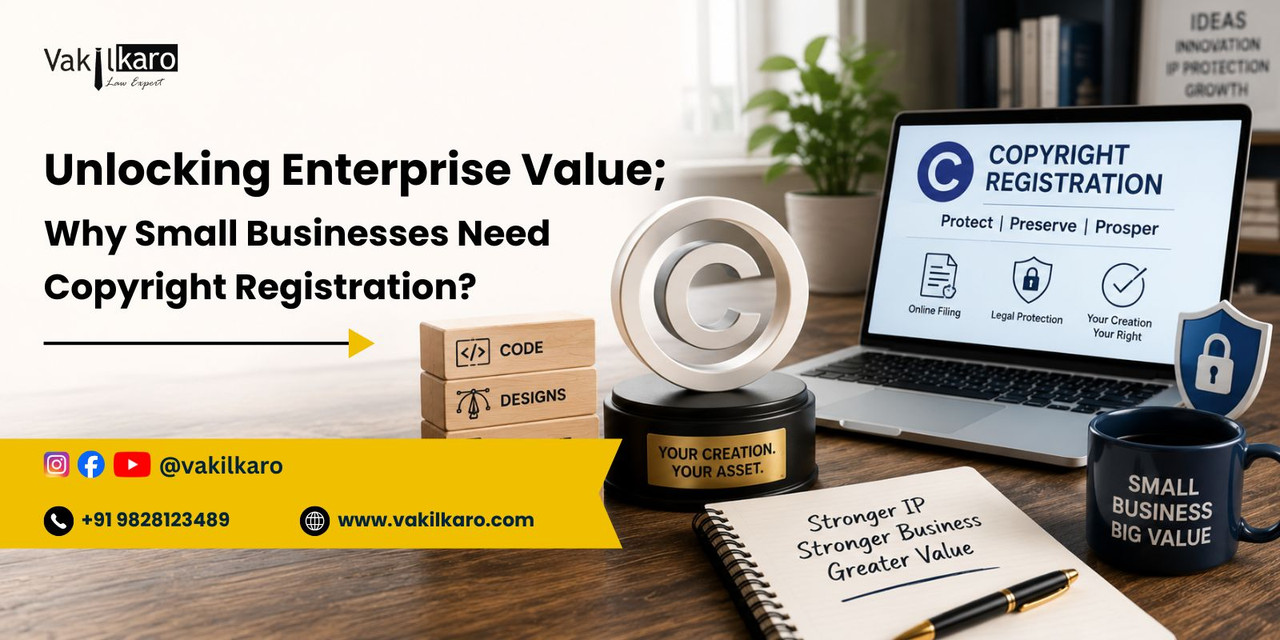
The Digital Fortification: Maximizing Competitive Advantages for Small Businesses
A small business’s main leverage is now intellectual property rather than physical infrastructure due to the rapid transformation of the digital economy. An agile startup is immediately at risk of predatory cloning when they introduce a custom software tool, an extensive operational playbook, or a distinctive visual marketing asset. Smaller businesses can create long-lasting market barriers that are comparable to the defensive barriers of multinational corporations by switching from a reactive stance to using the centralised copyright office online registration pipeline.
- The Shift: Auditing the creative assets as high-leverage corporate properties is a step up from treating them as transient marketing tools.
- The Mechanism: Prior to the releasing of the proprietary designs to the public at large, it is advised to expedite the digital submission procedures are used to ensure an absolute statutory paper trail. .
- The Execution: To reduce the operational friction, and to incorporate a systematic asset verification into your company’s engineering and product design processes. .
- The Slogan Delusion: Disentangling Brand Identifiers from Creative Expression
Many early-stage entrepreneurs confuse their trade identity marks for creative property when trying to create a baseline asset protection roadmap. Founders often ask how to obtain a copyright for an enterprise title or look for ways to protect a Copyright Registration Online. This is an example of a basic systemic misconception about corporate legal compliance.
Statutory frameworks do not provide copyright protection for company names, product titles, branding slogans, or generic taglines. These elements are only protected under trademark law, which is intended to prevent consumer confusion and anchor trade origins. The original expression of ideas is protected by copyright, which serves a completely different and extremely specialised function. A trademark keeps rivals from stealing your trading title, but it doesn’t stop them from copying your custom product catalogues, and their internal source code, or website design. To protect those essential assets, the only legal path to compliance is to correctly file the copyright application online.
- The Corporate Goldmine: What Can Your Growing Business Actually Protect?
A common misconception among small business owners is that copyrights only apply to film studios, music labels, or authors. In actuality, a contemporary company generates content continuously, producing dozens of highly profitable assets that are directly under the statutory registry’s purview.
Under the Copyright Act, an enterprise can secure a massive array of operational properties:
- Software and SaaS Architecture: Custom app backend workflows, software scripts, and proprietary source code are all legally classified as “literary works.”
- Marketing and Growth Assets: Copy for landing pages with high conversion rates, specialised blog entries, e-books, and educational webinars.
- Visual Identity and UI Designs: Original architectural designs, product packaging mockups, custom vector graphics, and distinctive user interface designs.
- Training and Operational Data: Corporate presentation slide decks, employee training manuals, and specialised consulting frameworks.
If these components are not registered, then the competitors can steal your company’s innovation, pass it off as their own parallel creation, and steal potential customers without facing any repercussions.
- Immediate Enforcement: How Digital Filing Supercharges Your Legal Leverage
Enforcing an uncertified asset that to in a fast-paced digital market is a nightmare, despite the fact that the law recognises inherent copyright protection that in the moment when an original work is published through a tangible medium. In order to avoid market dilution, your legal team must take swift action if a rival steals your proprietary B2B training videos or copies your website for their business.
Risk-averse digital platforms, hosting companies, and advertising networks typically require an unquestionable, government-backed verification prior to executing expedited removals. If you attempt to take down the business identifiers based only upon the out-of-date file timestamps or internal server issues, the resolution process will stall indefinitely. If you choose to register your copyright online, it completely alters your ability to enforce it. The resulting certificate serves as prima facie evidence under the law, allowing you to demand quick platform takedowns, block infringing links, and qualify your business for statutory damages and legal fees in court without a protracted evidentiary trial.
- Constructing a Capital-Efficient Legal Pipeline for Smaller Enterprises
Building a defensive barrier around your small business requires systemic discipline rather than a sizable legal budget. Instead of making ad hoc filings after a piracy incident has already put your revenue at risk, your corporate team should incorporate intellectual property protection into your primary product deployment cycles.
Make sure your business follows these high-efficiency procedures when setting up your technical and creative workflows. :
- Secure Absolute Independent Contractor Assignments: Every contract you sign with outside software developers, graphic designers, or video editors should contain a clear “Work-for-Hire” clause. In the absence of a clear written assignment, copyright ownership legally remains with the individual contractor, rendering any subsequent corporate filings null and void. .
- Leverage Streamlined Portals Preemptively: Include a thorough online copyright filing in your routine software deployment and product launch checklists to ensure that the priority dates are set before assets go live. .
- Conclusion and What Should You Do Now?
Leaving your small business’s code, unique marketing designs, and operating books unprotected is the commercial equivalent of building a retail store and leaving the front doors unlocked overnight. While registering a trademark protects your market identity, securing your creative innovation through official, government-approved registrations is what builds long-term corporate valuation and transforms an agile startup into an unbeatable enterprise. .
As soon as possible, try looking at your company’s existing technical and creative repositories. Before your properties are made public, you must begin your statutory registrations, check the assignment clauses in your freelance contractor agreements, and keep your brand identifiers separate from your operational content. .
Strategy is Key:
- Resolve the Concept Contradiction: Instead of wasting administrative time searching online for a copyright name, consider registering your business name as a trademark and concentrating all of your copyright efforts on media, code, and content. .
- Deploy Pre-Launch Digital Registrations: Before going public, you should use an expedited process to register copyright online for your main assets, such as your central marketing files, standard operating procedures, and core software modules. .
You can ensure that your company’s creative ideas are the only source of income by safeguarding your operational property. Keep an eye on the Vakilkaro Brief for intelligent, progressive information on corporate compliance and intellectual property strategy. To turn your company’s everyday ideas into long-term business moats, Vakilkaro provides thorough portfolio engineering, advanced asset searching, and specialised corporate advisory.
 Party Walls Limited
  yuvaflowershari
  alphalegal