
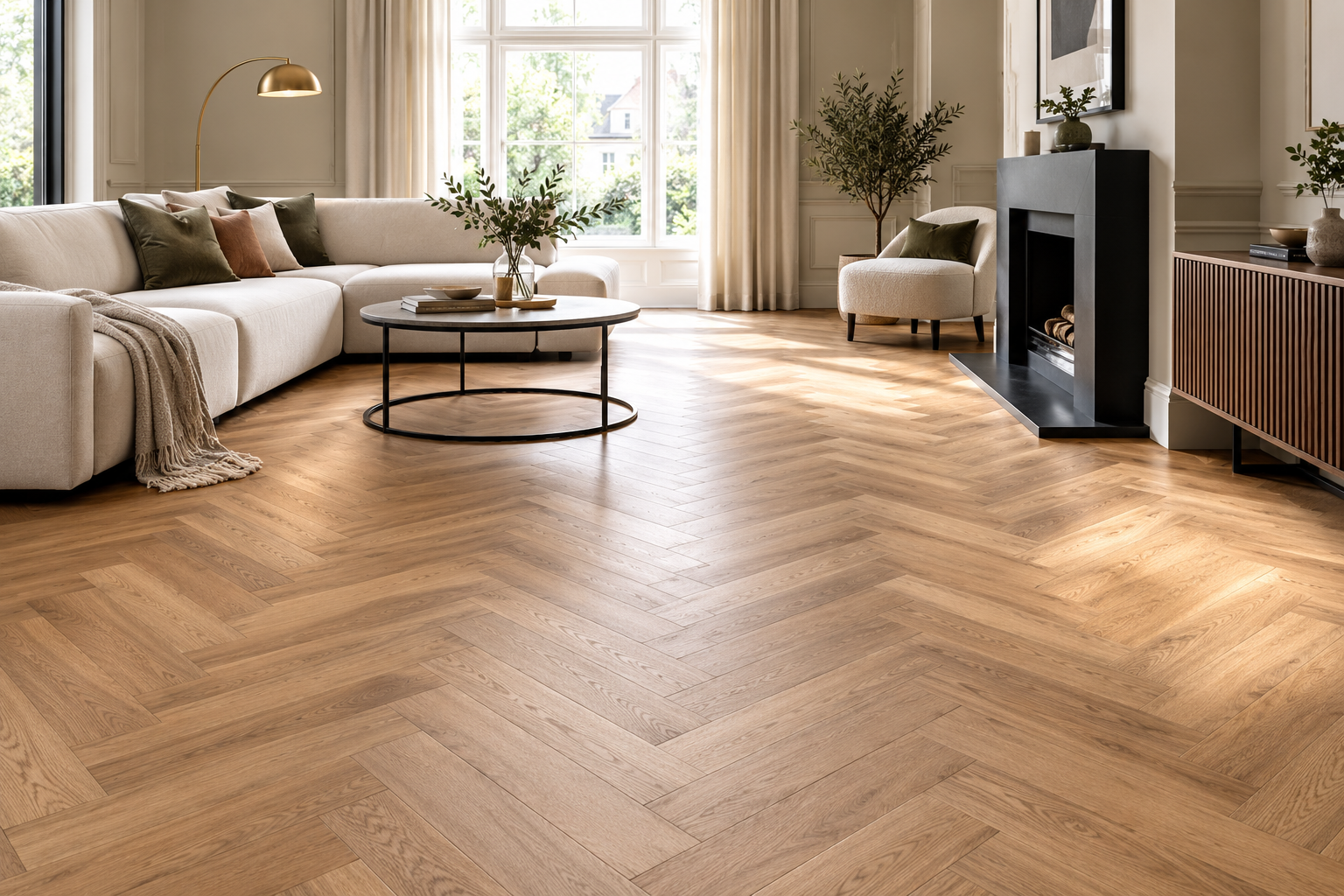
When you’re planning a home makeover, flooring is usually treated as a straightforward thing: you choose a colour, pick a material, and then someone gets it installed. But honestly, flooring can steer more than what ends up under your feet. Its tone, layout, proportions, and pattern can tweak how wide, calm, and even a bit more refined a room feels.
This is where engineered herringbone flooring steps in. With that distinctive V-shaped arrangement, it can turn what would’ve been a normal surface into a noticeable visual moment. Still, though, does it really make a room look bigger? And will that classic layout still feel right in modern interiors?
Well, the outcome depends on how you select the flooring and then—very importantly—how it’s fitted.
Can herringbone flooring really make a room look bigger?
Yeah, it can give the impression of more space, even if it doesn’t change the room’s actual dimensions.
What’s happening is mainly optical movement. Unlike plain straight floorboards, herringbone pulls your gaze across the space in more than one direction. That movement can make the flooring feel more lively, and when the job is done carefully, it can add a small sense of depth too.
In smaller rooms, going for lighter wood tones tends to help, and boards that are sized in a sensible way for the space will also matter. For instance, oak laminate flooring in pale or natural shades can create a wood-inspired look while keeping everything brighter and easy-going.
The real trick is pretty simple: don’t pick a pattern or colour that ends up dominating the space you have. If it’s too busy, the room can start to feel cramped, even if the idea sounded good on paper.
Why does herringbone flooring look so elegant?
Herringbone has a long design history, so it always feels a bit more refined, even before you think about it. But the pattern isn’t stuck in old-fashioned spaces or traditional houses only.
Modern engineered herringbone flooring mixes that classic geometric layout with today’s more contemporary finishes, colours, and textures too. Natural oak shades can sit really well with minimalist interiors, and yet warmer finishes can bring extra personality into spaces that lean more traditional.
And the repeated V-shaped pattern brings order to the whole floor. Rather than just merging into the background, it becomes part of the room’s visual style, which is maybe why it reads so “put together” without trying too hard.
That’s one reason homeowners often look at herringbone flooring when they want their flooring to stand out as a statement feature, without needing bold colours or heavy décor.
Could lighter flooring make a small room feel more spacious?
Colour matters a lot in how flooring is perceived. Lighter tones—like light oak, beige, or natural wood—tend to bounce more light around than very dark finishes. So in a room with decent natural lighting, a paler floor can give that airy, open feeling.
This is where oak laminate flooring can be especially handy if you want the warm look of oak without fully committing to a solid hardwood floor.
Still, the idea that “lighter is always better” isn’t really universal. A darker floor can add depth and contrast, especially when it’s matched with light walls and furniture. The best option depends on natural light levels, ceiling height, your furniture choices, and the overall colour palette in the space.
How does herringbone compare with conventional laminate wood flooring?
Most traditional laminate wood flooring uses boards laid in straight, parallel runs. It gives you this tidy, almost straightforward look – nothing too fussy.
Herringbone flips that idea, because the planks meet at angles and repeat the design across the floor. So instead of just “lines”, you get a more layered visual rhythm, a sort of zig-zag style that keeps catching your eye, even when the room is calm.
Neither option is automatically better for every space. Straight-laid laminate wood flooring can feel simple and continuous, especially in rooms where you want the walls and layout to do the talking. Herringbone, on the other hand, can bring more architectural character, and it tends to make the floor feel a bit more designed, rather than just installed.
If you want a quiet, not too loud surface, conventional laminate wood flooring might fit the vibe better. But if you want the floor itself to add personality, engineered herringbone flooring is usually the more distinctive alternative.
Can herringbone work in a modern interior?
Yes, absolutely. One of the nicest parts of herringbone is how versatile it actually is.
Try engineered herringbone flooring with clean-lined furniture, neutral wall tones, and modern, simple lighting, and the pattern can look surprisingly current. Or, if you go the other way, pair it with classic furniture and warm colours, and you can get a more timeless feel, like it never really goes out of style.
The main thing is balance. If your flooring has a strong pattern, the rest of the room doesn’t have to fight it with more patterns. Keeping furniture simple and accessories restrained helps the floor become the main visual feature.
Is Oak Laminate Flooring a good alternative for creating a wood-look interior?
If you’re a homeowner and you want that wood-like, warm vibe, oak laminate flooring can be pretty appealing; it does the job without all the fuss. Modern laminate patterns can mimic the grain, tonal shifts, and the general vibe you would usually expect from natural oak. It can also be a smart fit if you’re aiming for a smooth look between several rooms, as everything connects, even when it doesn’t quite match.
But when you’re picking laminate wood flooring, don’t stop at the colour, not even close. Think about the plank width, the surface texture, the finish, the wear rating, and yes, how it will sit with your current furniture and the way natural light moves through the space. A believable wood-look floor isn’t just one feature; it’s how the little details click together, right?
So, can herringbone make your home look bigger and more elegant?
It can help with both, though the final effect is really dependent on the full design setup.
If you choose a herringbone wood flooring layout with intention, it can bring movement, depth, and that extra architectural interest. Light or natural wood shades can keep the room feeling airy, while the pattern itself gives a polished sophistication, geometric and tidy.
Whether you go with engineered herringbone flooring, oak laminate flooring, or standard laminate wood flooring, the best results usually come from matching the flooring to the room’s proportions, the lighting, and the bigger design direction.
In the end, flooring isn’t only a surface to step on. If you use it with care, it becomes one of those design elements that, honestly, shapes how a home feels.
 aggiecarpetcleaning
  Bruce Gladden