
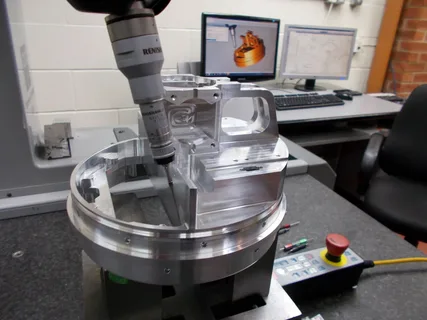
In modern manufacturing, precision is one of the most important factors that determines product quality and functionality. Whether you are creating a single prototype or producing thousands of components, understanding cnc machine tolerance is essential. Tolerance refers to the acceptable deviation from a specified dimension, ensuring that parts fit and function correctly.
Manufacturers use CNC machining because it offers high accuracy, repeatability, and consistency. However, every machining process has limits, and even advanced machines cannot achieve absolute perfection. By understanding cnc machine tolerance, engineers and buyers can make better design decisions, reduce costs, and improve production efficiency.
What Is CNC Machine Tolerance and Why Does It Matter?
CNC machine tolerance is the allowable variation in a part’s dimensions. For example, if a part is specified as 20.00 mm ±0.05 mm, the final dimension can range between 19.95 mm and 20.05 mm and still be considered acceptable.
Tolerance is critical because it ensures parts fit together properly in assemblies. Components that are too large or too small may fail during installation or operation, leading to costly rework or product failure. In industries such as aerospace, automotive, and medical devices, precision tolerances are vital for safety and performance.
Key Benefits of Proper Tolerance Control
- Ensures accurate fit and assembly
- Improves product functionality
- Reduces scrap and rework
- Maintains consistent production quality
- Lowers manufacturing costs
- Enhances customer satisfaction
CNC Machine Tolerance in Prototype Manufacturing
Prototype manufacturing focuses on creating early versions of a product for testing and validation. During this stage, cnc machine tolerance helps engineers determine whether a design can be manufactured and whether all parts work together as intended.
Tolerances in prototypes are often tighter than in production because engineers need to verify performance under real-world conditions. Precise dimensions allow designers to identify potential issues before moving to large-scale manufacturing. This reduces development risks and shortens product launch timelines.
Why Tolerance Matters in Prototyping
- Tests part fit and functionality
- Identifies design flaws early
- Supports engineering validation
- Improves product reliability
- Saves time in later stages
CNC Machine Tolerance in Production Manufacturing
In production manufacturing, consistency becomes the top priority. Hundreds or thousands of identical parts must meet the same dimensional requirements. Proper cnc machine tolerance ensures that every component meets specifications without significant variation.
While tighter tolerances may improve accuracy, they also increase machining time, inspection effort, and costs. Manufacturers carefully balance tolerance requirements to maintain both quality and profitability. For most standard CNC-machined parts, tolerances of ±0.005 inches (±0.127 mm) are common, though much tighter tolerances are possible when needed.
Production Advantages of Controlled Tolerances
- Enables repeatable manufacturing
- Minimizes assembly issues
- Reduces quality control problems
- Improves process stability
- Supports large-volume production
Factors That Affect CNC Machine Tolerance
Several variables influence the ability of a CNC machine to achieve required tolerances. Machine condition, tooling, material properties, and environmental conditions all play important roles.
For example, aluminum is easier to machine accurately than softer plastics, which may deform under cutting pressure. Tool wear can gradually affect dimensions, while temperature fluctuations may cause material expansion or contraction. Skilled operators and advanced inspection systems are essential for maintaining precise cnc machine tolerance.
Main Factors Influencing Tolerance
- Machine calibration and rigidity
- Tool sharpness and wear
- Material type and hardness
- Cutting speed and feed rate
- Workholding stability
- Ambient temperature
- Operator expertise
- Measurement equipment accuracy
Designing for Cost-Effective CNC Machine Tolerance
Specifying unnecessarily tight tolerances is one of the most common design mistakes. While it may seem beneficial to demand maximum precision, tighter tolerances significantly increase machining costs and lead times.
Designers should only apply tight tolerances to features that are functionally critical. General dimensions can often use looser tolerances, which are easier and less expensive to achieve. Collaboration between design and manufacturing teams helps optimize cnc machine tolerance for both performance and cost.
Best Practices for Tolerance Design
- Use standard tolerances whenever possible
- Tighten only critical dimensions
- Avoid over-tolerancing
- Consult machining experts early
- Consider assembly requirements
- Review manufacturability before production
Typical CNC Machine Tolerance Standards
Different manufacturing standards define acceptable tolerances for machined components. General tolerances may follow ISO 2768 or ASME Y14.5, while specific industries often require stricter specifications.
Standard CNC machining can typically achieve tolerances of ±0.1 mm to ±0.05 mm. Precision machining may reach ±0.01 mm or better, depending on machine capability and material. Understanding these standards allows engineers to set realistic expectations and avoid unnecessary production challenges.
Common Tolerance Ranges
- General machining: ±0.1 mm
- Standard CNC machining: ±0.05 mm
- Precision machining: ±0.01 mm
- Ultra-precision applications: ±0.001 mm
Conclusion
Understanding cnc machine tolerance is essential for both prototype and production manufacturing. In prototyping, accurate tolerances help validate designs and identify issues before full-scale manufacturing. In production, consistent tolerances ensure every part meets quality requirements and performs reliably.
By considering material properties, machining capabilities, and design requirements, manufacturers can achieve the ideal balance between precision and cost. Whether you are developing a new product or scaling up production, proper management of cnc machine tolerance leads to better performance, reduced waste, and more successful manufacturing outcomes.
 Saransh Agarwal
  Dasscom
  tech.emizen