
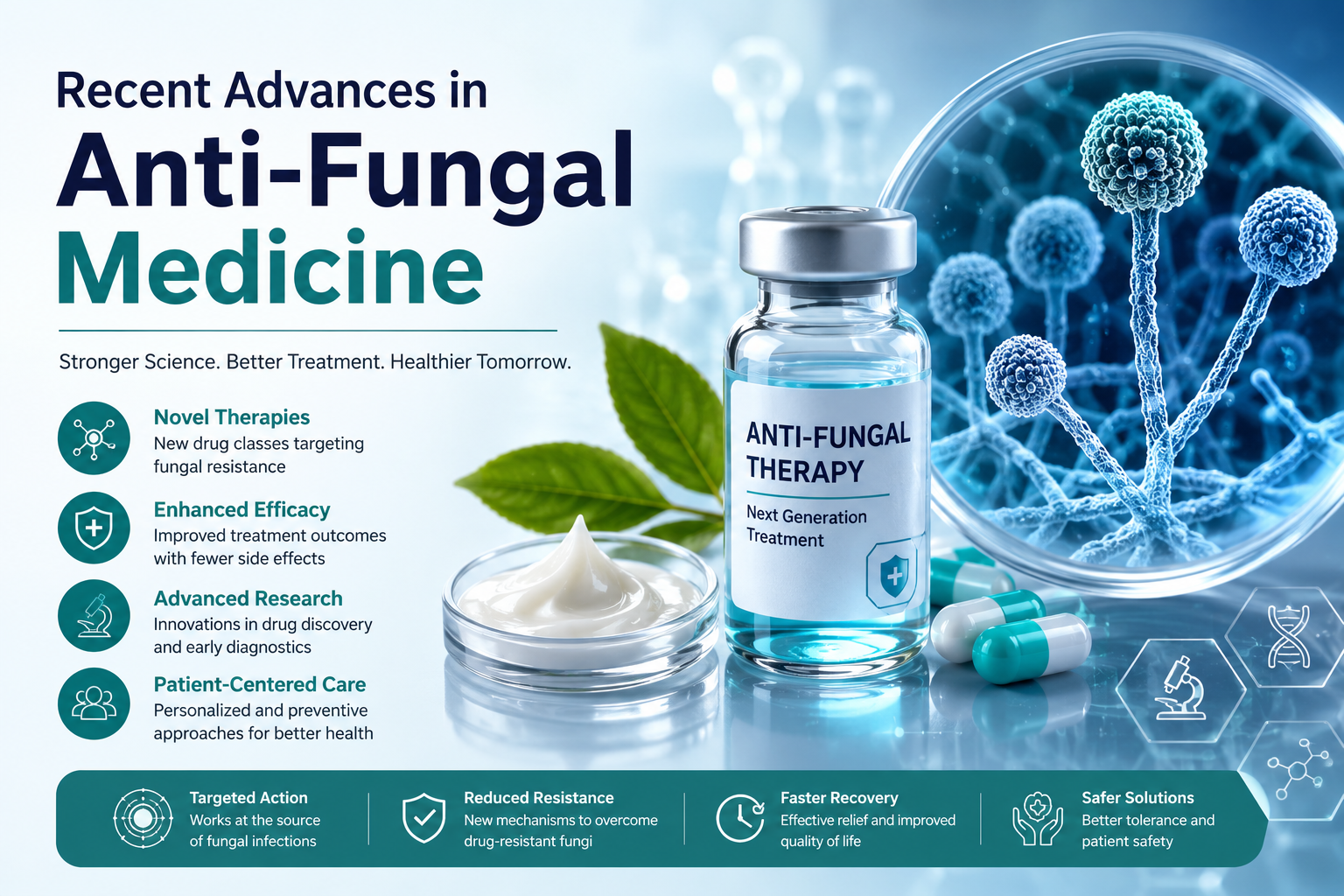
On a global scale, there is a huge burden of mycoses, which can range in severity, and can affect organ systems, and kill millions annually. Even skin infections (such as athlete’s foot and ringworm) should not be taken lightly as they can disrupt modern lifestyles. With the advancement of modern medicine, we have developed strategies in the treatment and diagnosis of mycoses which have led to more improvement in the care of afflicted patients.
Anti-fungal agents are classified in/in order that they are developed to eradicate or reduce the burden represented by fungi that infect humans and harm them. These agents target and/or affect the cellular structures/pathways of the fungi and limit the growth and expansion. Over the years, researchers and healthcare professionals have developed new medications and treatment regimens that provide target higher levels of effectiveness, and decreased side effects, and improved overall outcomes of patients.
What Causes Fungal Infections?
Infections are caused in a variety of etiologic agents which are medically classified as microorganisms. The various classes of agents that can cause infections have different levels of risk to the general public. Fungi are a collection of various classes of microorganisms that have different levels of risk to the general population as well. Most fungi do not cause malignant infections and are not considered pyogenic when they infect the body or proliferate on the skin.
It is not a rare occurrence that fungi proliferate and cause infections within the human body. These organisms can infect and proliferate in multiple tissues and organ systems. Fungi can proliferate within the integumentary system, such as the skin (dermis and epidermis) and the epidermal appendages (dermal derivatives), in the epidermis, within the dermal appendages. The integumentary system is not the only system fungi can infect. They can infect multiple organ systems, such as the pulmonary system, the vascular system, and all the other organ systems including the musculoskeletal system, the reproductive system (gastro intestinal system), the exocrine/ endocrine (such as the integumentary, reproductive, and the thyroid system) and the urinary system.
A subgroup of infectious agents (which may proliferate and infect multiple systems) are mycotic agents. Primary mycotic infections, as defined by the OSHA and CDC are the infections that develop and proliferate in the body and infect the body and all organ systems (which include the musculoskeletal and reproductive systems) caused by various infectious agents.
Mycotic infections can proliferate and infect organ systems or all organ systems (which include the reproductive organs systems, the integumentary system and its vasculature, and the urinary system). Candidemia and other infections are considered primary mycotic infections.
It can be stated that invasive fungal infections are the proliferated infections that infect all organ systems (including the vascular and reproductive organ systems). Invasive fungal infections such as Candidemia are primary mycotic infections.
There are predispositions for the mycotic infections include weak or chronic disease, such as situations of immunosuppression (with the use of chemotherapeutic agents) and the immunological disease, that is the patient is subseptitively or hyper immunosuppression. Also, the geographic region may be a factor in the incidence of mycotic infections, such as in the tropics the warm humid regions.
Fungal infection complications are eliminated with the use of anti-fungal therapies that tackle early-stage concerns. In particular, they decrease symptom severity, help control the infection, and help diminish the chances of the infection coming back.
Modern anti-fungal drugs are created as:
- Oral tablets or capsules
- Creams or ointments
- Powders or sprays
- Intravenous medications
- Medicated shampoos
The location, type, or severity of the infection determines the treatment chosen.
The Classes of Anti-Fungal Medications
Many sub-classes of anti-fungal medications exist today and they all target a different component of the fungal organisms to eliminate them.
Azoles
Azoles make up the most-used class of anti-fungal. Medications classified as azoles, like fluconazole, itraconazole, and ketoconazole, act to disrupt the integrity of the fungal membranes and inhibit their enterocele.
Polyenes
Amphotericin B is an example of a Polyene. Polyene class members are aimed to disrupt fungal membranes and are employed to treat serious systemic fungal infections. Since they act so aggressively, they are typically reserved to use in a hospital setting.
Echinocandins
Echinocandins are newer anti-fungal medications that inhibit the formation of fungal cell walls. They are particularly useful in treating invasive Candida infections and have become an important advancement in anti-fungal therapy.
Allylamines
Allylamines such as terbinafine, target fungal infections of the skin or nail. These medications are used to inhibit growth of fungi and are available in both oral and topical preparations.
Notable improvements have been made to research of advanced strategies for treating anti-fungals, which include tackling the issue of anti-fungal resistance, along with faster and safer options with better results on resistant strains (nih.gov).
Target Anti-Fungal Resistance
Less negative side effects and better potential of treatment (positive outcomes) of increased patient comfort, ensues with a better treatment methodologies focusing on the targeted anti-fungal destruction of fungal cells and minimizing damage to healthy human cells (nih.gov).
Insight of Treatment Formulations
Better potential of both treatment and comfort of patients, which is a positive side effect outcome,of formulations (for example) liposomal and topical with better delivery increased penetration with topical formulations (nih.gov).
Positive Outcomes of Combination of Therapy
Combination therapies of two or more anti-fungal agents (which better results are seen)are for resistant infections and (which is) positive outcome is the lack of treatment failure (nih.gov).
Better results with Combination of Oral and Topical Anti-Fungal Agents
Advancements of diagnostics has created better results with quicker and more accurate diagnostics, which is crucial to therapy and outcomes. The quicker the advanced diagnostics, the more positive outcomes (nih.gov).
Improvements of diagnostics equals improvements of outcomes. Better results with the combination of oral and topical anti-fungal agents are optimal combination therapies (nih.gov).
Antifungal resistance depends on how and how often antifungal agents are used. Futile research is being done to discover new drug targets and methods of therapy.
Skin infections can be complicated and difficult to clear.
Healthcare professionals recommend:
- Using medications exactly as prescribed
- Completing the full treatment course
- Avoiding unnecessary anti-fungal use
- Maintaining proper hygiene
The use of medicines as prescribed is required to maintain treatment.
The importance of Disease Prevention
The importance of treatment can be as significant as the prevention of disease itself. For the prevention of fungal infection, the importance of personal hygiene and the prevention of unhealthy lifestyles is required.
Skin, clothing, and nails all contribute to the infection. For the prevention of disease, the preservation and cleanliness of skin and clothing are of significant importance. Moisture can be harmful.
Negative conditions can be harmful to the body and contribute to infection, such as diabetes.
Poor hygiene
Those without the ability to care for themselves, such as the elderly, are susceptible to fungal infections, making awareness of disease prevention of great importance.
Patients who are as susceptible to infection.
The need for geriatric or residents to be placed under the control of the government.
In addition to the use of medicines, alternatives such as the use of the following have proven to be both inexpensive and effective. For greater prevention and control of infection, tea tree oil, garlic and lactic acid bacteria.
However, natural remedies should not be a replacement for doctor-prescribed care for severe infections. It is always advisable to get a professional opinion about alternative options.
Future of Anti-Fungal Research
The aim of anti-fungal therapies is creativity and supporting the individual. Researchers develop new medicines and vaccines, alongside therapies guided by the immune system to optimize the management of treatment with fungal infections.
Some areas of focus are in:
- New classes of anti-fungal drugs
- Fungal vaccines
- Gene-targeted therapies
- Nanotechnology-based drug delivery
- Artificial intelligence in fungal diagnostics
Advancements in medicine and technology are on the verge of revolutionizing the treatment of fungal infections.
Importance of Early Medical Attention
Fungal infections deteriorate untreated and lead to symptoms that are more severe and painful. Persistent itching that. lasts for an extended period of time, skin that is red and scaling, nail that the infected nail’s discoloration, and/or infected areas that release an abnormal discharge should be seen by a healthcare professional.
How to ensure a quicker recovery:
- Reduced symptoms
- Reduced complications
- Retain and/or spread the damage caused by the infection:
- Education about the infection
Always follow the doctor’s orders and show up for follow up appointments.
Conclusion
The options for treatment have improved with the large-scale development of anti-fungal therapies. Complex challenges are multiple the infected thorough treatment diagnostics, and anti-fungal therapies that are responsible, combined with the prevention, timely and efficient healthcare management are the answers to combat the impact of fungal diseases.
 Flypped Digi
  ponec86
  corewellness60@gmail.com