
In manufacturing, things don’t fail on paper. They fail on the shop floor, during assembly, or after the product reaches the customer.
That’s why CNC machining is not just about machines or software. It’s about how consistently a part behaves when it is actually used.
At Indust, most conversations with buyers and engineers start with the same concern—“Can you hold the same quality every time?” Not “Can you make it once?”
That question says everything about this industry.
What CNC Machining Actually Is (In Real Terms)
CNC machining is simple to explain but difficult to control in practice.
Yes, it’s computer-controlled cutting. But what really matters is what happens between programming and the finished part—tool wear, heat, vibration, fixture stability, operator decisions.
Even if the code is perfect, the output can still vary if the process is not stable.
That’s why choosing the right CNC Machined Components Supplier becomes important. You are not just buying a part—you are depending on their process discipline.
Materials Decide More Than People Think
Most machining issues don’t start on the machine. They start with material selection.
Aluminum is easy to machine, but not all grades behave the same under cutting loads.
Stainless steel looks standard, but it creates heat, tool wear, and dimensional drift if not handled properly.
Brass is forgiving, which is why it is often used in precision fittings.
Titanium is where things get serious—slow machining, tool pressure, and tight process control.
Plastics are a different challenge altogether. They move under heat and pressure, so even clamping matters more than cutting in some cases.
Good machining shops don’t just “work on materials.” They adjust everything around the material behavior.
How Parts Are Actually Made (Step by Step Reality)
A lot of people think CNC machining is just loading a file and pressing start. That’s not how production works.
First comes interpretation of the drawing. Not everything in a CAD file is production-ready.
Then setup—this is where most errors silently start. If the job is not clamped properly, no machine can fix that later.
After that, machining starts. Milling, turning, drilling, finishing—each operation changes the internal stress of the material slightly.
Finally, inspection. Not just to approve parts, but to understand what went wrong or right during production.
In serious shops, inspection is feedback—not just clearance.
Grinding: The Step People Only Notice When It’s Missing
There’s a point where milling and turning are not enough.
That’s where grinding comes in.
Grinding is slow, controlled, and used when dimensions or surface finish cannot be left to normal machining variation.
A proper CNC Grinding Machine Supplier matters here because grinding is less about cutting and more about stability.
If the machine vibrates even slightly, the surface finish changes. If temperature shifts, dimensions drift.
That’s why grinding is usually the last step in high-precision components—it removes uncertainty.
Quality Standards (What Actually Matters on Ground)
Standards like ISO or AS certifications are good to have. But in production, they don’t guarantee consistency.
What actually matters is how the shop controls daily variation.
Things like:
- First-piece checking before full production starts
- In-process measurement, not just final inspection
- Tracking tool wear over batches
- Keeping material traceability linked to each lot
If these are missing, the process depends too much on individual operators.
And that’s where quality becomes unpredictable.
CNC vs Traditional Machining (Simple Truth)
Traditional machining depends on skill.
CNC machining depends on system control.
But even CNC fails if the system is weak.
The difference is this:
Traditional = every part depends on the person
CNC = every part depends on the process
That’s why industries moved to CNC—not because it’s faster, but because it is repeatable.
Supplier Selection: What Actually Matters
Most buyers compare price first. But in machining, price is the last thing that should matter.
What really matters is:
- Can they repeat the same part after 3 months?
- Do they understand tolerance sensitivity?
- Do they correct problems or just ship parts?
- Do they control variation or just measure it?
A reliable CNC Machined Components Supplier is not the one who makes perfect samples—it’s the one who keeps production stable over time.
That’s the real difference.
What’s Changing in CNC Manufacturing Right Now
The industry is slowly shifting.
Machines are getting smarter, but the bigger change is in how production is monitored.
Now you see:
- Machines tracked in real time
- Tool wear predicted instead of reacted to
- Digital simulations before cutting starts
- Less manual dependency on experience alone
But even with all this, machining still depends on basics—rigidity, setup, and discipline.
Technology helps. It doesn’t replace control.
Practical Reality Check for Buyers
A few simple checks save most procurement problems:
If the supplier cannot show how they maintain tolerance across batches, don’t assume consistency.
If inspection happens only at the end, process control is weak.
If they cannot explain why a deviation happened, they are not controlling it—they are just detecting it.
Good machining is not about reacting to errors. It’s about preventing them from happening repeatedly.
FAQs
Is CNC machining always accurate?
It is accurate only when process control is stable. Machine capability alone is not enough.
Why do parts vary even from the same machine?
Because setup, tooling, and material behavior change over time.
When is grinding actually required?
When normal machining cannot achieve required finish or tight tolerance consistently.
What is the biggest mistake in supplier selection?
Choosing based only on cost and not checking process stability.
Closing View
CNC machining looks simple from outside. Inside the shop, it is controlled uncertainty—where every step affects the next.
That’s why supplier capability matters so much.
A dependable CNC Machined Components Supplier is not just producing parts. They are maintaining consistency in a system where small variations can create big problems later.
And when finishing accuracy becomes critical, a capable CNC Grinding Machine Supplier becomes equally important—not for production speed, but for stability at the final stage.
At Indust, the focus is not on over-explaining machining. It is on keeping it practical—because in real manufacturing, only one thing matters: whether the part works the same way every single ti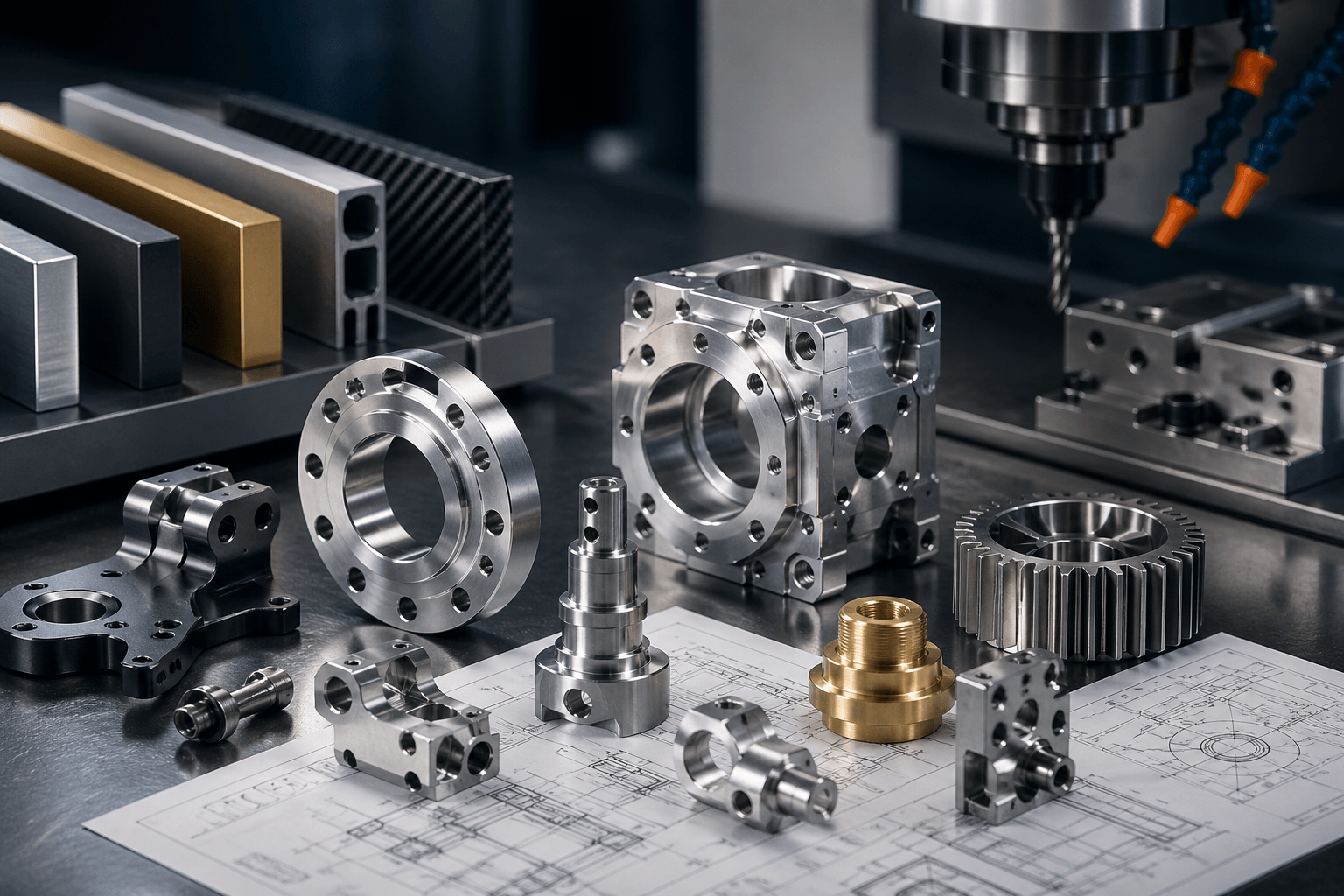 me.
me.
Check our latest blog
 lovetech845
  Jhoana Williams
  Petrofast Middle East FZC