
Quick Answer: Whale watching in Maui typically costs between $30 and $150 per person, depending on the type of tour, boat size, and experience level. For most visitors, it is absolutely worth every dollar especially from December through April, when over 10,000 humpback whales migrate to Maui’s warm waters. Whether you choose a large vessel cruise or intimate kayak whale watching, this guide breaks down every cost, every option, and everything you need to know to make the smartest booking decision.
Why Maui Is One of the Best Places on Earth for Whale Watching
Maui sits at the heart of the Hawaiian Islands Humpback Whale National Marine Sanctuary the single most important humpback whale breeding and calving ground in the North Pacific. That’s not a marketing claim. It’s a federal designation backed by decades of marine research.
From mid-December through early April, humpback whales travel roughly 3,000 miles from Alaska to the shallow, warm channels between Maui, Lana’i, and Kaho’olawe. You’re not hoping to spot a whale in the distance. You’re watching them breach, slap their fins, and nurse their calves within a few hundred feet of your boat. That’s the fundamental reason whale watching in Maui is in a different league from most ocean wildlife experiences.
Whale Watching in Maui: Complete Cost Breakdown
Large Vessel Tours (Most Popular)
The most common whale watching tours in Maui depart from Ma’alaea Harbor or Lahaina Harbor on catamarans or power vessels that hold 40 to 150 passengers.
- Adult tickets: $40–$80 per person
- Children (ages 3–12): $25–$45 per person
- Infants (under 3): Often free
- Duration: 2 to 2.5 hours
- What’s included: Naturalist narration, sometimes snacks or drinks
These tours offer stability, restroom access, and shade making them the best choice for families, first-timers, and anyone prone to seasickness.
Small Group or Private Tours
For a more personal experience, smaller vessel tours carry 6 to 24 passengers and provide far more interaction with the naturalist guide.
- Per person cost: $80–$150
- Private charter (entire boat): $400–$1,200+
- Duration: 2 to 3 hours
The premium is real, but so is the payoff. Smaller boats can maneuver closer (within legal limits) and spend more time with individual whale pods.
Kayak Whale Watching — A Completely Different Experience
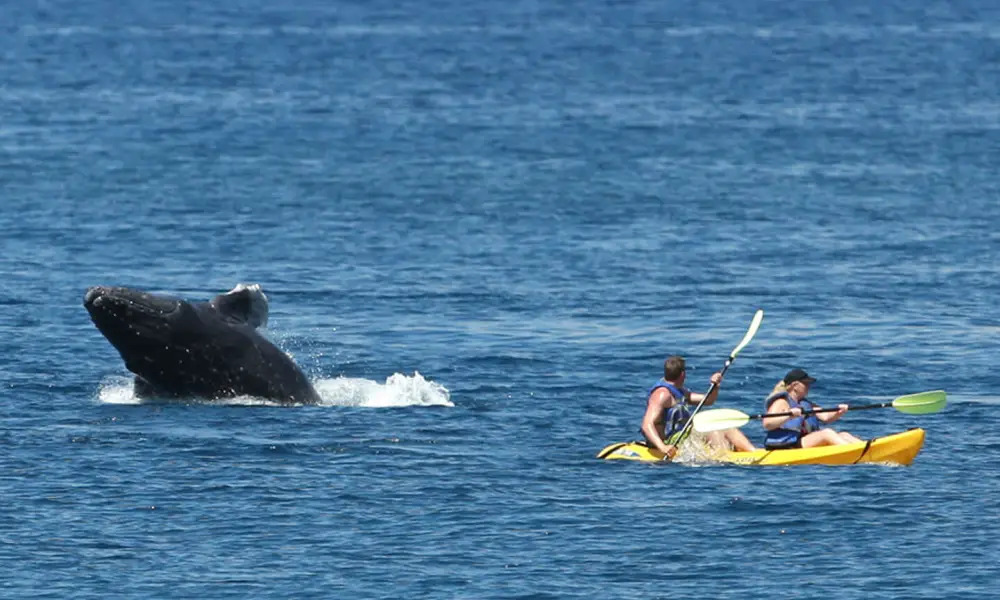
Kayak whale watching is Maui’s best-kept secret for adventurous travelers. Guided tours launch from south Maui beaches and take you into the whale nursery zones at water level, where the sounds and proximity are unlike anything a motorized vessel can offer.
- Maui kayak whale watching tours: $75–$130 per person
- Duration: 3 to 4 hours (includes paddling, snorkeling, and whale observation)
- Group size: Typically 6 to 10 participants
- Best for: Active adults comfortable with paddling in open ocean
Important note: You must stay at least 100 yards from humpback whales by federal law. Reputable kayak whale watching operators strictly follow these guidelines and will train you before departure.
Whale Watching from Shore (Free)
This is genuinely underrated. From McGregor Point Scenic Lookout on the Honoapiilani Highway particularly between mile markers 8 and 11 — you can watch humpbacks from the cliffs for free. During peak season (late January through March), sightings from this vantage point are nearly guaranteed on clear days.
Bring binoculars and plan to spend 20 to 30 minutes scanning the channel. It costs nothing and often delivers jaw-dropping moments.
Is Whale Watching in Maui Worth the Cost?
Let’s be direct: yes, with one important caveat timing matters enormously.
Book your whale watching in Maui between January 15 and March 15 for the highest concentration of whales and the most dramatic behavior, including competitive pods, mother-calf pairs, and full breaches. Arrive in December or late April and sightings are less reliable, though still possible.
Most reputable operators offer a whale sighting guarantee: if no whales are spotted, you receive a complimentary return trip. In reality, operators report whale sightings on over 95% of tours during peak season.
Worth it checklist:
- You’re visiting between December and April ✓
- You’ve never seen humpback whales in the wild ✓
- You want a structured, narrated experience ✓
- You have children or non-swimmers in your group ✓
- You want to combine wildlife viewing with snorkeling ✓ (many tours offer this)
If you’re an experienced ocean paddler and want something more raw and immersive, Maui kayak whale watching will be the standout memory of your entire trip.
Choosing the Right Whale Watching Tour in Maui
Top Questions to Ask Before Booking
What is the boat capacity? Smaller is almost always better for a meaningful experience. If you’re paying over $100 per person, make sure it’s not a 100-passenger party barge.
Is a marine naturalist on board? The difference between a narrated experience and a silent cruise is enormous. A good naturalist will explain whale behavior in real time telling you whether the breach you just witnessed was a social display, play, or aggression.
What’s the cancellation policy? Ocean conditions change. Confirm you can reschedule without penalty for weather-related cancellations.
Does the tour combine activities? Many whale watching tours in Maui include snorkeling at Molokini Crater or Turtle Town, adding exceptional value to the overall trip cost.
Best Departure Points
- Ma’alaea Harbor: Central, calmer water access, most operators depart from here
- Lahaina Harbor: West Maui, slightly rougher water in winter swells, but excellent proximity to whale channels
- South Maui Beaches (Makena, Big Beach): Best launch points for kayak whale watching tours
Tips to Maximize Your Whale Watching Experience
Book the morning departure. Ocean conditions are calmer before noon, and humpbacks tend to be more active in the morning hours. Afternoon tours can encounter choppier waters and more wind.
Sit near the bow or sides of the vessel. The front and sides give you unobstructed sightlines and the best photo angles. Avoid sitting inside the cabin if you want to see anything.
Dress in layers. Even in Hawaii, open-ocean wind at 15 to 20 knots feels cold when you’re on a moving boat. A light jacket makes a significant difference in comfort.
Take motion sickness medication before departure if you’re at all susceptible. Dramamine or ginger supplements taken one hour before boarding can prevent a miserable experience.
Download the Whale Alert app. Operated by NOAA, this free app tracks whale sightings reported by other vessels in real time. You can see exactly where whales are active in the channel before you even board.
Frequently Asked Questions About Whale Watching in Maui
When is the best time for whale watching in Maui? Peak season runs mid-January through mid-March. January and February offer the highest whale density and most dramatic surface behaviors.
How long do tours last? Most standard tours run 2 to 2.5 hours. Combo snorkeling and whale watching tours run 4 to 5 hours.
Can I do whale watching while pregnant? Most large vessel tours are suitable for early pregnancy. Kayak whale watching is generally not recommended. Always consult your physician and disclose your status when booking.
Is kayak whale watching safe? Yes, when conducted by certified, experienced operators. You will receive a safety briefing, wear a life jacket at all times, and paddle with a guide. Conditions are evaluated daily and tours are canceled if seas are unsafe.
Do humpback whales interact with kayaks? They can and do. Whales are curious and have been known to approach kayakers voluntarily which is legal as long as the humans don’t initiate the approach. These are the moments people talk about for the rest of their lives.
Final Verdict: What Should You Book?
If you’re visiting Maui during whale season and have any interest in wildlife, skip the luau for one night and spend that budget on a whale watching tour. This is a world-class natural phenomenon accessible to any fitness level and nearly any budget.
For families and first-timers: book a mid-size vessel tour through a licensed operator with a naturalist on board. Expect to pay $50–$80 per adult and leave with memories that photos will barely do justice.
For active travelers who want an extraordinary experience: Maui kayak whale watching is the highest-reward option available. Being at water level when a 40-ton humpback surfaces 80 yards away is something you simply cannot get from a boat deck.
Whichever way you choose to experience whale watching in Maui, you’re showing up to one of nature’s most spectacular annual events in one of the most beautiful places on the planet. That’s worth it.
 Rose Smith
  Emma Mia